Uh Jeff, you have described Prometheus, new AI startup, as as a bet on physical AI for the industrial >> AI for atoms. >> AI for atoms. Uh can you give us some examples of what that actually is in practice? >> Yeah, so um you know for the things we're used the LLMs and so on, they're very good symbol manipulators. uh but you really can't um ask them to uh design an object for you in a detailed way and uh you know it'll be a little bit I give you a couple of examples but the way we train them these large you know frontier models is we let them read the entire internet so they have the corpus of human knowledge and they can solve problems that are very uh you know that can be solved symbolically so they're good at math they're good at law. Um, they're good at a lot of things, but there's a lot of things you can't learn by reading. So, I could read a thousand books on how to be a great gymnast and I would still be a terrible gymnast or a thousand books on how to be a dancer and I still couldn't dance. And so, there are a lot of things like this. Um, and engineering is one of them. I give you a little thought experiment. let you pick the your six favorite physicists of all time. You pick Isaac Newton and Einstein and Maxwell. Take those six brilliant physicists, put them in a room together and say, "Build me a toaster oven." They would have no idea how to do it. They you understanding Maxwell's equations doesn't help you build a toaster oven at all. And so uh you know the and this is true because knowledge operates at different levels of detail. So you have to train specialized models if you want to be able to do engineering things and that's what we're doing at Prometheus. Um and so it's uh it's very exciting. Uh we have a brilliant team. We have 250 people now 250 people. We raised something just approximately 14.5 billion dollars. We've committed a lot of that to compute already. uh it is um it's very compute intensive. We build neural surrogates for numerical simulation uh and and we have a like one single multifysics model and then we can do things uh which we we've already demonstrated. The team is just heads down working hard. There's a new little miniature miracle every day and it's it it's incredibly fun to watch. But you know we're designing uh you know analog chips, radios and other things that would probably take a team of I don't know 10 to 20 people six to nine months to do. uh and we were doing it in 12 hours and similarly with you know valves and uh one thing we had one of the one of our teammates there at Prometheus has a was from JPL and had done some work on the Mars helicopter and so he asked uh the Prometheus tools to redesign the Mars helicopter just with a prompt and it was amazing how well it did and how far it went and it started out with all these different uh designs you know, should it be a quadcopter? Should it be a counterrotating helicopter? Should it be a fixed wing aircraft? And it started playing with this big design space. And it finally found something looks very much like the Mars helicopter. So, it's uh and calculated the blade cord and everything for Martian atmosphere. It created its own set of requirements. Uh uh you know, asked questions when it needed to disambiguate what we really wanted. Uh and so you these tools are so powerful and the the the manufactured world is so big like literally everything you see around you is manufactured somewhere and AI hasn't really touched that yet. It's a gigantic opportunity. The the the entire manufacturing economy is going to be transformed by AI in the coming years. And uh so it it's just it's just incredibly exciting what the potential is there. And and Liz, this is why also the models have to be very different. It's what Jeff said, the examples that he gave. If you think about the design of that radio that powers your cell phone, it's actually very complicated. It requires uh decades of human design tradition to understand how to make a design. And then to understand how that works requires a command of physics. to package it requires an understanding of everything from its thermal properties to its mechanical properties and you have to train specialized models to do that. Actually, even in the world of pure language models, we're seeing a lot of specialization, right? Anthropics, coding models for a time were the best because they focused on coding. Well, engineering is very diverse and very heterogeneous and is unlike any of those other things. So you have to really specialize in it to perform well. >> But is the idea, Vic, if you're if you're able to make the toasters and the jet engines and the skyscrapers like 3% more efficient, is the idea that you will be a toaster maker? Like is this a walled garden or is this kind of an open enabler? >> It can't it can't be a walled garden because it's too big. >> Okay. So if you if you look at the the manufactured world um you're literally talking about you know tens of trillions of dollars of of of of market and the and it's just too you know you're not going to you're not going to build toaster ovens you're not going to build jet >> you could find higher margin things to do with this I suppose but still be operating business >> but no but what our approach is um first of all it's going to not going to be a single approach it's it's too big it's going to be in terms of business model and how you approach the market and things like this. It's going to have to be more than one. It's not one sizefits-all. It'll be multiple things. But one of the things that will happen and that we're very excited about is investing in some of the companies that we uh then help with the with our with our tools. So, you know, try to uh benefit as a principle um instead of exclusively as a tool maker. But the tools will be available and companies will also be able to to use the tools um as they see fit. So you're going to have to approach this in a very broad way and you have to get you have to remember on the manufacturing side you know you think of the you know somebody's making the toaster oven but whoever's making that is using a vast supply chain >> and the and and then inside that vast supply chain is um so many different manufacturing processes. So the the surface area of of this of what we're talking about here is just gigantic. You can only do it in cooperation with, you know, thousands and thousands of companies. I see no no scenario where any kind of walled garden approach would could succeed here. >> Elon Musk is trying to merge all of his businesses together. Do you envision a world where Prometheus, Blue Origin, perhaps Amazon are are tethered together or or in fact knitted more tightly? >> That's such a such a funny idea. Uh I I don't I don't see that right now. um you know uh and so yeah there I I I have nothing to announce. Okay, but you are you you're one of the richest people in the world. You're sending rockets into space. You got married recently. Seem to be having fun. Like why why are you bothering with a new AI company in a very crowded space here? >> I uh I you know invested in this company when it was a little tiny, you know, seedstage thing um in late 24 and I was watching kind of the early progress and the more I understood about it, I became so enthusiastic about it and I just couldn't sit on the sidelines. It's impossible. It's just way too It's far too interesting. And I'm having fun. It's type two fun. It's like climbing a mountain. It's not, you know, you're kind glad after you're done. Um but the but but the uh the dopamine hits you get from this are very real. You know, it's like it literally is little miracles every day. And the team is so enthusiastic, so missionary. Uh they're just heads down. They're working their butts off. It's it's it is so fun. It's you're just if you're not uh attracted by that, then you're the wrong kind of person for this thing. But for me, it's it's Nirvana. >> When do you think we might see first product, first announcement, first launch of something? Well, we're in, you know, uh, private alpha with, uh, companies now, including Blue Origin, who's who's using these tools and and, you know, helping us test them, using them for real things for I I I can't tell you exactly what, but there are two projects inside Blue Origin that they're using these tools for right now. >> Um, and uh, and and we have other, you know, kind of early customers who are using the tools, too. So when we have a more public set of tools and and when we're ready to kind of go to market in a big way with that I can't tell you yet. Okay, Vic. Vic, on that, you know, there's this, I think, real mistrust brewing among big companies that are working with frontier labs that they're kind of letting the fox in the hen house and that you see these four deployed engineers come in on what if you squint can look kind of like reconnaissance missions to deconstruct a business and the conspiracy theory is that they're going to go back and and and build it and I guess >> feel your alpha. >> Yes. No, literally though, that that is the concern. I think >> this is a this is a phrase that comes up. I I mean if your plan is I assume you need a lot of training data from real companies in the real world to either of you. What is your pitch to them to to trust you? >> Well, we collaborate with them. We help them uh perform their work much much much faster than is possible without the tools that we're developing and uh you know we also very much respect the proprietary nature of things in engineering. It's very different than other parts of the economy and we have ways of respecting that while still training on parts of the data set that are not proprietary. Uh things in the physical world uh are uh they become very known to the public quite quickly after a product release. So a company may have uh engineering processes, traditions, things that are at the vanguard that it wants to protect and a long tale of things that are largely known to the public. We also generate a lot of our own data ourselves or less reliant on uh the kind of data that causes these problems. But in the end, you know, we're offering something which as Jeff referred to as a miracle every day. Yes, that's true. But also there are uh things on which these companies product development cycles depend that make them take a very long time and if we can shorten that sometimes by an order of magnitude that is a huge uh benefit >> if you take a specific Vic is exactly right and if you take a specific process like casting so casting is this you know what several thousand year old technique I don't know exactly when casting was first invented but a long time ago and it's progressed and it's gotten better and precision aerospace parts are often made out of casting and and and many industries. It's a big it's a big industry but it's very trial and errorprone and you find this in a lot of manufacturing welding um that there are not exact recipes for how to do this there you know when you go to cast a part it's just as one example but again it's very common you make a mold you get molten metal you pour the metal into the mold and you let the metal cool and harden that sounds very simple and for nonprecision ision things. It is pretty simple. But if you can't have any flaws or voids or cracks in that in that cast part, it gets complicated because the metal cools at different rates. In some places, the mold is very skinny and those places are going to cool fast. And in some places, the mold is thick and those places are going to cool more slowly. And because the metal contracts when it cools, you get little voids and hairline fractures. So, the way that the casting process works today is you make a part as we've just discussed and then you x-ray that part or cast get something. You have some industrial X-ray machine. You find the little hairline fractures and then you go back and you add insulation to the mold to slow the cooling rate in certain areas so that you end up with a mold and with insulated properly so the part cools at a uniform rate. that um is believe it or not done mostly by trial and error and it's actually not an easy thing to simulate. So there are good reasons why it's done. It's like you know experienced people studying X-rays deciding where to put insulation on the mold and trying again. And uh so when you if you think about a company like that it's they don't necessarily have a lot of data to protect. It's not like they have like all this they they haven't instrumented all of these processes. So some of what we're doing is trying to help those companies have a more repeatable process. Um and it's different. It's a I'd say where companies have real unique data sets, they should guard those data sets. If you actually have a very valuable proprietary data set, you know, my advice to you would be don't share it and actually work pretty hard not to share it. Yes. Um I think it's more rare than you think. There are a lot of companies that might think they have unique valuable data sets and then you might go argue with them about really how how valuable is this. But but I I think that um that's one of the ways that companies are going to differentiate themselves in the future by having um unique data sets. This this casting example illustrates something else. You you're never going to virtualize casting. You will not be able to cast a engine block in your garage. that casting house will always be there. And in making it more efficient, not only are you making that business more profitable, they're able to take on more customers, but all the groups that are waiting for 12 months or 9 months for that complex cast part now maybe they can get it in a month and that's a compounding advantage that benefits the whole supply chain. So the considerations are very different in our world than say in the world of >> remember the top level goal here which I think is worth keeping in mind is if you believe as I do and I think it's really not debatable all civilizational wealth comes from invention. 6,000 years ago somebody invented the plow and we all got wealthier. Much later somebody invented the steam engine and we all got wealthier. Without these inventions we would all be hunter gatherers today. And so that is how the world gets wealthier by invention. And the inventors by the way typically you know they collect a little bit of this then they go away. The invention stays forever and people build on top of it. And what we're trying to do at Prometheus is accelerate that dream build loop. Literally accelerate the invention loop. >> It ended badly for Prometheus though. >> What's that? >> It ended badly for Prometheus. That's But yes, but but never forget never forget the last half of the myth. Hercules showed up >> and saved him. >> Okay, >> shifting gears a little bit. We all have some homework to do. Um, look, Jeeoff, Democrats are in power now. You and a lot of folks here and surrounding couple of miles, I imagine. Um, allied yourself fairly closely with the president. Is that going to be a problem for your companies? Well, I I think uh in my case, and I think in a lot of people's cases, too, like I've worked with every president since Clinton and uh so I you know, and I hope to work with every president going forward uh as long as they'll have me. And uh so, you know, Trump is particularly communicative. He's he reaches out a lot. He's like he's he is he's he he's in my so you know uh as I said you know Clinton and Bush and Obama uh Obama was very communicative too. Um and I still reach out to Obama for advice. He's he's given me some good advice over the years. He but he is uh none of them are were half as communicative as as Trump is. Trump is the most accessible uh you know you can call him, he'll call you. Um so he's very unusual um in that not not in terms of it's not like qualitatively unusual just quantitatively like just the amount of outreach is unusual and um uh so I don't know what who our next president will be and I don't know how communicative they'll be. I don't know how much uh advice they'll want or how willing they'll be to advise. Um uh but I don't think reaching out to the president or vice versa is a bad thing. I think it's a good thing and most presidents do it to one degree or another. So I hope that people uh see that in the right light. >> But the Democrats have a long list. They have the gavl now. I mean they literally have a list of companies and executives. I suspect that your name is on it. Um I I mean I >> You're trying to scare me. Jamie Rascin was talking about this last week and I mean I guess you know reflecting back on it. Do you feel like you got something out of your relationship with the president? Was it worth it if the next two years are going to be what they look like? >> Look, I don't do this. I'm I'm on the side of America. I'm not my interactions with any of the presidents I've worked with, including Obama and Bush and and Clinton, none of that. And and Biden, too, although those interactions were the most limited. Um but but but all of those interactions have been for the benefit of the country. I have never tried to uh advantage Amazon or myself or any of my any of my companies. So the I you know presidents need advice from business leaders and shutting out business leaders is a mistake. It's not smart. you know it uh this company, this country requires this engine, this free market engine that drives all of the wealth creation. We can have perfectly reasonable conversations about how to allocate that wealth, how to tax it, where to move it to, how to redistribute it. All those are reasonable. The unreasonable conversation is let's kill the goose that leaves the that that lays the golden eggs. this we have the most dynamic free market system in the world. This this economy and the invention here is the envy of the world and we cannot lose that because that's where all of the if you're going to redistribute something it's got to come from somewhere. Um and so and so you've got to reach out to the people who are leaders in industry and seek their opinions because if you're sitting on Capitol Hill, whether you're a senator or a representative or a president or a cabinet member or you don't you you you can't know you don't have the ground truth of what's happening on the ground in American business and you need to reach out and get those things. So I hope future presidents do that. Liz, there's also a important uh perspective here that you know the Democrats have other uh priorities beyond the ones that you mentioned and at all times of great technology change there's just uh a enormous potential to do things at a scale that you can't ordinarily accomplish. So some of those priorities in education uh in infrastructure uh even in healthcare uh I would suggest that we are at a moment of time now where relevant technologies are advancing so rapidly uh that some of those liberal policy positions things that we haven't necessarily been able to change in decades of effort now there's a chance if we seize it appropriately uh to actually make progress there. >> Okay. But you look at like what you know this is a little further a field from AI but you know the the core issue is is almost always affordability and it is true that if you're a young person living in a major urban area it's very hard to find a house and to have an affordable life uh unless you're willing to commute two hours. So like living in a major urban area in this country is very expensive. Housing is very expensive. Um, and so we have to if you if you really want to help people, you've got to look at the root cause of those problems. Just as we would do anybody in their business, you if we have a problem at Amazon, you know, we have these big operations and all these logistics. When something goes wrong, we try to find not the approximate problem, but the real root cause of what's going wrong. And if you want to know why housing is expensive, it's not very hard to figure out. you when if you if you back up and look for the root cause, you find very quickly that we've subsidized demand and constrain supply. And so if you have policies that do those two things, prices are going to go up. Things are going to get expensive. And you cannot lower the cost. I'm just picking on housing, but it's because it's a big one, but there are other things that are like this where we know the solutions. And you look at a city like Austin, they have over the last 10 years lowered the cost of housing in Austin, even as the population of Austin grew very significantly. And they did that by changing a whole bunch of policies that increased supply. Um, and that, you know, for example, they eliminated a rule that required, I don't know, some number of parking spots, maybe two parking spots per apartment unit or something like this. And that turned out to be very burdensome on apartment uh developers. Um, and a lot of young people don't really care about two parking spots. So, it's a they'd rather live in the city and have no parking and take an Uber or something. So, if you go through and look at if you want to if you want to fix the root cause of these problems, you can't uh the opposite thing that doesn't ever work is finding a villain. Like if inside your company if you had a root a problem and you're searching for the root cause and some executive was just like pointing fingers you'd probably fire that person. And so we have to get if if you want these things to work in this country. That's the kind of thing that you know you you can have really good dialogue between business leaders and and uh you know our our political leaders and try to work on root causes to these problems. Increase the supply. Anything that doesn't build more houses, unless you build more houses, more housing, you housing costs will not come down. There's exactly one thing that will lower the cost of housing, and it is building more housing. >> But a lot of people think the villains are here, frankly. I mean, there's a huge amount of wealth that's been created out here. More is coming this week. >> I get that. But that that is the age-old political technique, which is pick a villain. And uh pick a villain is is a good political technique, but it's a terrible technique for solving problems. And so, you know, and the the villain moves around, you know, um I mean, when I was a kid, there were a lot of lawyer jokes and I think people perceived that lawyers were very powerful, so they like to diss lawyers. And then, you know, with the uh Occupy Wall Street happened and Wall Street was the villain. You know, from time to time, landlords were the villains. Um and and and now it's kind of a uh you know it's a um uh big tech is the villain. Tech is the villain. And that's that is unarguably true. That is that is the paint the picture that is being painted. It's not correct. It's not a true picture. Uh you know I think most people in tech just want to stay heads down doing the work. And so u uh you know I don't think I don't think there's a lot of villain here. I don't look around at this dynamic economy and all the tools that people are building and all the productivity they're creating and say what a bunch of villains. >> Okay. Um I want to ask about Nvidia, you know, under very different circumstances. You're an example Amazon is an example of a company that was run by its founder for a long time and transitioned to a non-founder. It's a question of, you know, well, first of all, do you think Jensen should come back? Guess I should ask. >> Do I think Jensen should come back? I I don't know enough of the details and I think probably most of us don't know. You can't know. There's probably a bunch of stuff that happened inside those board meetings and so on that we don't know. So, I can't answer that question. What I can tell you for sure is that um Jensen uh is a remarkable guy who uh founded and built a remarkable company with a lot of hard work and foresight and he deserves admiration and respect no matter what. and that will never go away. >> But if you had advice for the board um as a company that again did transition, >> hire from internally like if I if if you're not gonna if you don't bring Jensen back, I would not hire an outsider. Nvidia is too complicated. Um I think outside CEOs in a complex companies have a vanishingly small chance of succeeding. Um and so I would always think that's a last resort. the uh the Amazon analogy is a is a a very poor one uh because there has never been a more planful transition. So >> I said under very different >> just to be clear that is a very different situation you know multi-year planned transition. >> Let's talk about the the journey of Amazon because it lost money for years subsidized by shareholders until it turned to profit. And you look at the big private >> that's called investing. >> Just for the record. >> Absolutely. >> Point taken. When when you look at the big AI startups today, they're headed to the public public markets. Another one this week. How patient do you think investors will be? >> Investors are going to get more discerning. So you always see this in new technology cycles where in the beginning it's very challenging for investors let's just say the market um to differentiate good opportunities from weak opportunities you know and so what happens in the early innings is all of the experiments get funded the good the bad and the ugly they all get funded And as time goes on, the market becomes more discerning and it starts to uh disproportionately invest in the better ideas. And so and that so that's that's a phenomenon. I believe it's in the kind of AI space. It's starting to happen now. I think you're starting to see some of that discernment. It's extremely healthy. This is part of the cycle. It's what should happen in a in a high functioning free market system. The investors get better at saying, you know what, that's not a great idea. I'm not going to invest in that. I'm I'm worried about this idea. And they divert their resources to the better ideas. That's going to that's going to happen. But the technology is real. Nothing can can upset this technology because it's so valuable. You actually need a lot of experiments to figure out what works and isn't with new technology. You you can't predict it in advance. >> That's true. >> But isn't the problem, Vic, you ran Google's life sciences business for a long time, and there was talk of early cancer detection pills and glucose sensing, contact lenses, and is that stuff that you could have done with AI that you, you know, that with the benefit of hindsight, we would have gotten that? Because I think the the question is that the bad stuff that people can see with AI is here right now or at least it is in their nightmares right now and the good stuff is just going to take a while. And I wonder if you think the political clock is kind of running out or mismatched. >> Well, uh you you're right. I've worked within AI mostly at the interface of AI and science and engineering. Um and there are profound benefits there. uh I I can talk about a few but one very important thing is we we have to be really calibrated about how long things take in the world of health care in the world of living things in the physical world and we have to be scientifically rigorous and sort of uh uh uh underpromise and overd deliver. So that journey for example of early cancer detection that's a 10-year journey but there are products on the market now that from a simple blood test can detect many cancers early using machine learning. Uh there are other things happening uh in the world of uh drug discovery and drug development which have actually been going on for about 15 years and now are on the verge of finally accelerating the search for cures and the proof that those cures work. So you know the companies working on them actually it goes back to the first question you asked. They're really focused on those problems. They're developing AI that is very specialized to those problems. Right? Companies like Isomorphic or Zera or Incitro to name a few that have been discussed here. They have been doing the hard work to focus on that and to turn those products into something real and to prove that they work. So that's coming. But it won't be that we'll cure all disease in 10 years or something like that. You'll just see a increase dramatically in the productivity of those things pretty quickly. >> >> Um, just have a minute left. Jeeoff, I want to end on something that's hugely important to everyone. I know it's been consuming a lot of your time lately, which is choosing the next Bond. Uh, my understanding is you were intimately involved. How did we get Robert Patson? >> Uh, yes, I was I was heavily involved. There were uh it was very we did we had we we ran a a really tight process and we made the final decision on Friday. Uh we down selected. There were a big group initially and we down selected to five kind of finalists and then we did real old-fashioned screen tests of those five finalists and it was uh it was really interesting you know full costume real sets other actors with um we did three different scenes with each of the five finalists and then uh we got together uh on Friday to spend a couple of hours you know, looking at all those screening tests and reviewing all of that and uh all of the actors were extraordinarily talented. By the time we got to this list of five, they were they were all amazing. But there was something special about Rob and his patents and his his uh performances and it was uh univer it was kind of immediately um undebated. you know, Denise the the director uh was was we all sort of gravitated to Rob. By the way, initially I would say we were slightly uh biased a little against him just because he's already so famous. We sort of thought, you know, maybe we should have somebody a little more unknown. Um but in the screening tests, it was so obvious he is James Bond. >> Can we post those on semaphore.com? >> What's that? >> Can we post those on semaphore.com? >> Post what? >> The screen tests. Oh, >> we'll have to leave it there. Thank you both so much. >> Thank you.
 MoonWhy Dying Civilisations Always Turn To Degeneracy
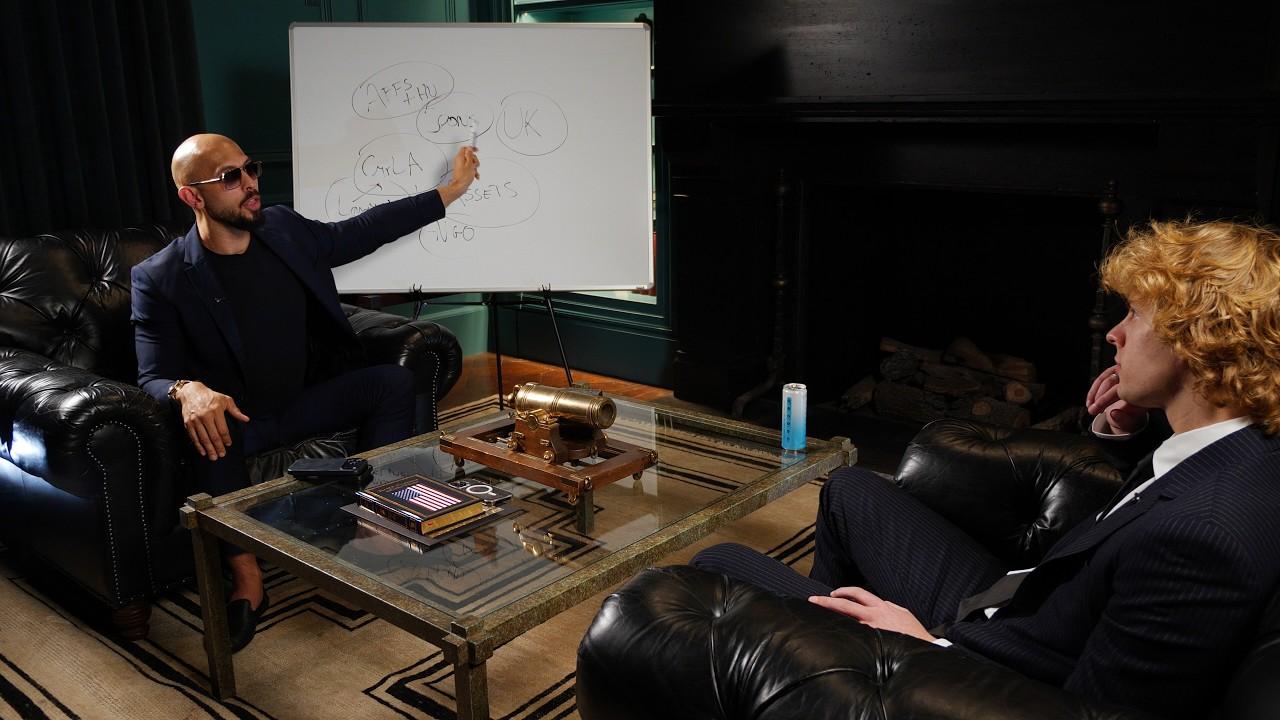 Jack Neel(NEW!) Andrew Tate's Emergency Interview Before Miami Arrest | Jack Neel Podcast
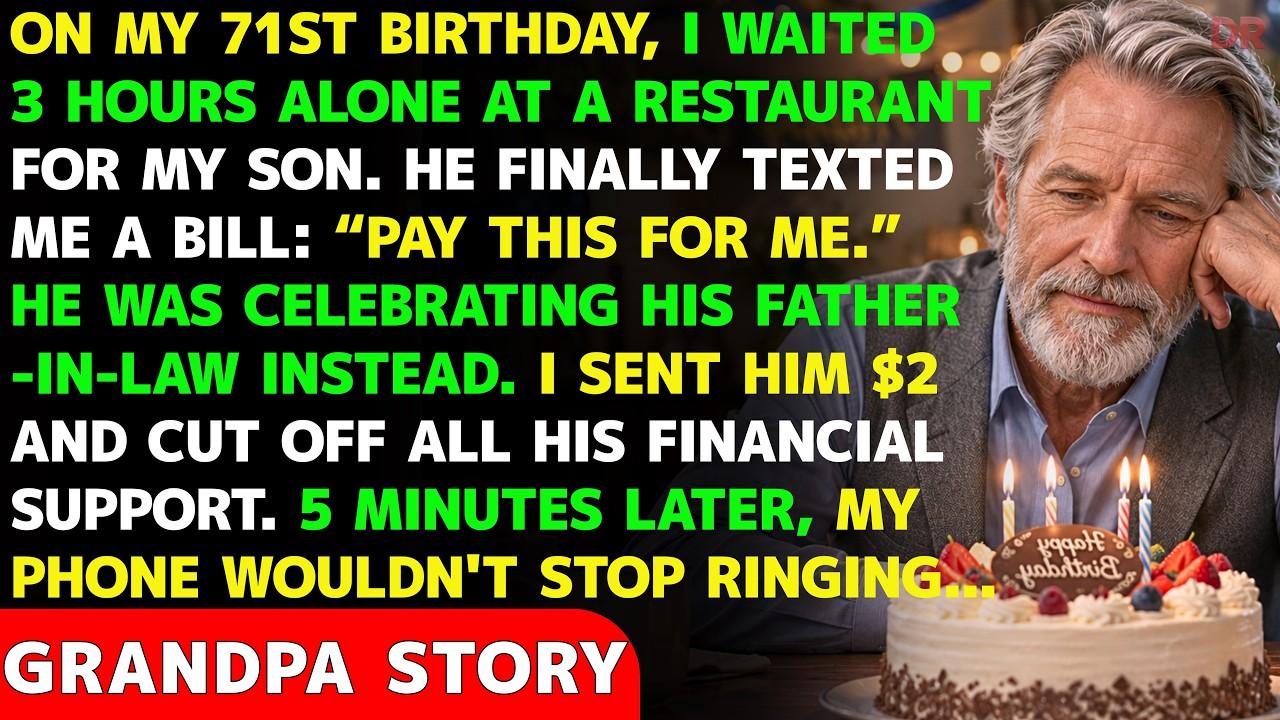 Dad’s Revenge StoriesI Waited 3 Hours for My Son on My 71st Birthday—He Was Celebrating His Father-in-Law Instead
 Jordan B PetersonJordan Peterson On Becoming An Adult
 Cortes Investidor Sardinha [Oficial]Como ficar rico nos próximos 3 anos
 Jett FranzenYour Lack of Personal Purpose Is Causing Your Romantic Obsession
 Jett FranzenYou aren't crazy... Something isn't right with people nowadays
 Jett FranzenMy phone addiction is ruining my life