AI Summary
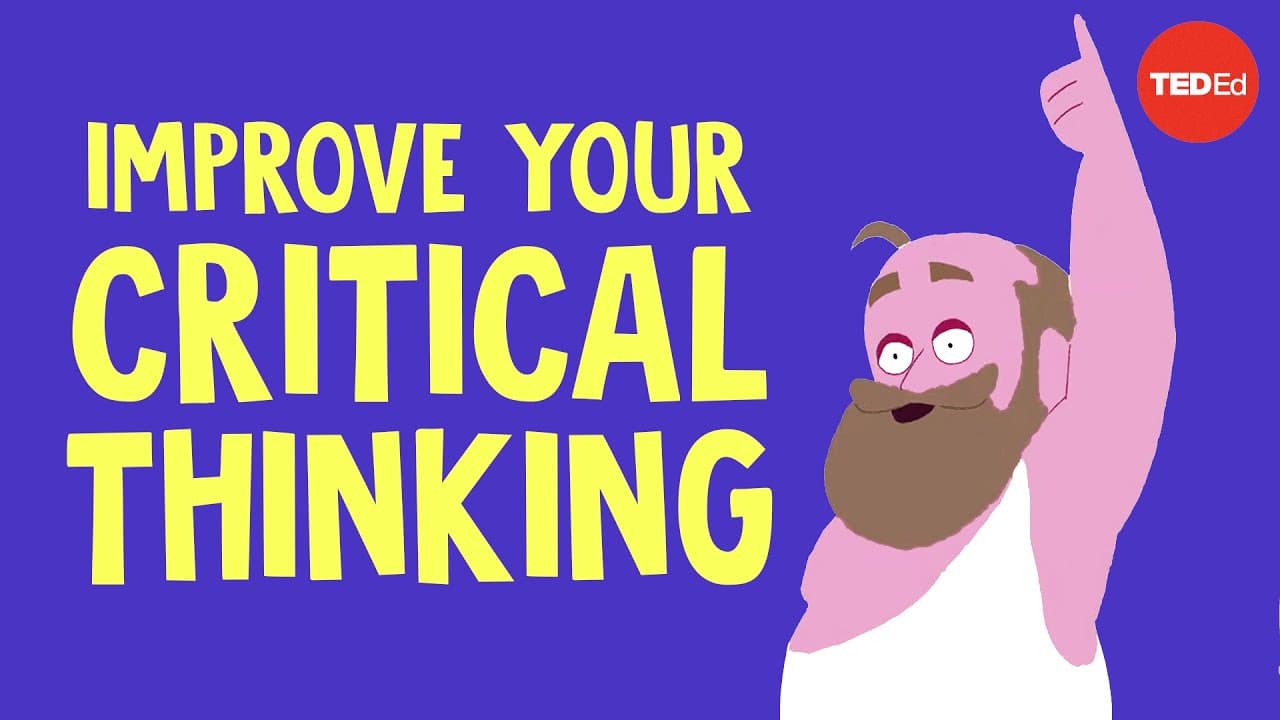
Analysis of "5 Tips to Improve Your Critical Thinking" by Samantha Agoos
Overview
The TED-Ed video featuring Samantha Agoos presents a concise yet impactful lesson on critical thinking, emphasizing its importance in decision-making. The video outlines a structured five-step process designed to enhance critical thinking skills, helping viewers navigate the complexities of daily choices.
Video Structure
- Title: 5 tips to improve your critical thinking
- Duration: 5 minutes
- Author: TED-Ed
- Animator: Nick Hilditch
- Key Theme: The necessity of critical thinking in making informed decisions.
Introduction
The video begins by acknowledging the overwhelming nature of decision-making in everyday life:
"Every day, a sea of decisions stretches before us."
This opening establishes the relevance of the topic, highlighting that while some decisions are trivial, others significantly impact our lives. It sets the stage for the discussion of critical thinking as a means to navigate these choices effectively.
The Importance of Critical Thinking
Samantha Agoos defines critical thinking as a method for deconstructing situations, allowing individuals to identify biases and manipulations that may cloud judgment. The emphasis is on a skeptical approach to decision-making, where options are scrutinized rather than accepted at face value.
Five-Step Process to Enhance Critical Thinking
Agoos outlines a structured process for improving critical thinking, broken down into five actionable steps:
1. Formulate Your Question
- Objective: Clearly identify the question or issue at hand.
- Example: When considering a new diet, clarify your goals (e.g., weight loss vs. better nutrition).
2. Gather Your Information
- Objective: Collect relevant data that addresses your question.
- Methods:
- Consult experts.
- Seek testimonials from others.
3. Apply the Information
- Objective: Analyze the information through critical questioning.
- Key Questions:
- What concepts are influencing this situation?
- What assumptions are being made?
- Is the interpretation logically sound?
4. Consider the Implications
- Objective: Reflect on the potential consequences of decisions.
- Example: Evaluate the long-term effects of choosing a political candidate based on short-term benefits.
5. Explore Other Points of View
- Objective: Understand opposing perspectives to enrich decision-making.
- Action: Investigate why others may support different policies or opinions.
Conclusion
In the closing remarks, Agoos reiterates that while the five-step process is a valuable tool, it cannot eliminate the challenges of decision-making. Instead, it enhances the likelihood of making informed, positive choices. She emphasizes the collective power of critical thinking:
"If enough of us use it, it has the power to make the world a more reasonable place."
Key Takeaways
- Critical thinking is essential for navigating everyday decisions.
- The five-step process serves as a guide to improve critical analysis and decision-making.
- Engaging with diverse viewpoints enriches understanding and decision quality.
Final Thoughts
Samantha Agoos' presentation is not only informative but also empowering, encouraging viewers to adopt critical thinking as a practice in their daily lives. The structured approach she offers provides a clear framework for individuals seeking to enhance their decision-making skills in a complex world.