Please welcome Welcome Andrew Ross Sorcin and his guest, founder, CEO and chief engineer of SpaceX and CEO of Tesla, Elon Musk. >> Elon Musk is here uh virtually everybody. Uh it is fair to say that Elon is the most consequential private citizen in the world. This year he took SpaceX public, the biggest public listing ever. He runs Tesla, SpaceX AI, now uh SpaceX SI X, the Boring Company, Neurolink, and even more than that. Uh he was one of the largest donors in this month's midterm election to the Republican part. He's also uh built a massive chip factory called Terapab, which he says could become the largest building on Earth. And just last week, you probably all saw it. SpaceX made history when it caught the upper stage of the Starship rocket uh from orbit. And uh I think as you can watch it there, it really was uh such a marvel uh to watch. Uh we're going to uh talk we're going to talk about his power, his influence, about the future, and just about everything. Please welcome back uh to Dealbook, and I bet you remember the last time he was here, Elon Musk. Elon. >> Hi. Good to see you. >> It's good to see you. Uh we don't have a a 7-second delay, but we thought about it uh because of uh our last conversation. >> Say something crazy or something. >> Do you remember? >> You don't remember? >> Yes, I do remember. >> You remember a little bit? >> You know, sometimes I I put my foot in the mouth and sometimes I manage to put both feet in my mouth and and hover, which is incredible. >> >> Um there there is a lot to talk about and and you're in China with the president. Um but I I wanted to talk about something we've been talking about all day to virtually every guest, but I know you've been at the forefront of it because you're a close friend of his. Um and you've been out publicly talking about it. Uh which is the Jensen story. Uh and this idea of bringing Jensen back uh and if not bringing Jensen back, the possibility of uh potentially hiring Jensen yourself. So, what can you tell us? >> Yeah, I I think I I I tend to speak my mind quite plainly online as is probably obvious and and as I mentioned, often uh shooting myself in the foot um and then putting their foot in my mouth. I mean, it's it's you know, I have to say I've um I've gotten myself into trouble quite quite a lot uh on on X formerly known as Twitter as as everyone knows. Um, so, so you but you're not going to find me saying one thing publicly and another thing privately. I I I say the same thing. So, you know, Jensen is an old friend of mine. I think he's I would call Jensen like, you know, Michael Jordan perhaps at his peak level, you know, in terms of what he means to a team. Um, and I I do I I do think it's it's uh you you got to think long and hard before you take someone like like let's let's say you're Chicago Bulls, you know, middle of your sec middle of your second season and you got a you got a winning streak that's just going to happen and then you kick Michael Jordan off your team. Doesn't seem like a smart decision to me. Um, you know, I think when you got when you there's there's no one that can really replace uh Jensen. I mean, it's he he he he does the roles of like several people. I mean, he's managing supply chain. I mean, you see him eating, you know, street food in Korea and Taiwan with critical suppliers. He has long-term relationships that have been built up over decades. He understands technology incredibly well. Uh, his team loves him. Loves it. Um, and many of them are there because of him and have had higher offers to go elsewhere and have turned them down because of personal loyalty to Jensen. >> So, do you think that, >> man? You really think you need to think long and hard before kicking someone else like that out? You know, someone like that out. So, it seems, you know, I I and and I know that there's like been, you know, he's he's certainly made some mistakes here. Um, but I I I don't think he's disloyal to the United States. Um, and um, and and I, you know, I just I've been clear. I think it's it's like it's like kicking Michael Jordan off your team. Um, when when when you when you're on a winning streak and it just seems doesn't seem doesn't seem like like a good thing for shareholders. Um, and and you and you have to balance the good that someone does and brings relative to the bad, you know. Um, so, so I yeah, I don't I don't I think I think it was it was a mistake and I've said so publicly. Um, and a lot of other people have too. >> You've now also said that you would hire him. Uh, the board is >> well, of course, but who wouldn't, you know? Um, he's an incredibly talented. He's one of the most talented entrepreneur CEOs in history. Who who wouldn't who wouldn't want to hire Jensen? Now, Jensen is not looking for a job, obviously, you know. Um, and I think he's still somewhat uh stunned by by these events. Um, you know, I feel like we're if this is movie, we're like in some George R. Martin script where, you know, you've got a major character that you're invested in and suddenly they're they're gone. Um, it's uh it's quite shocking. Do you think um long term that he will I mean do you think that he have you spoke to him about this personally? >> Yeah. Yes. >> And and and what did he tell you and what do you what do you think happens? >> I I don't know what happens next. Obviously the the decisions is up to the test up to I'm sure decision up is up to the Nvidia board of course. Um and then and then perhaps you know the next level of authority are the shareholders but the shareholders would would have to you know I think like the current board would either need to change their mind or shareholders would need to vote the board out at the shareholders meeting which is that's that's pretty rare for that to happen. Um so uh but but really the the board is in charge of the company right now. So that's, you know, >> um, you're with the president. Have you talked to him about it? >> Well, I mean, I don't think we should make this the the Jensen interview. >> No, I know. >> Um, yeah. Yeah. Well, I think the president has voiced publicly that he thinks um Jensen should have stayed as as CEO. Um, and and certainly everyone everyone I know thinks the same. So, but but this is this is this is a at the end of the day the Nvidia board decision. So, it's we're not on the board, >> right? Um let me ask you uh about you. I want to get into all of your companies and uh SpaceX and Tesla and everything else. Uh but we did say at the top of this um that uh you were obviously involved quite heavily in the politics of everything in the country uh in terms of supporting uh Republicans in the midterms. They lost. And I just wanted to get your reaction to to that loss and what you think the impact will be on the country, what you think the impact will be on your businesses. We now have a uh blue governor in Texas, uh which is a a first in a very long time. What what what did you think? >> Well, I think first of all, the the new governor actually I think is is going to be um quite moderate. I think I don't I don't think she's sort of a a far-left governor. Um and um and based on everything I've heard heard about her, I think I think things will be fine in Texas uh with Jire um as governor. So um I I think I think I think things will be fine on that front. Um, you know, I do think that there's it's good to have some balance of power, you know, like not not have the as a general rule, have not not have the the presidency, senate, and house all be of the same party. Um, so my goal, I didn't mention this on on X, was was that, you know, I think I think we want to have at least one of the, you know, one of of either the presidency, the House, or the Senate be of the other party. Um so so you say that what was my actual goal here which failed by the way obviously um was to have the Senate be 51 Republican uh in in 29. Um, but obviously the Republicans were routed in this in this election and the money they spent was I think I feel I feel pretty foolish about having spent so much money and and not seeing much for it or or or maybe it it would have been much worse without that. Um but um but but it certainly shows that you know this American elections are not just about money. you know that obviously um you can put a lot of money into an election and have an effect that is relatively minor. Um and I think that that was the case here. Uh, so I probably I could rewind the talk, I would have spent less money and um I I I didn't put a lot of personal attention into it because I'm focused on the on building SpaceX, Tesla, and you know, >> the reason I asked though is whether you think it's going to impact those companies because you you know, you hear uh people like uh the chairman of the oversight uh committee saying, you know, lawyer up and uh you hear the president saying uh you know, if I have to give him a pardon, meaning you I'll give him a pardon and I just I'm on a person need a pardon by the way because I haven't committed any crimes. Um so I mean I mean a bunch of these people are like a little over the top because they're like you know the a b a number of Democrats I think even the Texas new the incoming Texas uh you know house uh majority leader um said that I should go to prison. And then I and he was then they asked him but for what crime and and he couldn't name a crime but I'm like but he wants me to go to it's like it was like prison first crime crime later. And I'm like the guy's trying to you know ch channel barrier from like Stalin where it's like you know show me the man I'll show you the crime type of thing. I'm like come on guys this is a little over the top you know. Um but there definitely a few people grumpy about um you know my funding of in this past election. Um but you know hopefully in this country you still need to do an actual crime before you go to prison. I I you know as aspirationally that should be how it works. >> Do do you think this experience >> you will this experience >> it really needs to be first crime then prison you know not the other way around. I mean what country we living in here. But do you think that this experience though changes your thinking about um being involved in politics one way or the other, meaning giving money to one party or the other in part because invariably if you support the uh losing party, uh potentially the winning party is then going to I mean people talk about whether there'll be hearings and you're going to have to uh go to Washington talk like I I just wanted to know as somebody who's leading these companies and thinking about all this, how how you think about it? No, my motivations were were were very simple, which is just to to sort of uh have like one one of either the the the House, Senate or or Presidency be um Republican in 29 and not have just a um sort of in the worst case scenario, a super majority of of u of Democrats. Um I'm not in favor of supermajority of of Republicans either. Um, you know, I think we have some want to have some checks and balances here. >> And that that that was it really. Um, so, um, you know, I think I'm ideologically quite moderate, although that, you know, I don't think I have like, you know, any any kind of extreme political views. And you you've known me for a long time. I mean, can you think of some extreme view that I have? >> I have known you for a very long time. I think it's fair to say that you have said things or reposted things on X where um you know you got into an interesting interview with Xany from the Economist where you guys went back and forth uh about some of the the things happening in Europe and the like around immigration that that that people did think were far or extreme. >> Yeah, I know you don't think they're extreme. >> Uh yeah, I don't I don't think they're extreme like like what? I I think well look I think in the US uh people in the US and some people in the US might think that some of the the MAGA stuff was extreme and in some of the stuff in Europe around immigration and the like uh there are some people who would think that and that's why I'm I'm asking about it. >> No, no, you but you can't just um say broad-based oh MAGA whatever. I mean I'm not MAGA. Well, at least I don't like I'm not sure what mega means, but I I I don't think I'm like if if that means sort of blind adherence to a set of policies by the Republican party, then I I certainly don't have that. I think there are uh there there are positive posit positive negatives in both parties and and and and I mean, but politics is very tribal. Um and and for a lot of people if they you know a lot of people cannot see any good um in in the other party and they cannot see uh any bad in their own party because they they've sort of they more more or less invested in their party like it's a you know like it's like their their hometown sports team and and it's just it's just their team and they they won't they won't accept that that there's anything that the other team could do that's that's good or anything that their team can do that's that whereas the truth is that you know both both parties have their issues. Um and and on the immigration stuff I mean I was I was just saying like look I think Europe needs to stop uh you know massive amounts of uh illegal immigration into into Europe. Um, which I I don't know if that's these days that's controversial, but I think it's it seems crazy. They've got these like small boats landing all the time um with people who are unvetted and in some cases do terrible things uh to the residents of Europe when they arrive. And you at least want to have some vetting process when people you can't just have, you know, uh potentially dangerous criminals arriving illegally. Um, let me ask you if that if that's a right-wing view, then I guess so. Yeah, sure. I mean, but that used to be a normal view not that long ago and and like you know Obama and Hillary actually would would say exactly what I've said like you can literally look at their speeches um that they they're against. Maybe they're they're for it now, but they certainly were against it, you know, call it 105 years ago. Um, >> so this is this is not in any way like some extreme ideological view. >> I I've got a a separate geopolitical question for you because it came up a couple times today. Uh, and actually Palmer Lucky who was here uh offered a uh fascinating uh defense actually uh of uh your decision. Uh you've talked about it on X, but I don't think uh you've talked about it publicly. Can you explain to everybody uh your thinking and also just personally how you felt about it uh around the situation with Starlink and Star Shield in Ukraine and the idea of throttling it and what really happened because I don't think that the public really knows the true story. Um, no. Most people in the public just believe the, you know, the person on TV or or the article they read and they and they they they just they have a somewhat service reaction to to that. Um, but I think it's it would probably be accurate to say that there is no private individual who has helped Ukraine more than I have. Um, I I I made sure that Stalin was in Ukraine prepositioned ahead of the uh Russian invasion. Um, and when Russia invaded, they disabled all communications, all cell towers, all fiber cables, and all of and and every satellite communication system. There was one system they could not disable, and that was Starlink. Um, and if they had not had Starlink, their entire line would have collapsed because they had no communication system. Um, and Russia would have won. Now, does that sound like a pro-Russian action to you? >> So, then tell us what happened after. >> It doesn't, obviously. It's a rhetorical question. Um so and and and even to this present day um Starlink is provides the backbone uh of communications for the Ukrainian military and for um and for Ukraine more broadly. Um and if we were to turn off Starlink, the entire Ukrainian front would collapse immediately. So um this is I I think an action that can only only be described as incredibly supportive of Ukraine. Now, now, now from the beginning, I've said that Starink is a civilian uh system. It is not meant to uh to be used for offensive drone strikes that kill people. Uh that that is star that if you if you want to do that, you need to do Star Shield, which is um a separate system that is controlled uh by the US government. But do not ask me as as a private individual to make kill decisions that um sometimes result in the loss of innocent lives, not just soldiers. Um that that is not my position to to do. Um and yet we've been pressed relentlessly to do that. Um which I think is uh you know outrageous and and not and not a not a cool thing to do. So um the now in in the uh in the stalling system um there's there there is a there is a speed limit um which is that that speed limit is the the speed of the fastest uh uh road speed limit in Ukraine which I think is about 80 miles an hour um which uh it means you you can you can drive around and you can do anything up to 80 80 miles an hour that's it Um, so, uh, you know, I I repeatedly said, look, if if, uh, if they want you to do something that's an offensive military action, it needs to be the Star Shield system where the kill decision is that of the War Department u perhaps ultimately the president um, and not mine. And that's how it's going to be. And those are the rules that have been in place since the beginning for years. Um, now people pressuring me to change it, but I'm not changing it. Um, and and and and let me tell you a bit more about this because I can tell you a lot about this war and and and the origins and the history. Um, a lot more than I think hardly anyone could tell you. Um, because I I I struggle with what is the right thing to do. Um and and and what I'm trled by here is uh the thing that really troubles me morally is uh a continued conflict uh where thousands of uh you know thousands of kids are sent in to die every day with no change in the borders forever. And I think anyone who who supports that is a horrible human being or has not thought through the problem. Um, and you should have have empathy not just for the Ukrainian uh boys who are dying, but also for the Russian ones because they're conscripted and forced to go to that line. Nobody voluntarily goes to a line just to die in a drone strike. And now and now those, you know, those those sons are never going to see their, you know, their parents again. Um, some the kids of those of those men are never going to they're never going to see their father again. Imagine if that was your son. or you're dead. And and and I think that there's been too there's been too much of this Ukraine good, Russia bad. Anything done to the Russians uh is excusable. That that's that's an unkind thing and and a horrible position to take. Um and and I I can go on for this topic for a while. >> Let's ask you one question. >> Let me anticipate some of your questions. So Russia is the aggressor. No, no, that's actually Let me because I maybe spend a moment on this one. Okay. Um, so, uh, spend a moment on this one. Um, uh, it's true that from an invasion standpoint, Russia Russ Russia is the the aggressor, but it als it is also true that, uh, that we Americans staged a coup to, uh, uh, overthrow the democratically elected pro-Russian uh, president of Ukraine. That does not strike me that that that is an offensive action. Um and and and without the without without US uh state department and and other agency help this would not have happened. That that is obviously an offensive action. Um I mean the full answer would take too long. Maybe I should just write this up and articulate it. Um there there were some and and it sounds like I'm making excuses for Russia here but I'm I'm not. I mean if if you look at what what my actions have done SpaceX for example has resulted in twothirds of the Russian reduction of the Russian space uh activities by 2/3 because we took away their Soyos launches we took away their commercial uh rocket launches and reduced the the Russian air space industry by a factor of three. I'm not exactly someone who has aided Russia. We have no business in Russia. We have no nothing in Russia. >> So just just help us with this though. There's one piece that I that just and maybe this will clarify it. Uh President Zilinski talks about the fact that they are using he refers to it as star shield that he is using star shield the system of the US government and then claiming that that is the system that was slowed down. And >> that's false. So >> that's what I want to understand. >> I don't want to blow your mind but Zilleski is not always truthful. Okay. So, >> maybe that comes as a shock. >> No. No. So, does Ukraine he's not always truthful? No, he's not always truthful. >> Does Ukraine have access at all to Star Shield, the US system? Is the Is the US giving that system to Ukraine or are they simply working off of the commercial system called Starlink? Because maybe what's happening here is some of this is getting conflated. >> I think some of this is getting conflated. There there there are two satellite systems. One is uh Starlink commercial satellite system. The other is Star Shield. Uh Star Shield is um is is is controlled by the US government. Uh any action taken by Star Shield is up to the water department. Um Starlink is is is commercial and and uh is not intended as a weapon of war. Um it is intended to you know just be be helpful to people. It's meant it's meant as civilian infrastructure. >> And so when when when the president talks about President Zilinski talks about using Star Shield, he is not using Star Shield or he >> he's lying. He lying. Um and what he is actually saying is he wants to use Starlink uh for uh military offensive military operations. Have you talked to the president, President Trump about them, meaning Ukraine having access to Star Shield or has anyone in the US government talked about Ukraine having access to that so that it it's not controlled by the commercial side of this? >> Star Shield is not controlled by by the commercial side of things. >> No, I understand that. That's why I'm asking I'm asking whether >> controlled by the US government, >> right? I'm asking whether whether you >> ask them if what they want to do with it. >> Right. No, the the reason I'm asking >> what what I'm trying to tell you is Linski is actually asking to use the Starlink commercial satellites um and and and for offensive military actions and and and we have declined to do so as we have declined to do so from the beginning of the of this conflict. End of story. So what's so interesting about this is you know we talked to Mark Carney the prime minister of Canada uh and others so many people have looked at this this story um and suggested that a single person meaning you uh shouldn't have the power to turn on or turn off one of these services in in the middle of a war um and that this is too much power for one single individual right I mean that's that's the argument you've read it you've seen it um and as a result some of these other people are talking about it diversify flying away from either using Starlink or trying to find other satellite services and this or that. >> Most fly away. Don't use Starlink. >> No, I understand that. But I what I'm trying to understand is whether you think that there is a misunderstanding about who's controlling the satellites. >> I think there are both deliberate lies and misunderstand and and and lack of understanding. Um but but nothing has changed with regard to Starink. The same rules that have been in place for Starink from the beginning are in place today. Um, and you can look at my ex post and my Twitter posts. Um, and and I'm very clear that Starlink the Starling satellites are not used not for use for offensive military operations. Uh, we I don't want Starink commercial to become party to a war, which we would be if we uh allow Starink to be used for offensive military operations. That's why Starshield was created. Um, so that that any kill decision there is is done by the water department as it should be, not me. Um, and we've not turned off uh Starink. This is false. By the way, Walter Isacson made an error in his book. Um, because when he wrote the book and he acknowledges this error, and you can ask him about it because a a a false statement was put out uh by Ukraine saying that this this is a few years ago that I had turned off Starlink for an offensive strike against the Russian fleet in Sevastapole. This is completely false. Um, at the time the the Starink satellite beams were not on in in Crimea. They were they were not on because Russia was a sanctioned country and it would have been illegal for us to turn the beams on in a sanctioned country without State Department approval. How do you feel though? And I'm just I I I mean this genuinely people look at you and go, "This guy's got extraordinary power." And right now they they see that manifest itself or they think they might see it manifest itself in the context of of Starlink which is uh so much further ahead than just about any competitor. Uh Amazon was trying to put up some satellites even this weekend and unfortunately had a mishap with the ship going up and as a result you have a monopoly on space at the moment. Um >> um you know we we we we don't actually file patents. The only patents we file at SpaceX are defensive patents. I encourage people to copy our rockets and to copy our satellites. We we play we do not place any patent landmines in their way. In fact, we we we we're quite open about h how things work. You can go and look at our rocket for example. There's ones sitting right on the main street um in Hawthorne outside of our headquarters. Uh you could you could measure it and copy it. And I've actually said, "Look, if anyone wants to do that, we won't sue them. Go ahead and do it. It's a monopoly. We've just made a system that is much better than anyone else's. But we've done nothing to inhibit others from doing the same. In fact, we we've helped them if anything by saying we're not going to patent or block any any technology innovations that we do. And we've done the same same at Tesla. I open sourced all Tesla patents um for use by the rest of industry in order to help with the uh advent of electric vehicles. Um talking about Starlink, one of the things that you are planning to do is uh create terrestrial um telephone service. Um and there's a lot of questions about what that ultimately means to a Verizon and T-Mobile and AT&T and whether you can how easy is it going to be to pull this off, how much it's going to cost to pull it off. Um clearly, uh it works in rural areas. It gets more complicated the more the denser you get. Um what does that look like to you? Well, we're trying to do useful things with regard to communications. Um, these useful things we do with communications allow us to fund the development of advanced rocket um rockets like Starship. So, you know, we created Starlink which which has the benefit of providing uh high bandwidth lowcost connectivity to regions of the world that don't have it today. Um so we we've enabled uh high bandwidth affordable connectivity to many rural schools and hospitals uh to rescue organizations. Um the number of people who have been whose lives have been saved by Stalink because they had connectivity if if there were um a ship a ship about to sink at sea uh or there been a natural disaster and the only form of communication was Starlink. I I'm not sure what the count here, but I think it might be at hundreds of people's lives. Hundreds of lives have been saved because Starlink was the only means of of connectivity in a natural disaster or like I said for people who who who are lost or in in aircraft. It's it's this it's all over the internet. You can just do a search and and and see what what you know the good that Starink has done. Um and uh you know and and and it's it's the first ever global high bandwidth system. Um and but but the there was another sort of long-term role that that was important for Starlink, which is that we need to somehow fund the development of of rockets that are capable of extending uh life as we know it, extending consciousness beyond Earth in order to secure the long-term survival of of humanity and and consciousness and life as we know it. Um by building self-sustaining cities on the moon and Mars. See, because something bad might happen on Earth. You never know. It could be, you know, a nuclear war. It could be me like a giant meteor, uh, super volcanoes, uh, some kind of bio-engineered virus. >> Do you think that's going to happen? Is that what's really d I mean, is that what that is that what drives you and you you fear? Well, it's it's it's it's simply that in that if you simply look at the the fos fossil record and look at how many extinction events have happened, which is a lot, um then you know this is simply a matter of time, not it's a when, not an if. >> Um I put that into the general class of of of things that are um defensive reasons to extend life and consciousness beyond beyond Earth. Um so these are all important. It's like important to have insurance for life as a whole, you know, u it's life insurance but for for everything. Um and but but if you ask say what what what motivates me uh even more than that I would say that it's it's that we we want to I I want to see a future I want to envision a future where that that is exciting. uh that we were we're out there exploring new frontiers uh going to new star systems. Um and and make science fiction not just fiction forever. Um that we should, you know, boldly go it's like Star Trek boldly glow where no one's gone before and and perhaps we'll find some long dead alien civilizations or perhaps we'll find actual aliens we could talk to. Um and and and and to be out there among the stars, I think is an incredibly exciting future uh to look forward to. And you know how you can figure out if if something's really cool about the future, just ask your kid and they'll tell you. Um and and and you know there there are many problems and difficulties that we have to solve in this world. But life cannot just be about solving one miserable problem after another. There have to be things that excite you and inspire you about the future that make you happy to wait when you wake up in the morning you can't wait to see what happens next >> and and being a star fairing civilization is one of those things. >> So back to telecom for a second. One of the one of the reasons to do that is to to finance that. What I was going to ask though is it's extraordinary cost and there's a lot of I wonder whether you think you'll end up buying a telecom company in America. The stocks of all those companies have fallen. Um, and also by the way, they're they don't their margins, the multiples they get on those companies are not nearly what you get. And so I'm trying to understand sort of the the the longer rationale. Well, I think I think we've got a we've got a plan that enables um that broadly enables um ubiquitous access on Earth, including via via cell phone. Um, we've got we'll be launching the SpaceX direct to cell version 2 constellation starting next year. Um, that will I think have 40 times the the bandwidth of the current direct cell version one. Some some very big multiple. Um, and there'll be version three and so forth beyond that. Um, where it can connect directly to your phone from from space with no incre just with your normal phone. There's no nothing needs to be added to it. Um now but but there is a missing piece of the puzzle here which is that if you're if you're indoors especially if you have a metal roof um that blocks the signal from space. So um so we need something that's terrestrial that that addresses situations where people are um you know in in a building with a with a thick roof essentially. uh and and that's where like the 800 MHz band that we bought uh comes into play uh where we can establish um what I call um you know micro micro ground stations or very small ground stations um and have it have a network of very small ground stations that um that that are are may maybe bundled together with stalling terminals um as as one of the approaches um or or you know basically Instead of having these big launch towers all over the these sorry these big cell towers all over the place uh having a whole whole bunch of sort of micro microell sites um that that uh you know scattered throughout densely populated areas um and and this is a design we have a design for this and it's it's going into production I think I think next year um uh which is a quite a revolutionary sort of like micro cell tower thing um that that you can just put on your roof like like a like a stalling dish and and it addresses the uh you know the problem of of reaching people who are in in a building. Um I and I don't really think and by the way I I don't think this means like you know AT&T, Verizon or others go go out of business or anything. Um and may maybe they'll lose some revenue here but um I actually think that the the demand for bandwidth will be tremendous in the future. um and a lot and and that bandwidth will be driven primarily by um super super intelligence and robots and and that they're going to need a lot more bandwidth than humans because while humans can speak at maybe 100 bits per second um at at a peak rate, the the the computers can do it at a trillion bits per second, >> right? And so that that means you're really going to want several orders of magnitude more bandwidth um to connect to you know to service the super intelligence and the vast number of robots that will exist in the future. >> Um I you probably can't talk too much about it but obviously the big news uh is about the potential of a SpaceX and Tesla merger and I was just curious what you would think if it doesn't happen. And I think everybody thinks that eventually we'll find a way to happen. But if it doesn't happen, how much more challenging you think it would otherwise be to operate these businesses separately down the line? >> I I think either either path is possible. Um it's just that there's there's more and more areas of interaction or overlap with SpaceX and Tesla that they that didn't exist before. So if you'd asked me 5 years ago, do I ever think there's any purpose in SpaceX and Tesla getting together? I would have said no. And I people did ask me this and I said like I can't think of why that would make sense. You know, the word synergy is overused and misapplied. Um and and you know, very often like the number of mergers that actually worked out where the the combined company is worth more than the you some of the the prior two companies is is relatively unusual. Um what what what we are seeing is that is that is uh AI and robotics or SI and robotics is what's what's causing convergence here. Um so uh you know both SpaceX and Tesla have major AI software groups. Obviously the Tesla AI software group is primarily focused on real world AI with the Tesla self-driving and with the Optimus robot. Um SpaceX has uh sort of the large model AI stuff and um on the on the AI software front uh both Tesla and SpaceX have um advanced chip design groups. Um and if you look into the future uh it's orbital compute is really going to be where things scale to large to to very you know like in the future the amount of super intelligence compute that's in space will round up to 100%. >> Now remember these words that because that sounds like a preposterous thing to say. Um meaning that I think um uh super super intelligence compute will be less than 04% of compute. Therefore, orbital compute will round up to 100%. Um, and I think this is a relatively easy prediction to make and it's simply a matter of time before that happens. >> And you need the two companies to be together to do that. You think? >> No, you don't need them to be together, but would would they be better together, >> right? >> I mean, probably yes. Now, now it's this is not like let's merge the companies no matter what. Um, these require shareholder votes. Um, which may or may not succeed, at least in the case of of of Tesla. But even for my shareholder vote for SpaceX, I have to represent other shareholders. I can't just drag drag them into a non-economic uh you know, mojo that that is is bad for them because I'll obviously get sued. So um so really it's just a question of um do SpaceX and Tesla uh execute better together um and create more value than if they're apart and is that is that does that does that hypothesis stand up to scrutiny? Is it actually valid? And that will be up to the shareholders to decide. Um so but but I but there are so many areas of convergence uh that that didn't exist in years before and and are increasingly um significant to the future. >> Um I I got a hard question for you. We asked readers um if they had questions for you and one question that came back a lot was this. It relates to the merger of SpaceX and Tesla and relates to the idea that uh at Tesla you have a pay award that's tied to operating targets but that if a deal happens at least historically uh you would have uh been able to capture uh that compensation and the question that they they asked multiple times was given that that was done originally so you could control Tesla and that you now have full control of SpaceX whether you think you should get or not that piece of compensation if a deal is done. >> Well, I I don't think I should be compensated with with with any any kind of award just for doing a merger. That would be um unreasonable and and not right. I mean, I think the right the right way to think about any deal is what did the parties intend at the time of doing the deal? And you should and you should keep your deals and stay true to your word. And so if if you know if if the say like Tesla stock options that were contingent upon uh Tesla execution um I should not receive those stock option awards uh simply for merging with SpaceX because that is not um meaning that the what the deal which which was uh to that that I should only get those stock options for Tesla performance not not just because of a merger >> right um big question about cars uh came up a lot recently which is uh the cybert truck. Obviously, you are suns setting so you can make more room uh to make uh uh cyber taxis and eventually I imagine >> cyber cab. Yeah. >> Uh do you think in the end that you make and continue to make I just got one by the way uh a Tesla by the way I ordered it. I did not actually get it yet. You've got a long line. >> Which one did you order? >> The Y L. We've got a lot of We got three kids. certainly our most popular car. >> Um, so >> we really I think we probably need to change all of the Model Y production to the Y L because it's it's it's what most people seem to want. >> But the question is, do you think that you're going to be selling cars in the future or you're just going to be uh making cyber caps if that's becomes the business? >> Uh, no. Well, it's going to make sense for us to to make cars that can seat different amounts of people. So the cyber cap is seats two people which covers 90% of all passenger miles. Um so if you look at all passenger miles the average number of people in a car is like 1.2 >> right? So, cyber cap being a two-seater covers about 90% of all passenger miles driven, but we still need uh autonomous vehicles for uh if you got, you know, say four or or six or some large, you know, if if you've got like a whole family in the car, you still need um autonomous vehicles for that. So, so we what we plan to do is is have an autonomous version of Model Y um that that wouldn't have steering wheels and pedals um and and would be um you good for for transporting groups of six or seven people. >> Um I know you got to run uh because you've got some meetings and I know it's early in the morning there. Uh I have uh uh just a couple of quick uh questions for you uh that really relate to the AI piece of it. Um, you recently said uh that you thought a lot of these neoclouds were going to be guppies and that the e economics of some of this were going to fall apart and I just wanted to expound on that especially this evening as Anthropic is about to go public. By the way, I'm actually very interested in that too which is what your take is on anthropic. This is a company interestingly that I think at one point you thought was terrible for the western civilization. Uh, and now they're renting a lot of compute from you. >> Yeah. By the way, before we rented them any comput, I went and met with a lot of people at Anthropic. I just didn't I didn't just move forward with the deal. Um, and it it turns out I actually do know a lot of the people at Anthropic from my open open eye days. Uh, and no one I met at Anthropic set off my evil detector for what it's worth. Um, so um, and the these are um relatively short-term deals that either party can terminate, right? Um, and if I if I feel Anthropic is doing something really terrible for the world, obviously I would I would end those contracts. Um, and Anthropic by the same token is is able to end the the contracts with um, depending on which one, three to six months notice. Um, so >> do you think they will? Because there's been some speculation. They apparently had told some investors that they might. >> Uh, I I think that that it's unlikely that they will do so. Um so when when I've talked to Anthropic they they they tell me it is extremely likely that they will continue to rent compute from SpaceX and and in fact that they want significantly more um but they they have to say like in a worst case scenario where um there are extreme cailments placed on what um AIOSI can do then they they may not be able to use compute. Um but but they've told me that their I mean they've told me that their their sort of highest probability outcome is that they would like an incremental 10 gawatt of compute from SpaceX. So that's a big number. Um yeah so but my interaction so far with the anthropic team is that is they seem they seem like good people and they seem principled. Um they may this there's you know there's some some quirks about them like we all do but they they seem um you know they seem diligent and they seem seem to care about the future. Um and yeah so I don't you know I I kind of like the guys to be honest. So it seems seems good and um and and they certainly are they make a great AI. Opus and Fable are are great products. Um, maybe two philosophical questions for you. The last time we saw you, I'm just so curious how you're feeling personally. Uh, when when we were up here last time, I talked to you about this idea that you said that your mind was like a storm. And at the time, I asked you whether it was an unhappy storm, and I wanted to know what it's like now. >> Um, well, I think it's it's not always a storm. I mean, I think it's sort of maybe there's weather conditions or something. Um, sometimes it's stormy weather, sometimes it's not. I wouldn't say it's particularly stormy weather right now. Um, I feel relatively at peace. >> You feel relatively at peace? >> Yeah. >> Elon Musk, everybody, thank you. Thank you very, very much for the conversation. Appreciate it. Thank you. Thank you, Elon. Uh, folks, that does it for us today. It has been uh a great one. We appreciate you being with us all day and staying till the end. Uh and we look forward to doing this again very very soon. Thank you for Dealbook 25. Thanks everybody.
 Learn with Lukas8 Faceless YouTube Niches BEGGING For New Videos
 MoonWhy Dying Civilisations Always Turn To Degeneracy
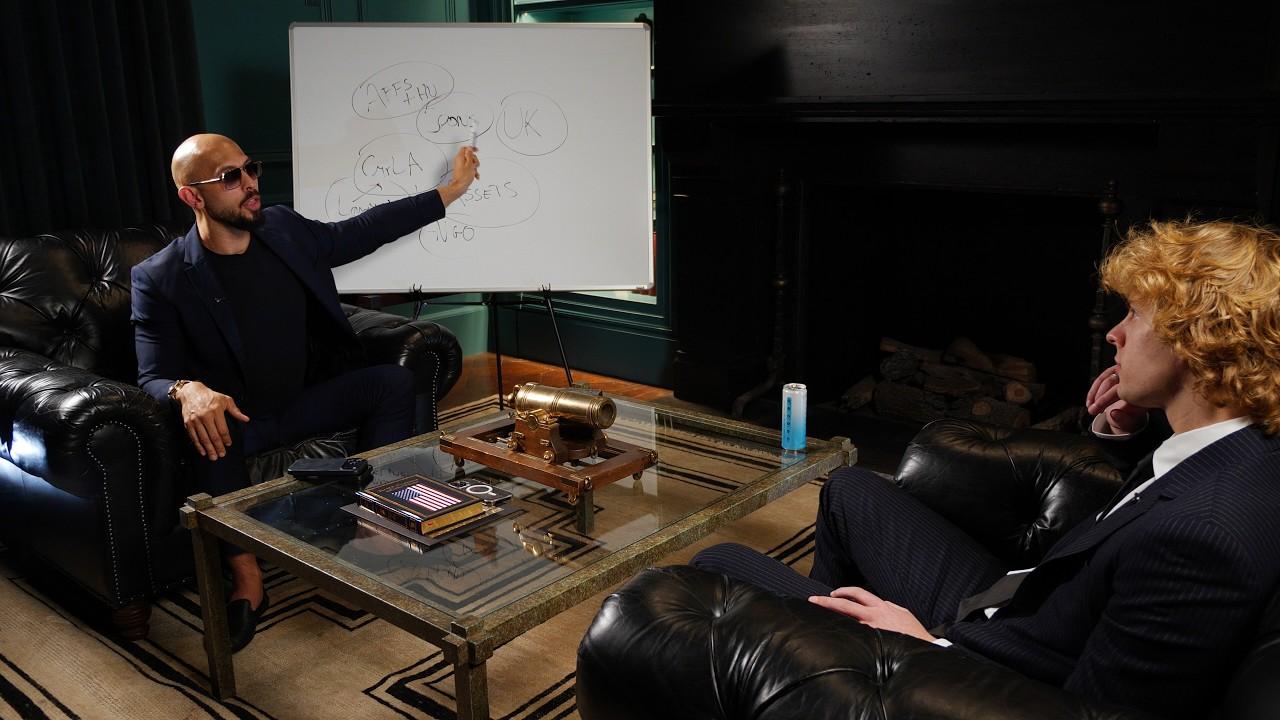 Jack Neel(NEW!) Andrew Tate's Emergency Interview Before Miami Arrest | Jack Neel Podcast
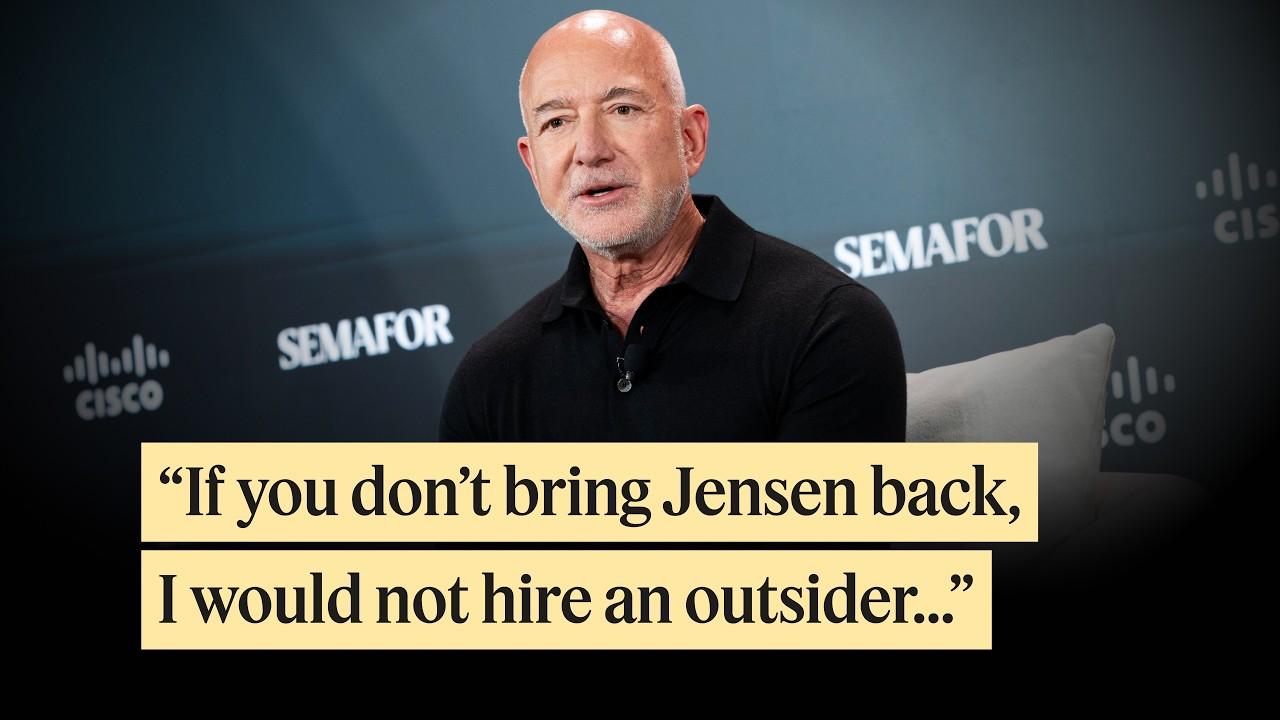 SemaforJeff Bezos on Jensen Huang, Getting Into The AI Race, & Picking James Bond
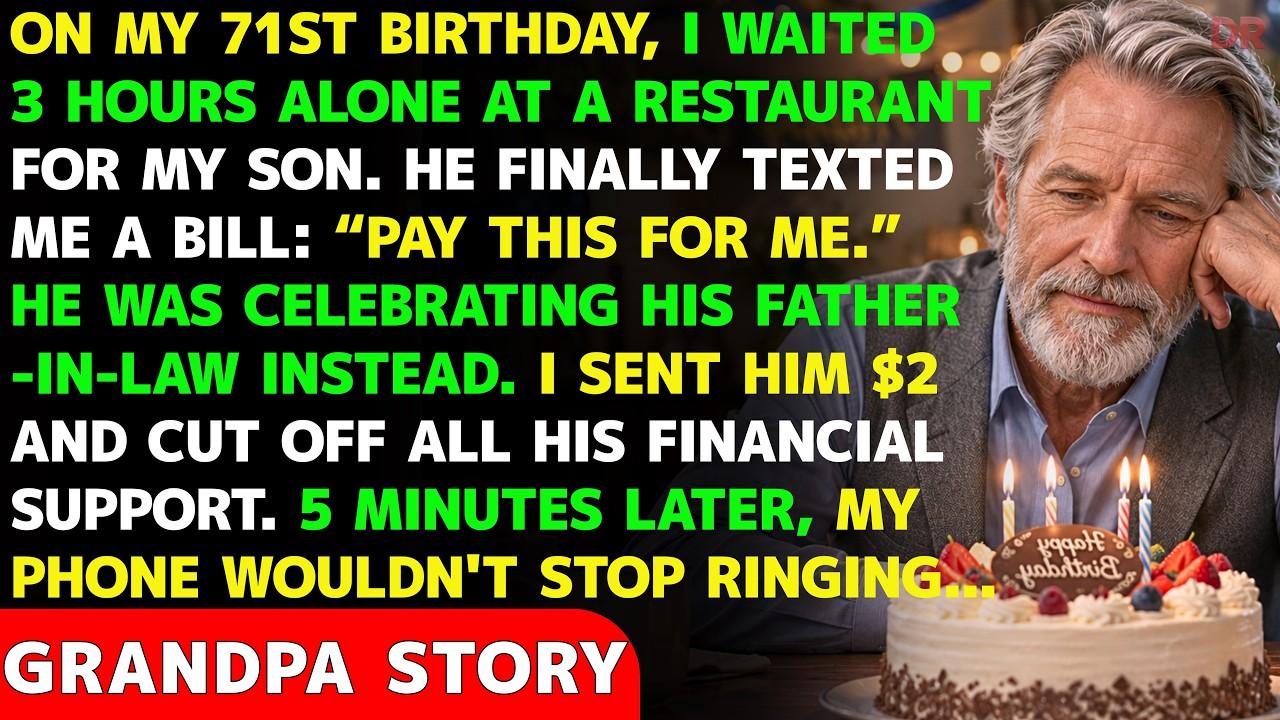 Dad’s Revenge StoriesI Waited 3 Hours for My Son on My 71st Birthday—He Was Celebrating His Father-in-Law Instead
 Jordan B PetersonJordan Peterson On Becoming An Adult
 Cortes Investidor Sardinha [Oficial]Como ficar rico nos próximos 3 anos
 Jett FranzenYour Lack of Personal Purpose Is Causing Your Romantic Obsession