Delighted to be with you in Eco Rama on Boursorama and the Fed has decided to maintain its rates between 3.75 and 4% but in its statement it now describes the American economy as strong and no longer simply as solid. John Plassard, hello, head of investment strategy and partner at Cité Gestion bank. Hello Bérénice. So, how are you doing the day after the decision? Well, listen, it's fine, I have confirmation, we all have confirmation, you said that the economy is doing very well at the moment, there are no clouds if we listen to what Kevin Warsh says or at least when we read the press release, there are no clouds on the horizon and it's quite interesting to see that this is a dynamic that is totally different from the European Central Bank which will meet in less than 2 hours now. And how exactly do you inter-interpret that ? Does the Central Bank believe that the American economy can sustainably support such interest rates? Well, listen, we see and you've noticed the difference in this robust growth, we have growth that is better than expected, it's quite incredible to say that for an economy, to say that we are accelerating much more, especially thanks to solid consumption, we have household spending which continues to support activity, we saw yesterday the results of Visa in the United States where Americans are still spending, whether on credit or not, that's another question, but they continue to spend, and then we have extremely high investments in terms of productivity and capital goods, what this means in the background, obviously, is spending on artificial intelligence, and so this contributes to improving the economic growth of the United States. You know, with persistent inflation because it's one of the two mandates of the Fed, price stability, well, we are in a situation where, theoretically, for a central bank to lower inflation, it has to raise rates so that there is less demand. And here in fact we see that demand is still extremely strong in the United States and that's not what's going to calm inflation even if it is mainly due to the rise in energy prices but we have seen in the latest statistics that it is starting to spread to other sectors and in particular to the issue of services. But one last thing is that, uh, a rather interesting thing he also noted is that he said, uh, the Fed chairman finds the conditions of interest rates in general quite restrictive at the moment. That is to say, he is not telling us that we need to raise rates 10 times in a row because it is already quite restrictive, especially on long-term rates, which the Fed does not control. However, there are two members of the Fed, Lisa Cook and Ben Bernanke, who voted in favor of a 25 basis point rate hike . Actually, they broke with it unanimously, according to the committee. What can we say about this? What does this divergence within the reflect? So first we need to call both people Lisa Cook because you know she is also under media fire since President Trump would like her to leave the Fed for certain faults that she is accused of. We're not going to go back over that. So she is particularly a prominent dissident, so there will potentially be political repercussions in this decision. The other person, Hamac, had already advocated for a rate hike at the July meeting. So she is in a I would say that it is not a a a a a clash between two parties at the Fed level, it is rather a kind of continuity, but we see that the majority of members wanted, as we say in poker, to pay to see, that is to say to stay where we are and wait for the next statistics. So obviously, we are in a fairly classic situation where on one hand we have high inflation and on the other hand, well, we potentially have a future tightening that would be considered excessive and we would repeat the mistakes that were made, particularly in Europe in 2011. So during the press conference, Kevin Warsh refused to give any indications on the next monetary decisions, which is what is usually done. And he also announced a reduction in the number of meetings dedicated to the rate starting next year, from 2027. The question is, why does he specifically want to break, let's say, with these traditions of...? For? So he would rather it be, and he said so, that's what we call forward guidance, avoiding telling the market what will happen, when the potential statistics, well, say something else. So he would like the market to adapt not to the discourse, but to the real statistics, which isn't a bad thing, in theory. Now, we need to know if these statistics, as he himself said, well, do not speak of the past, because often we have statistics, particularly some on American employment, that speak of two months prior, and many things can happen during those two months. So that's quite interesting. So why, still following this line of reasoning, why does he want there to be seven meetings next year, compared to eight this year and six in 2028? It's because he wants the market to really analyze the numbers rather than certain dissidents we just talked about who might show the market something that isn't right by saying, "Oh well, the Fed members do n't agree among themselves, so that will put more pressure on a rate hike or cut ." So they absolutely do not want that and they want to be able to react to the data without prior commitment. So obviously there is a risk, it's the risk of volatility because if we have fewer signals it causes extremely brutal adjustments in expectations because I remind you that when we look at the stock markets for example it is anticipations of what will happen. When we look at inflation expectations, we still need some indications. So we obviously have statistics, but we don't have as many statistics as the US Federal Reserve . So I would say it's a bit paradoxical because on the one hand we have a Fed that wants to be less predictable and that could become an additional source of uncertainty. So there is a kind of paradox in this desire not to talk more on the part of the Fed. So Kevin Warsh also reminded us that interest rates would continue to influence investment decisions, especially those of the giants of artificial intelligence. So, precisely, while investments in data centers and infrastructure, as we've recently discussed here on this panel, are exploding, these investments are exploding, with persistently high rates, could they weaken the financing of this? Yes, clearly he's kind of stating the obvious, but it's still important to know that the Fed is looking at this very closely and is concerned. We know that even tech giants, whoever they may be, are not immune to interest rates. We know that there are massive investments and you have talked about it on the set in recent months, as you said, data centers, semiconductors, energy infrastructure which mobilize considerable capital and obviously well if we have higher rates then the profitability is less important. So there is a profitability that is under the surveillance of investors but also of the Fed and so we are going to have, we already have for a few weeks or a little over a month, we already have more and more selectivity I would say since we have the companies which are the most profitable which are holding up best on the stock market and those which depend on financing and future financing are suffering a little more. And that's interesting, one because we knew it, two because the Fed is concerned and knows that if it raises rates too much, it can have a very important consequence on the tech leaders who are the leaders of the American stock markets and therefore could cause a drop in the S&P 500 for example. Hmm. So nine out of 10 investors anticipate a 25 basis point rate hike by the Fed at its next meeting in December. However, Kevin Warsh refuses to confirm this perspective. So, what economic indicators could, uh, let's say, still tip the scales in favor of the decision ? Well, listen, in exactly 2 hours and 30 minutes, uh, we're going to have, for example, the Fed's preferred indicator on inflation, which is the PCE. Uh, for inflation, we will also have to look at underlying inflation, for growth we will have the revision, well, not the revision, it's the first uh data on US economic growth for the 3rd quarter which, uh, according to uh, US Treasury Secretary Scott Bessent said yesterday on CNBC, it will be good, it will even be better than expected. Well, uh, I don't know where he's getting these figures from, if he has n't seen them before, but we'll have growth of more than 3% in the 3rd quarter. And that's very important because we're still in the situation we were talking about at the beginning, where we have growth that is much too strong and, and it sounds pretty crazy to say this, but it prevents, in a way, the Fed from doing its job on inflation which is too high, that is to say by removing part of the demand. And there, indeed, it is inflation that we will have to look at and, obviously also employment because I was talking about consumption before, which helps economic growth, we can imagine that if the unemployment rate goes from 4.1 or 4.2 today in the United States to 5, quite quickly, because these are figures that move quite fast, well, American consumption would be bizarre. Well, wait and see, as they say. Exactly. THANKS. Data dependency, the famous data dependency, which is so emphasized by central bankers, by the ECB, but also the Fed, let's wait and see, we're not going to tell you anything, I'm obviously exaggerating, but look at the next statistics. So, see you in exactly 2 hours and 30 minutes. Many thanks, John Plassard, Head of Investment Strategy and Partner at Banque Cité Gestion. THANKS. Thank you, Bérénice.
 Nathan NazarethHow To Run TikTok Ads For Beginners (2026 START UP GUIDE)
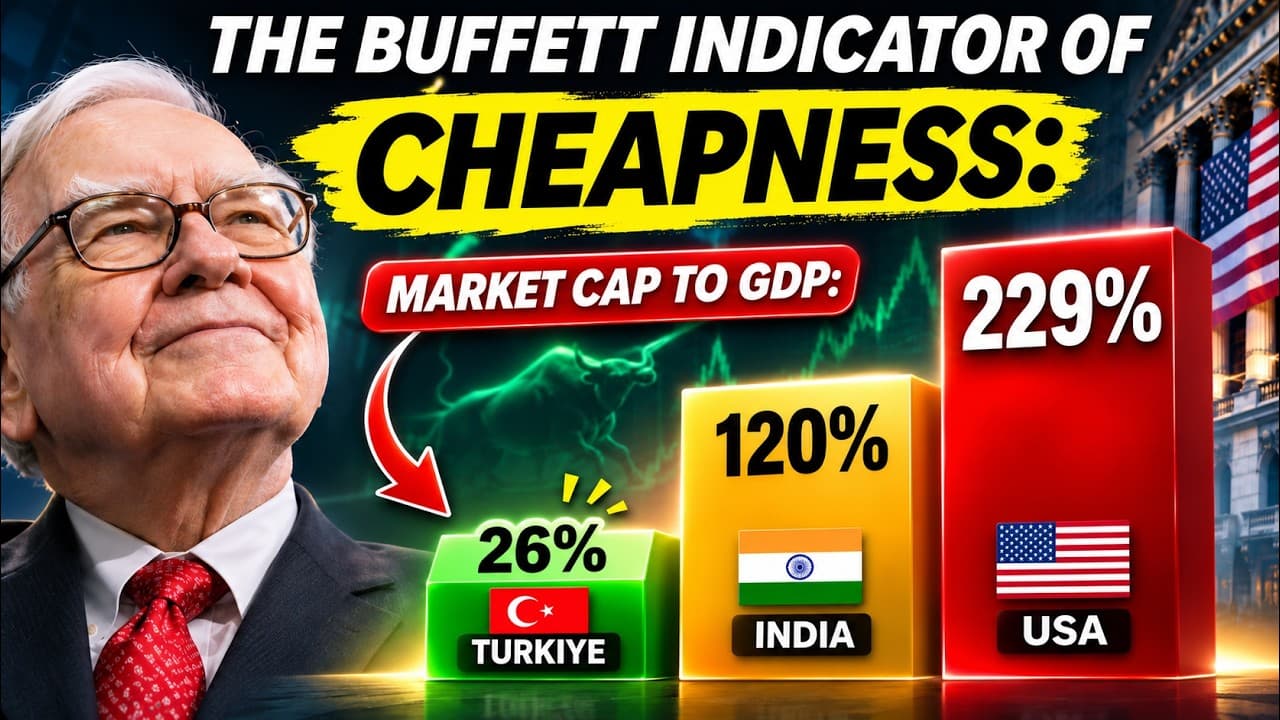 Mohnish PabraiMohnish Pabrai's Interview with CNBC TV18 on October 22, 2026
 Nikko MontanezHandmade chocolate business idea 💡 #shorts #trending #businessidea
 Predictive HistoryGame Theory #1: The Dating Game
 The Daily BeastWhy Billions Won’t Save Trump from Crushing Defeat | Inside Trump's Head
 Einfach MedizinEmbryologie - Befruchtung und Implantation einfach erklärt
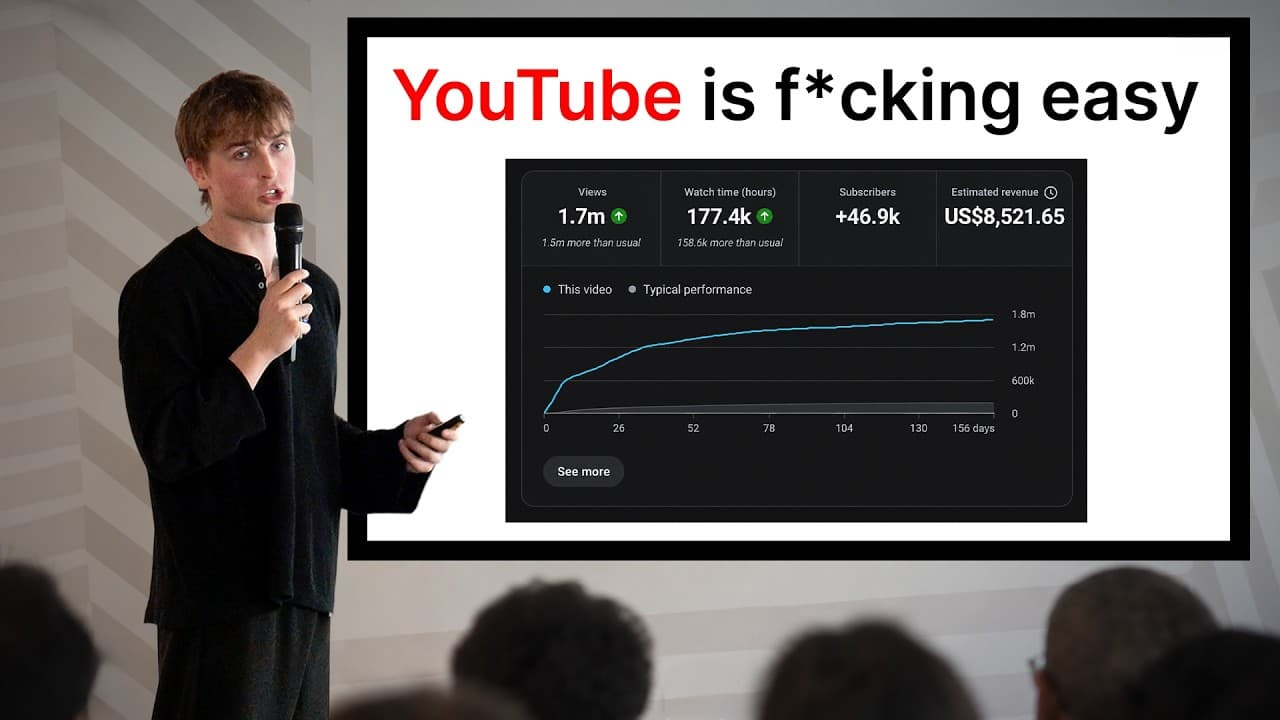 Jake TrinderThe Most Valuable YouTube Training You'll Ever Watch
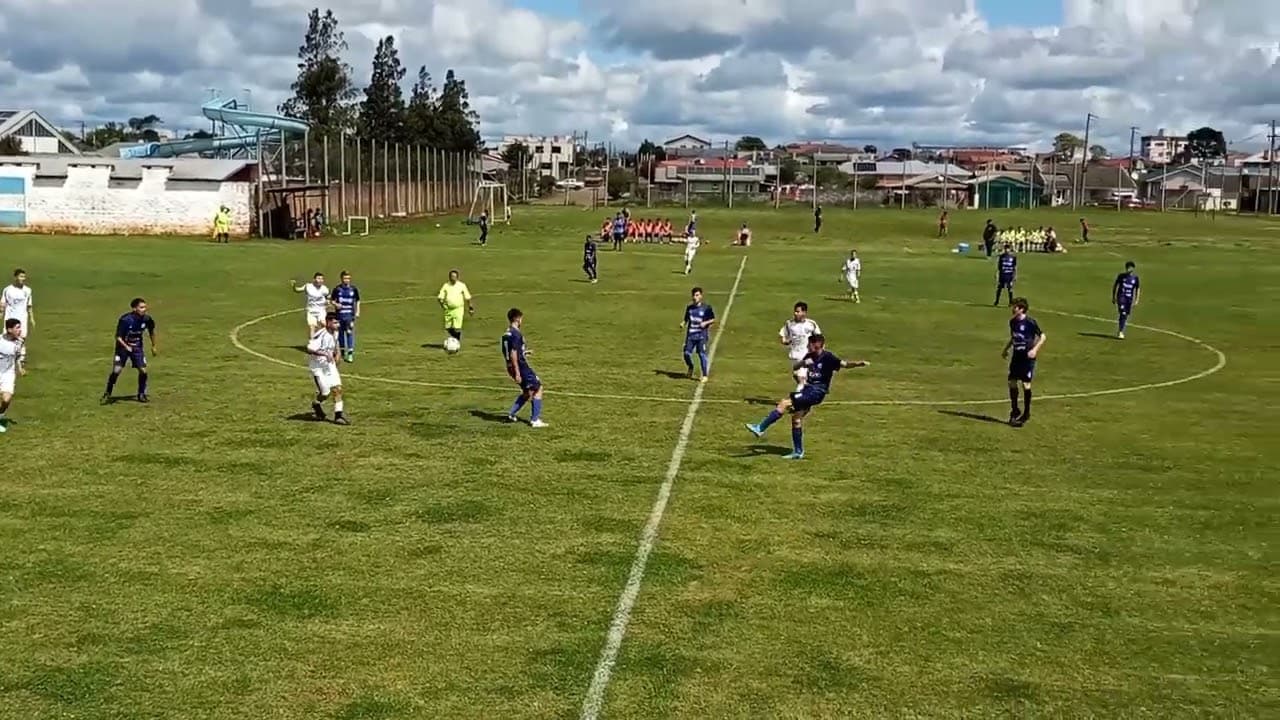 Lineker MacielGlória/AFAVA X Atlético-RS - Copa Luis Parise Sub-15