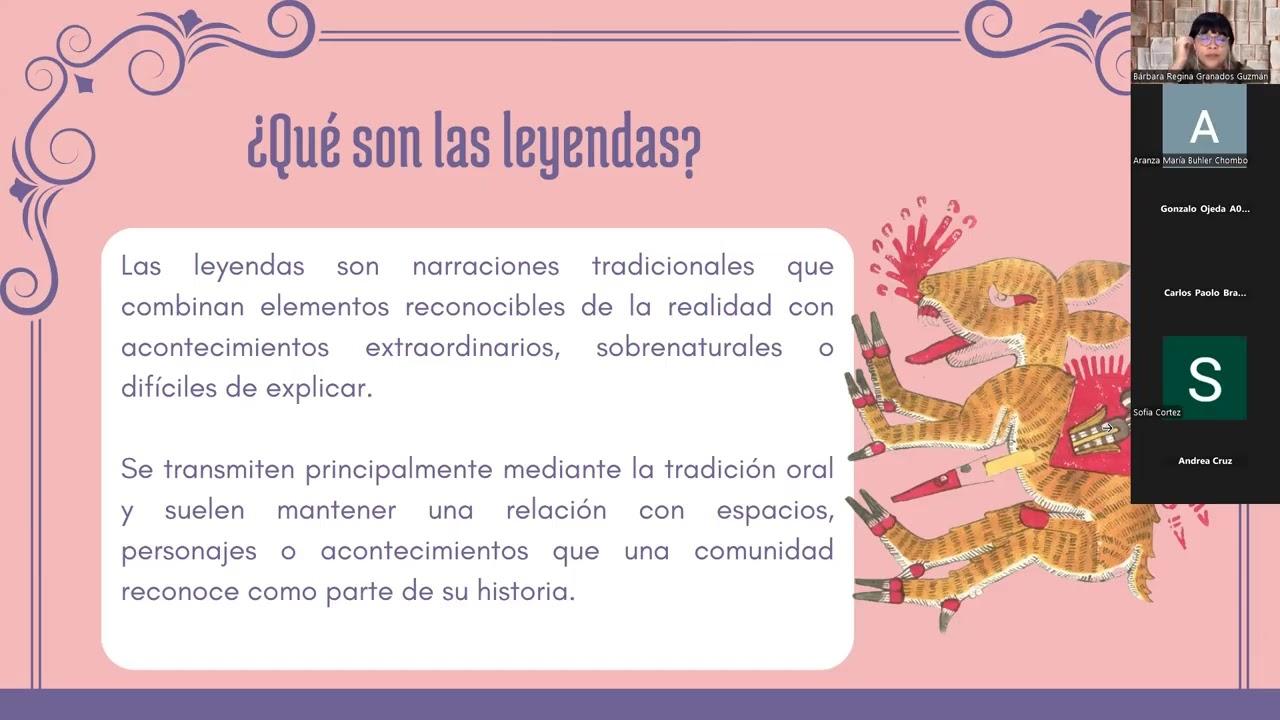
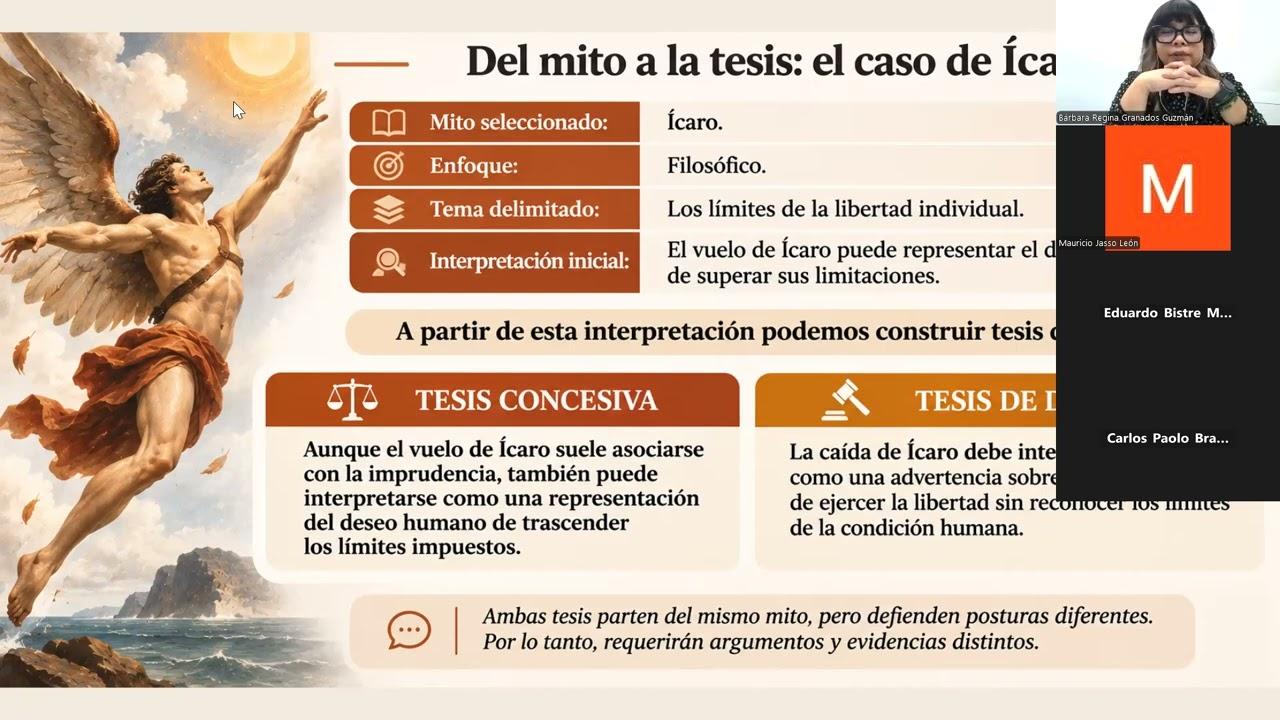
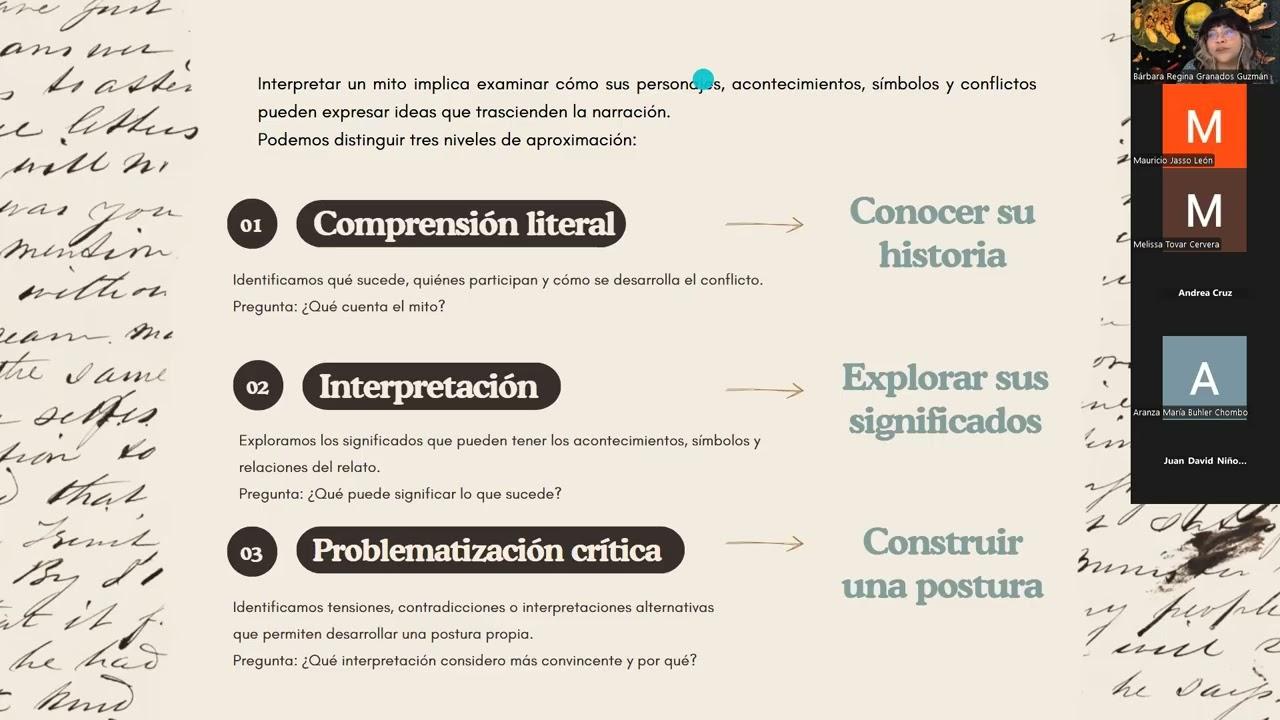
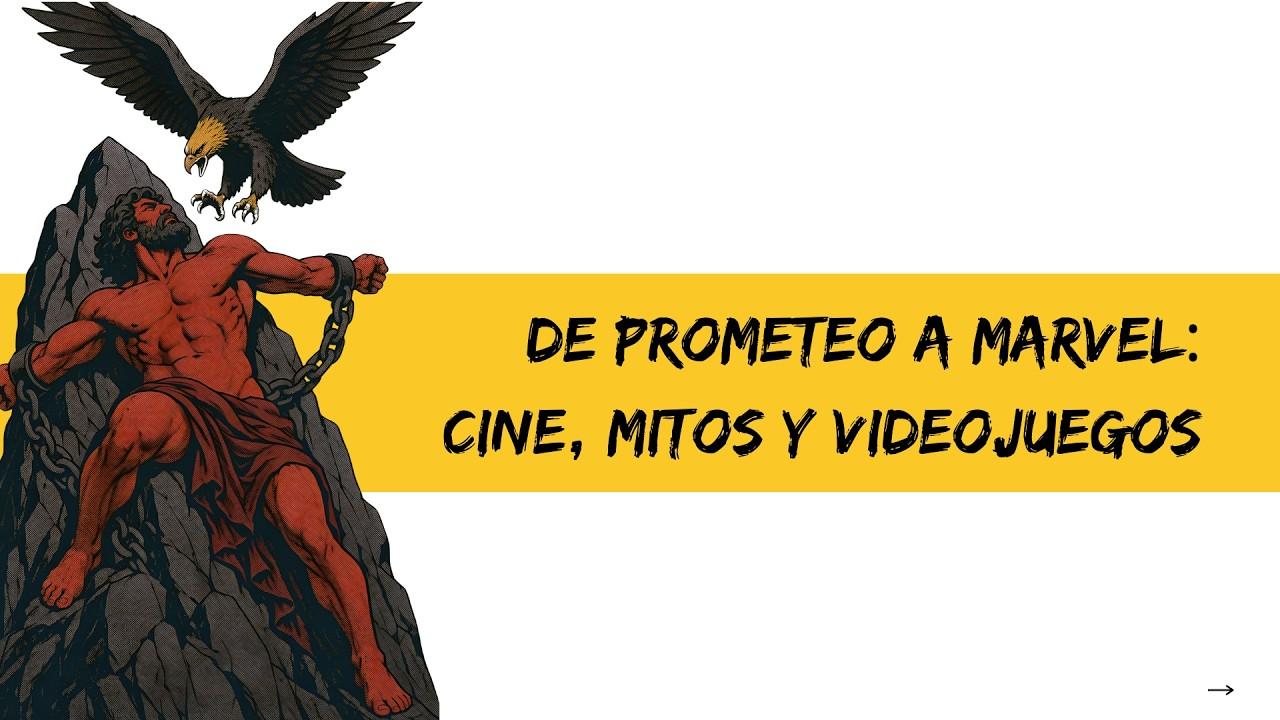
Alright, today what we're going to do is... rewrite myths, right? We've seen and reviewed a bit through these themes that have to do with archetypes, with the hero's journey, with these narrative formulas, how they are structured in different ways, how they are very flexible, how they can vary in intention but maintain the same essence, or change the essence and change the whole meaning of the character, the various levels that we can transform in the same story, the same essence of an actor, I don't know, of an actor I mean an actor of the story, not a professional actor, right? So, from a narrative character, right? So, today what we're going to do is try to put those elements into practice in the restructuring of a myth, right? Let's see how we're going to rewrite it. Well, broadly speaking, definitions, hm, the truth is that it's not so much superficial, but it's enough to work on this exercise, right? Rewriting, right? What is rewriting? Well, it's a process, a process where we rewrite a text or work to change its focus, correct errors, improve quality, modify its structure, but maintaining or transforming the original message according to the author's objective. So, if rewriting, as you can see, is like whatever it is, this rewriting of characters, or improving the story in some way , right? For example, I don't know if they suddenly stumble across this fan-made alternate ending on YouTube, right? From some movie or saga whose ending they didn't like, and then they kind of create another version of what they believe or their proposal of how the series or movie should have ended. This is something that is very common, it is very common because we all have different perspectives regarding where we want the narratives to go, right? For example, the ending of Game of Thrones was very controversial; some people liked it, some people hated it. And precisely in that sense, that's how we have to take this context for the exercise, right? Rewriting will always depend on your own perspective of what you want to convey and somehow justify in the argument of your story why you are making that change, right? That change... where does his motivation come from? You never liked where the story went, you never liked what happened in between, you never liked the character's traits, you never liked the ending. The things we want to change need to have a motivation and they need to have a purpose. It's not just a description or an edit of something that's already been built, is it? In order for us to truly have this sense of rewriting it, it has to have a specific objective, right? And that's precisely what we're going to work on today: the motivation behind writing. The simplest way, or one of the simplest ways— because it's not the only one—to approach the development of this skill, this competence, is precisely through rewriting something that already exists. That is, not starting from scratch, because that can be complex, especially for literary or narrative creation. But rewriting something that has already been worked on will allow us to start with a foundation and gradually integrate very specific elements that will give us the possibility of taking that story where I want to take it. So, that's kind of, uh, today's exercise in broad strokes . It is very important that if there are any doubts regarding this concept, regarding the function of rewriting in narrative, they express them so that we can resolve them before starting to work, right? We're going to look at some crude and general examples, just to try to make this issue of rewriting a little more sense to you . You're going to delve a little deeper, but to give an example, we have these scenes. We have different versions of a myth. Here I chose the myth of Prometheus, because it is one of the most well-known myths that we have already reviewed a lot in class and we know more or less what it consists of, where it is going, what the essence of the character is, what the essence of the plot is and this will make it easier for us to understand these variations. So, we'll start with the original story, right? He attempts to steal fire from the gods to give it to humans and is punished for defying divine authority. Later, a rewriting of that same myth would be a scientist unleashes an artificial intelligence whose knowledge was reserved for large corporations. Therefore, she is condemned to remain disconnected from the world. Okay? Mmm, we're going to reflect on that now, and we're going to read. Let's read the first three. Okay, we'll continue later. A hacker steals an algorithm capable of predicting the future and shares it with everyone. In doing so, he discovers that he too has destroyed the freedom to choose. Okay. The latter is very metaphorical. So, here's what I want to ask you. First, can someone do some research online to share in class? What is the meaning of the myth of Prometheus? What does our imagination tell us , right? Information from the internet, general knowledge regarding the myth of Prometheus. That's why we're doing this search; it's not because I don't trust that you can identify it without any reference, but we want to see what the starting point is that we have in general knowledge. So, if someone could help me, please, to search online what the feeling is... Ah, we have Jimena. Forward. Yes, he says that the meaning of the Prometheus myth is that knowledge, freedom, and progress come at a price, but they also represent the human capacity to overcome its limitations. Mhm, very good. That's it. Thank you very much, Jimena. I also saw here that Juan David participated in the chat. Uh-huh . His punishment plus the consequences of defying authority and the responsibility that power entails. That's how it is. Very good. Precisely this general explanation, this universal explanation of the myth of Prometheus is, uh, the main function attributed to the myth, uh-huh. Like this issue of dissent, this issue of freedom, but also the consequences of going beyond the limits that are set, right? As the limit of the divine order, of the natural order, etc., etc., right? So, in this class we've reviewed different ways in which we can interpret the myth of Prometheus, right? As someone, uh, as a benefactor to humans, as someone, a rebellious character who questions limits, seeks freedom, but we can also see him as a metaphor for what happens when one exceeds their limits, right? So, here, uh, what we're going to do now is question these stories that we saw earlier. What elements are consistent across all three versions? Check out this question. I'm going back to the narratives. What elements are consistent across all three versions? Speaking, of course, of the concept of this functionality that we saw, of the myth of Prometheus. What do you think? What element remains in all three versions of the myth? Go ahead, Pablo. Oh, sorry. Ultimately, all knowledge has a consequence; that is, the lesson is that no matter what kind of knowledge it is, every action tends toward a consequence, and it will be up to each individual to deal with it. The metaphor of the consequence of the transgression remains, doesn't it? Aelina, go ahead. I feel more, well, uh, from what I remember, Mhm. I don't remember the name of the first one, but he kind of shared his knowledge with others and looked out for the town. And in, so to speak, in the last one I read, it says that he shares them with everyone, so I think that's an essence that remains, it's already in that version. Mhm. I have to take something to free him, then like the liberation of knowledge, of liberation. Yes, not to keep it for himself, but also so that, so to speak, the town or the city also benefits. Mhm, very good. Thank you very much, Elia. Hey Vicente, go ahead. Ah well, I see from the three versions that fire, as used in the first version, can also be like fire itself, or technology or knowledge, right? Because in all three stories, fire doesn't just represent heat or light, but also technological capacity and the ability to use that technology as progress, and thanks to that, humanity can move from a somewhat backward state to a technological development, a development that can help it transform its environment. Excellent, Vicente, because even in the original story, fire is not just fire. Fire is a symbol, a symbol of progress, of knowledge, of being able to survive, isn't it? Humanity would n't have been able to survive if they hadn't developed the ability to create fire, right? And in this mythical tale, that ability is granted thanks to the sacrifice of Prometheus. So, yes, it's important to point out that in rewrites and adaptations, and in original myths as well, things don't have to be literal, right? We have a lot of symbolism, and that's the beauty of writing, isn't it? And from narrative, we can use metaphors, analogies, symbolism, and that helps us to enrich the depth of our stories. Isaac, go ahead. Yes. Um, what I saw that the three different ones share is that the central action always involves the transgression of a boundary, and mainly speaking of a boundary of, uh, like a dome of power, of a controlling authority, that is, the Greek gods, the corporations, and the owners of the algorithm. Aha, like rebellion with a purpose, right? With the purpose of achieving something for the benefit of a greater good. That's a very interesting aspect as well . Thank you so much for mentioning each of your contributions. Let's move on to the next question. Which I think is already pretty much implied in what we're talking about right now, isn't it? Vicente also highlighted that quite well. The fire must literally be fire to preserve the meaning of the myth, because we have already seen that it is not; fire is a representation, it is a symbol. And precisely this characteristic of being able to use symbols as representation, as in the second narrative, the release of anger, and in the third, an algorithm capable of predicting the future. So, they're like representations of something that will spring up, that when released can bring about change in a larger group of people, in a society, in an era, in an environment, and so on, right? We can make it as specific or as open as we want. And precisely these are these benefits, right? The narrative exercise is about rewriting, that's what we're going to analyze today. Where would you take the myth of Prometheus? Where would we look, or someone like you might imagine where you could take a narrative of that style, right? Here we are going to review and revisit concepts that we reviewed in the previous class. For example, is it the previous one or the one before that? I think it's the previous one. This, but it is these strategies of editing or restructuring, of adjustment, of modification, updating, however we want to see it, that can serve us for today's session, to do them or see them and give a little more meaning and order to the rewriting of our myth. So, we have different strategies. We remember that the update, well, is a change, well, kind of superficial, right? Time period, setting, physical environment, objects, etc. Here are some examples, like one from a classic myth: Narcissus becomes obsessed with his image on social media. In other words, imagine that the update is maintaining the same sense of the myth, but taking it to a more contemporary setting. Then we have investment, where we can change roles, values, perspectives, and so on. And an example of this is when Medusa tells her story and questions who the real monster is, right? Let's also think about examples we've already reviewed in class, like Maleficent, right? Maleficent was always presented as a villain, and recently we had a couple of movies with a narrative that explored the character more, and the purpose of that narrative was to justify Maleficent's hardening, or to a certain extent her evil, with a story that had made her so tough, right? Uh, the reinterpretation, which is where we change the heart, the core, do you remember that image with the three levels we presented? Resignification, then, is changing the essence of the character or the conflict, right? An example of this is that Icarus, for instance, represents recklessness, from the incident where he was told not to fly so close to the sun because he could get burned, his wings were made of wax and he didn't understand, so he keeps going up and up, trying to reach that limit and the consequence is that he falls, right? So it becomes a symbol of resistance, right? These are like reinterpretations of the same story. After a change of outcome, which we didn't review in the previous class, but the truth is that it's a strategy that can be useful to you and it's quite simple. What does changing the ending mean? Well, it means changing the consequences or the final message, right? Often these mythical narratives carry a moral, a reflection, or a lesson integrated within the development of the stories, so what happens if we change that message? What if, instead of being a message inclined towards personal reflection, it's a message inclined towards the pursuit of power, right? He supports it, and so the message isn't a reflective and good message that seeks introspection, right? Rather, it seeks to encourage other types of human feelings or motivations that could be considered negative or evil, right? That's the great thing about exercise, being able to take it in the direction we want, right? Here, for example, is a fairly general example, but Orpheus decides not to return to the underworld. In other words, Orpheus decides not to go and rescue his beloved and simply continues with his life. What would happen? Well, that's it, right? Orpheus would simply be a different person. And the story would obviously have a much, much simpler ending, wouldn't it? Um, it's important to mention that any decision and change we make in our narratives and characters will have a consequence and will open up new paths. The important thing here is to justify those paths, that those paths make sense and that in the end, when we see the whole story together, we can be able to glimpse it and justify it on its own, that is, that we don't have to explain additional information, but that the story itself can be explained, justified and have sufficient meaning, right? So, now we're going to do a reinterpretation. We're going to Canvas, and I want to share the link directly through the chat. Very good. Okay, so what are we going to do? I'm going to explain the activity a little bit. This activity is individual; we're going to do it right now during class. And the first thing we're going to do is select a mythical narrative, right? It can be any myth you want: Greek, Roman, Norse, Aztec, Hindu, from all the ones we 've reviewed in the course, or if you have one that you know more specifically, that you like, we can use it. So what are we going to do? We are going to rewrite that myth in the format of a micro-story, a micro-story has the characteristics of being a short, concise story, and for this exercise we are going to use 300 words. And we're going to use artificial intelligence to help us with this exercise. Here I want to explain a few things. This exercise that we are going to do today is the beginning of a series of practices along with a little bit of what we did last class, but from this point on it starts to be much more focused. It's a series of exercises so that you can experiment and develop this sense of writing a little more, because the evidence will require that skill, right? So, let's think that all these exercises we're doing will contribute to your ability to restructure evidence one, right? It has a large percentage value within our course, so let's take these activities as an exercise that is helping you prepare for evidence one, that is, yes, ha ha ha, pretend that from today we are going to start studying for that subject. So, what we're going to do at this point, as it's one of our first approaches, is use artificial intelligence to make the rewriting and creation process simpler. But we're going to approach the point where, within the evidence, AI can't be used for certain things. So, let's take that as a starting point, which is why we're going to use artificial intelligence, but we're not going to use it in a careless way. What we're going to do is, uh, once you select the myth you want to work on, we're going to go to this link over here. I'm going to ask you to log in and confirm if you can see this screen in your browsers, or if it opens for you, please give me a thumbs up to confirm that you can log in without any problems. Okay, okay. And it opens, miss. Perfect, thank you very much. So, what we're going to do is the following. We're going to use this site which, as you can see, already has the components that the micro-story requires, right? Here's a bit about the original story, what the central conflict is, the symbol or element you want to preserve, the transformation, what the contemporary context is in which you want to take it, what rewriting strategy you want to try, the current theme you want to explore, and a series of reflections, as well as any extra comments or details you'd like to have considered. This page will help you create a prompt so that, once you have it, you can copy the prompt here, take it to your preferred artificial intelligence, and then ask it to create a 300-word micro-story, right? Once they have forgiveness. Once the micro-story is ready, the next step is an individual review. And here I do ask you to do it as honestly as possible, yourselves, right? What are we going to do? Once we have the text, we'll try to check that it has those characteristics of a micro-story. Brevity, that each word has a useful function. Since we only have 300 words, they all have to be carefully considered, right? And they all have to fulfill a function. The ellipsis, which is this function of not everything being explained. Ellipsis is like this information that is said between the lines, that is, that is not explicitly stated, for example, you don't say, "The character opened the door and looked surprised," right? So, the ellipsis could be that "Juan looked surprised," right? So, this context is kind of left between the lines, not explicitly stated, but the reader uses it to infer things that happen in the story, right? Then we have intertextuality. Here I have a little error, which is where the story can rely on prior knowledge of the myth. That is, if I'm talking about the myth of Prometheus and I already understand the myth of Prometheus very well and I know that the myth of Prometheus implies rebellion, it implies the transgression of limits, it implies divine punishment, but it can also imply everything we talked about a moment ago in a contrary way in a reinterpretation, well, I can use that duality within the same myth to use it in the motivations of my story. After the presentation of the conflict, right? A recognizable tension, even though it unfolds in just a few lines. And in the end, well, a significant ending, a revelation, a reversal or a closure that transforms the reading. It's going to be important here that even though the exercise is with artificial intelligence, please try to give your story its own style, right? Let's not make it a generic one, I mean, it's only 300 words, so let's put some effort into it , shall we? And here in the last part of this plenary session we're going to share the contributions, okay? Uh, we're going to share, sorry, the stories and we're going to count this as double participation. So, here's something to make it a little more attractive. As you can see, this is not evaluated, but, as I said, it is a preparation and an exercise to begin with the study of intention, okay? Are there any questions about this before we begin? If everything is clear, then thank you very much, thank you very much indeed. Alright, let's get started. We'll give you 20 minutes to work on all these parts, from 15 to 20. Right now, when it's 15 minutes, I'll ask you how we're doing, so we can get as many people involved as possible, okay? I'm going to put a timer here and I'll be keeping an eye on things . Just in case there's any doubt. So, they can start their Miss now. individual work. Yes tell me. Yeah? Can I leave a little earlier? Okay. Can you leave a little earlier? I'll let you know as soon as I finish. Ah, okay, yes, perfect, of course. Yes. The message is the same. And raise your hand. That's where we have to start. Of course. We have 4 minutes left. 3 minutes. Ready. Are they finished? They lack time. How much of a grace period do we have? Does it have to be 300 words or can it be less than 300? Uh, the closest to 300. I mean, for example, if you did 260, that's fine. It's just like an extension of what micro-stories usually have, but since it's not going to be reviewed, we're not going to check it, so as long as it's similar it'll be fine. Okay, let's start the presentations with Alexa who has to leave early, go ahead Alexa. Would you like to read your work to us? Thank you, miss. Yes, well, I mainly used the update and also the reinterpretation and I chose the myth of Narcissus. Yes. And the name of my myth is Behind the Filter. Narciso was the boy everyone knew on social media. Her photos had thousands of likes and she always tried to show that she had a perfect life. Little by little, she began to worry more about how she looked in photos than about what she was actually experiencing. Stop replying to your friends, compare yourself to other people and even pretend to be someone you weren't to please others. One night while walking near a lake, he opened his cell phone camera to take a picture. After several attempts and filters, she found one she liked and published it. She waited for the likes, but they didn't come as she wanted. Annoyed, he deleted the photo and tried again. As he bent over the water, he saw his reflection. There he was, unfiltered and unedited , looking back at him. For a moment he stared at himself, trying to find in that image the boy everyone admired. The wind stirred the water and her face disappeared. Desperate, he tried to look at it again, leaning closer and closer until his cell phone fell into the lake. Narcissus kept staring at the water, hoping to recover his reflection, unaware that he was losing much more than his image. The next morning, her latest photo was still accumulating likes. His friends wrote to him asking about him, but no one received a reply. Ready. Uh, thank you very much, Alexa. Tell us what was the intention you wanted to reflect in your story and what strategy you used to rewrite it. Um, I wanted to give a reflection on how sometimes we worry so much about showing a perfect version of ourselves that we sometimes forget our principles and get lost in that cycle of comparing ourselves to everything we see, especially now in these times of social media, and the other question was... What techniques did you use for rewriting your story? Update. Updating and updating more than anything and reinterpreting what it was, well, I feel that in the original myth it also has another meaning. It's not just his reflection in the water. OK. But here, we want that version of ourselves without so many filters, without seeking perfection. Very good. Thank you so much, Alexa. Oh, thank you, miss. Thank you, Alexa. Thank you. for your commitment. See you later. Okay, Edna, this way, come on in. Yes, hello, miss. Good morning. Well, I chose the myth of Icarus and Daedalus. This and also the strategy I decided to use was that of reinterpretation. Okay , so I'm going to begin. It's called Wings of Noise. In Northern Crete, nobody blinks without someone noticing. The streetlights throb to the rhythm of your pulse, and the bathroom mirror suggests you smile a little more. Anyone who breaks a rule will not go to prison. He receives his memories edited on a loop until he forgets which one is the real memory. Daedalus had designed a labyrinth, so he knew that you couldn't get out of it by walking. For months he fabricated pens, false identities, invented routes, other people's heartbeats stuck to his profiles with a deciphered wax that didn't last long. They were like wings of noise so that the algorithm, when searching for them, would find a flock. "Fly through the middle," he told his son. "If you go too low, the sea of the feed swallows you and you obey again. If you go too high, Helios reads you." Helios is the central server, the tower that never sleeps. One day they took off in the early hours of the morning and for the first time the cameras mistook them for absolutely nobody. Icarus felt the vertigo of not having a name and it wasn't enough for him. He did n't want to escape, he wanted to enter the tower, Helios, and erase his record, his father's, and everyone else's. I wanted people to be completely free, without leaving a trace. Then it went up and in the first firewall the wax began to melt. Its feathers fell off one by one. The identity of Lima, which was the borrowed pulse, the route to the south, and then in the end only its clear face remained, illuminated as never before. Daedalus didn't see him fall, he saw him everywhere, on the city's screens, watching his looped childhood smile when the mirror asked him to. It continued flying at a medium altitude, but more slowly, and it was also crying because the system, because it wanted the system not to register the anomaly. It wasn't absolute freedom, but it was theirs, and it was enough to get others out of that same system. Um, what was your intention, or where did you want to take the story with the modification you made? Well, originally, I mean, I also made a mix of other movies that I like, other dystopian movies where they also use technology to torture people, to keep them within the system. Uh, but I wanted to reinterpret the story where a person seeks, like in the myth of Icarus and Daedalus, freedom, but obviously in the original myth, the wings end up melting and in the end he falls. Uh, here I wanted that freedom, or that search for freedom, to have an intention of giving that freedom to others as well, right? That they were inside the city and that all their memories, all their actions were being collected to keep them in that slavery or under that systemic oppression. And well, yes, that was what I wanted to convey, that kind of reinterpretation that sometimes people don't just seek freedom for the sake of it , but because they are looking for something beyond that , something more transcendental, and also, in this case, something that transcends the freedom not only of him, but of other people in the city. Thank you very much for your participation. Let 's move on to Isaac now. Yes. Well, I applied the update technique. Uh-huh . I chose the myth of Icarus. Uh-huh . And well, I titled it, well, we titled it Artificial Intelligence and Me, the Wings. Uh-huh . Hey Daedalus wrote the algorithm in three nights with coffee next to his keyboard. When he finished, he handed the laptop to his son. This will help him grow. But listen to me carefully. Neither that no one sees you, nor so much that the exposure consumes you. Icarus nodded without looking up. I was already looking at the counter. 1,000, 10,000, 100,000. From the 14th floor I could see the city below, a sea of lit windows. His dad would write to him, "Eat something, go to sleep, slow down." Icarus left them on read. One million, another video, faster, louder. Two million. She stopped going out and answering calls. He slept with the phone on his chest, warm as a feverish forehead. If a publication stayed at 40,000, the room would feel too small. The night he reached five million, he opened a live stream and didn't close it for nine hours. The chat was running so fast that nobody could read it anymore. Among the hearts, someone wrote that he looked bad, another that he should stop acting. At four in the morning, the camera showed him his own face, with dark circles under his eyes, cracked lips, and a smile that was slipping away. He tried to say the phrase he always said, but he couldn't . The algorithm that never failed kept pushing the transmission. Four million strangers watched Icarus fall from his chair. Daedalus entered at dawn with the spare keys. He found the phone on the hot floor and next to it his son unable to get up. The counter on the screen kept going up. The only message asking how I was had been on read for 3 days . What a great result. Very good, Isaac. Tell us what you wanted to reflect or what your intention was when you made the adjustment you made. And well, I mean, a concept that I wanted to introduce here is, I don't know if you've ever heard of what's called doomscrolling. Yes, well, I kind of wanted to reflect that and also the need that many people have right now to expose themselves on social media, you know, to want to get attention and approval from others. Very good. Thank you very much, Isaac. Very good exercise. Okay, let's go with Monica now, go ahead. Monica. I ca n't hear you, it's like you keep unmuting yourself , but I still can't hear you . Very good. We'll be right back to you. Vicente, go ahead . Oh yes, teacher. Uh, I chose the myth of Romulus and Remus, but now as something more modern. Okay , there it is, if it's not called Silicon and Blood Chains. I do n't know why I gave it such a strong, but dramatic name. On the 40th floor of the Avalonga tower, the air smelled of new carpet, cold coffee, and Amulio's stale ambition. For 20 years the tycoon devoured the companies after dispossessing his own brother, Numitor, leaving him ostracized and forgotten in a luxury retirement home. Amulius wasn't looking for riches; his addiction was absolute control, that daily overdose of his subordinates trembling after a phone call. Romulus and Remus, raised under the dull noise of the teeth of the periphery, interrupted the board meeting, not with swords, but with an encrypted hard drive , having inherited the eyes of their grandfather and the stubbornness of the street wolf that saved them from abandonment. When the file was projected, the giant screen spat out the evidence: illegal transfers, forged signatures, and the slow corporate poisoning in which Amulius ruined his brother. Before the silent investors, the tyrant felt the weight of sudden withdrawal. Losing power was like being left without air. The high blood pressure broke his chest before the police arrived; the fall in his stocks was his real heart attack. With his dignity restored, but his hands worn out, Numitor returned to the office only to sign his last act of authority. With the shadow, he bequeathed to his grandchildren the remaining seed capital and ownership of some commercial land in the financial district of Lazio. Romulus gazed at the view over the skyline. He did not seek to avenge the past, but to build a new empire on its ashes. That's where Romanic was born, the cybersecurity startup that would soon subject Wall Street to its own rules. And well, what I wanted to understand is how power is like a self-destructive addiction, right? The main message revolves around the nature of modern power, like large corporations and CEOs, rather than how it used to be, like kings and such. Now, like the billionaire businessmen, power is no longer just a position, but also a drug, and justice is not only revenge, but also restitution and creation. Very good. It turned out well, the exercise was really, really, really cool and it perfectly manages to represent this metaphor of the symbolism of current power. Very good, Vicente, very good exercise. Hey Monica, can you hear me now? Yes, now go ahead. Who knows why he had problems? But anyway, my myth is that of Orpheus and Eurydice and the strategy I used was investment. The title of the myth is The song that is no longer ours. The neurologist gave her a single rule, delivered as if giving bad news: don't force her to remember, let her come on her own. Orpheus went down to the third floor of rehabilitation like someone going down a basement, with his guitar on his shoulder and his pulse in his throat. Eurydice was alive, but behind her eyes there was a loose wire in a dark house, the motorcycle, the traffic light, the accident. He knew that , she didn't anymore. Every afternoon he played the song from the first anniversary. Eurydice closed her eyes and her fingers followed the rhythm on the sheet. He believed for weeks that music was a bridge. One Thursday the physiotherapist opened the long corridor, the one that ends at the exit. Today he walks without support, you go ahead and don't turn around. So that she doesn't feel like they're watching her, waiting for something. Orpheus walked along playing softly, behind her dragging steps, each one a victory that did not belong to him. He wanted to turn around, he wanted to check if his name had appeared on his face. He clenched his jaw and continued without looking. Upon reaching the door, the footsteps caught up with him and passed him. Eurydice stopped under the streetlight, humming the melody as one hums something heard on the radio, beautiful, foreign. Did you compose it? Orpheus' fingers loosened the guitar neck. It was a long time ago , he said, for someone who wanted it. She smiled politely, like a newcomer, and walked out onto the sidewalk alone. He stood on the threshold, with his guitar silent, and let her go without asking her to be who she was. How beautiful. I want to see the movie. How lovely, very good, Monica. Hey, tell us what you wanted. What was your intention in this story? Well, I wanted to kind of reverse the story, to see what would have happened if Orpheus hadn't actually turned to look at Eurydice, but obviously the context here is a modern one, right? It's just that in modern life, and well, here the meaning is that it's also one of the difficult parts of love, that well, it doesn't always happen, sometimes it happens, well, loving someone also implies accepting the person they are becoming and not clinging to the person they once were , right? So, the person you're in love with now won't be the same in the future, right? And that would be the part, accepting it. Very good. Very, very good exercise, Monica. Thank you so much for sharing. Let's move on to Amy now. Forward. Yes, well, I chose the myth of Pandora and decided to update it to our reality, because where, I mean, more or less where social networks store a lot of personal information. In my story, the box becomes like a digital archive containing people's secrets. What a great dad, what a great dad. So, so, well, oh. Mine is called The Last Notification. And well, it all started with an anonymous message. Do you want to know what everyone is hiding? Pandora, a 19-year-old college student, received a file called box.zip. Below was a warning that said do not open. She thought it was a joke, however, curiosity got the better of her. When he opened it, his screen was filled with private conversations, deleted photos, and secrets that no one had dared to reveal. He recognized the names of friends, teachers, and even family members. Suddenly, his cell phone started vibrating nonstop. The secrets were publishing themselves. Within minutes, social media was flooded with accusations, friendships ended, and thousands of people began attacking each other. Pandora tried to delete the file, but every time it deleted it appeared on another device. Desperate, she closed the computer. The damage had already been done. Hours later, when the notifications finally stopped, he found one last folder on his desktop. Her name was hope. Upon opening, only one question appeared. What if everyone could see what you're hiding? Pandora felt her heart stop. Below was a button that said publish. This time he decided not to touch it. It's kind of , well, it was the best thing I could think of right now . But the analogy is cool because the Pandora metaphor fits really well, right? Yes, yes, yes. Very good, Amy, I thought the exercise was good and you explained your emotional state at the beginning, and I think it's reflected very coherently. Thank you very much for your participation. Thanks, Win. Hey Ariana, go ahead. Yes, I based this one on the Odyssey and it's called Sculpted Lives. Ulysses inhabited a sea of reflected echoes. Around him, the daily tide carried siren songs. Lives sculpted in marble. Perfect, flawless bodies and happiness displayed like pieces of paper. They were all sailing towards the same uniform island, molding their faces to fit the gaze of others, forgetting that true shipwrecks do not occur in the storm, but in obedience to the mold. For years, progress meant seeking the approval of invisible shadows. The journey was a labyrinth of mirrors where every step depended on the muffled applause of the crowd. To give in to the current, to become just another one in the statuary of the norm. It seemed like the only refuge from being devoured by the loneliness of the monster of difference. But that night the joke turned into a burden and the background noise unbearable. Ulysses closed his eyes and let go of the moorings of other people's judgment. For the first time, after the surge of murmurs, he heard the earthly pulse that beat beneath his own feet. He untied his will from the mast of expectations and set off blindly into the cold of the night, where the light did not come, does not come from where I am alienated, but from the courageous act of recognizing his own footprint. Ithaca was not a destination on the map, it was the courage not to fade away in the reflection of others. Okay, Ariana, tell us about your motivation, how you made your analogy, and what you wanted to convey. Yes, okay, I wanted to preserve this central conflict of the obstacles that life throws at you and I gave it this reinterpretation and also a bit of updating, since I wanted it to be based on current life, where with so many social networks there are many stereotypes that still exist, but that people simply put their lives on social networks as something that is not, but more and more stereotypes are simply created. Perfect, thank you very much, Ariana. Let's move on to Ana Paula. Hello, yes, I am going to present the myth of Icarus, uh it is called A little further up and I focused mainly on updating. Okay. His dad had told him that he didn't need to take risks to be seen. Eh Icarus placed the cell phone on the rooftop and started the transmission. At first there were 20 people. When he climbed onto the water tank, 200 arrived. As he walked along the shore, 2000. The comments advanced so quickly that he could barely read them. "That's it!" his dad shouted from the stairs. Then a donation appeared that said, if you jump to the other building I'll make you famous. Icarus calculated the distance; it seemed short on the screen. He opened his arms, and for a second he had the whole city below him. The cell phone continued transmitting from the sky. The next day, for the first time, his name was trending. And that's it. Very good. It reminds me a bit of this, you know, this idea of do something and there's a reward, someone worthwhile. Yes. It kind of reminded me of that. What was your intention, Ana Paula? So, how did you want to reflect the myth in the update? So I adapted Icarus's desire to fly to the search for recognition on social media, you know. Well, it represents the height it reaches, and fame works like this , so that you can take risks, and so, well, I mean, how much can you do for fame? And so he seeks recognition, although in the end, well, it doesn't have any purpose, well, I mean, sometimes you don't enjoy it anymore, I mean, it's mostly something very superficial. Very good. Perfect. Thank you so much Ana Paula for sharing your exercise. Let's go with Kiri. Yes, miss. Well, I did a reinterpretation of the myth of Prometheus. Which, well, is the one we were just reading. He says, the one that not even the gods could extinguish. Prometheus had lived for centuries among gods who never lost anything, immortals who lost everything. He thought he knew suffering until he met Lia. She was human, the daughter of a people condemned to spend the winters without fire. Every afternoon he climbed the mountain to contemplate Olympus and wonder why the gods could see everything and still allow so much suffering. Prometheus began to visit her secretly, he told her stories of the stars and she told him about the little things he had never known. The smell of rain, the fear of losing someone, the happiness of hearing a loved one's voice after a difficult day. They fell in love without realizing it. He learned to wish that the afternoons would never end. She began to dream of a future she knew was impossible. Because Leah was growing old while Prometheus would remain young forever. "When I'm gone, will you remember me?" he asked her one night. Prometheus took his hand. "The gods forget wars and kingdoms. I will not be able to forget a single one of your words." But winter came. Leah's brother fell ill, and the cold began to consume the last of her people's strength. She desperately sought out Prometheus. "You can help us, please. Don't let me lose anyone else." Prometheus knew what it meant to disobey Zeus. Stealing the divine fire would cost him his freedom, perhaps forever. For the first time, he was afraid to do the right thing, because doing so meant losing the possibility of ever hugging her again. Even so, he stole a spark and gave it to humans. That night Lia hugged him, crying. "Stay with me." Prometheus rested his forehead against hers. "If I stay, many will die. If I leave, at least you will have the chance to live." It was the last time they saw each other. Zeus found him and chained him to a rock, condemning him to suffer eternally. From there Prometheus watched as the fire spread across the earth. Every night I searched among the lights for a sign of Lia, even though I knew she could never return. Years passed. Lia returned to the mountain when she was an old woman. She lit a small flame and whispered to the sky, "You promised me you wouldn't forget me." Prometheus closed his eyes; he could not answer her, he could not embrace her or stop time, he could only see her one last time before she disappeared into the shadows. And when Lia's flame went out, Prometheus understood that he had accepted the punishment of the gods. But he never imagined that the most painful thing would be surviving the person for whom he had defied everything. Because some flames don't go out when they stop burning; they remain lit in those who have to learn to live without them. Oh, I love romance. Yes, yes, well me too, Miss, that's why I kind of wanted to give it a romantic approach. Yes, like what we are willing to do for a person. And it turned out so well, it's precisely the reinterpretation, that is, you turned it into a love story, right? How cool. Very nice, how beautiful. Very good exercise. Thank you so much. Hey, Diana, go ahead. Can you hear me now, Miss? Yes, you can hear yourself. Okay. Uh, well, I wrote one that's kind of good, not anymore. The prompt was for an update and I used the myth of Sisyphus, which would be, uh, the condemnation of Sisyphus. Every morning Sisyphus woke up before the sun to fulfill his sentence, to push a rock to the top of the mountain. The gods had changed the rules; it was no longer enough to reach the top, you had to do it faster, reach a higher mountain, and prove that you could carry more weight. The notifications from his phone were glowing on the surface of the rock . Tasks, deadlines, other people's goals disguised as your own dreams. "You can still do more," whispered the voices of Olympus. Sisyphus obeyed, slept little, forgot his hunger, and stopped looking at the landscape. However, each time he reached the top, a new obligation would send the rock rolling back down to the valley. One night, with injured hands and exhausted strength, he stopped. His phone vibrated amidst the dust. The gods demanded another victory. Sisyphus looked at the summit, then at the rock. For the first time, he wondered who had chosen that mountain. Dawn arrived without a response. Then he turned off his phone and sat down to contemplate the horizon. The rock was still there, and so were the obligations. From Olympus the gods waited for him to push her again, but Sisyphus remained still. The rock rolled downhill, as always. This time he didn't follow her. Mhm, very good. Tell us, Diana, what you were trying to reflect in this adaptation. What was your motivation? I based it, well, on the absurd as well , well, Camus, who was the one who, I mean, yes, used this myth, but he took it more as the absurdity of life, and well, yes, as reflecting that we are constantly trying to reach goals that, once achieved, lose their value, and yes, well, that, I mean, like pushing the rock without asking yourself what it's doing is like the same thing that society does, convincing you that you have to keep moving forward , but there's no definitive summit. Mhm, okay. That metaphor of the rock was well done. Very well, thank you very much, Diana. Hey Paula, go ahead. Well. Dion. Well, this one, I did the one about Icarus and Daedalus. Uh, Daedalus finished the wings on a Tuesday of 48º. She made them with feathers from dead pigeons on the wires and with the wax from votive candles that no one lit anymore because the saints had also stopped listening. "The city is a labyrinth with no way out," he told his son. But the sky was still open. Icarus looked up. For as long as I can remember, the sun wasn't in the sky, it was everywhere. It was in the pavement that softened under the sneakers, in the tin roofs, and in the thick air that smelled of burnt tires. Her grandmother used to say that in the past, people protected themselves from the sun by seeking shade. Icarus had never seen a cool shade. Daedalus adjusted the straps with trembling hands. "Listen to me carefully, don't fly too high." Icarus nodded, although he knew that the advice belonged to another era. They jumped together from the rooftop. Up above, the wind was almost warm. Icarus laughed for the first time in months. Below, his father fluttered near the buildings, obedient to an ancient prudence. It grazed the smoke from the avenues, the reflection of the glass, and the heat rising from the concrete like an animal waking up . Icarus saw it before he understood it. One feather came loose, then another. He shouted, but the noise of the air conditioners swallowed his voice. Daedalus fell without looking at the sun. He didn't even have to get close to him. Icarus continued climbing in search of the cold, until the city was just a bright smudge. Then he realized that the myth had been told incorrectly from the beginning. It was never dangerous to fly high. The dangerous thing was to stay down below, where the sun had already risen. I liked how it somehow stands out, I mean, the visual aspect, it was constructed very well, so that you can almost see it, right? In this particular story. Hey, tell me what writing strategy you used, Paola. Um, what kind of strategy? In other words , if it was an update, this reinterpretation, uh, like the intentionality of how you wanted to modify the story. Ah, well, I mean, I transported it to modern times, like a city in northern Mexico, where the heat is extreme and the pavement melts. Then, the father and son escape from a labyrinth with wings and wax feathers. The joke was about re-transferring it to our current context and thus exaggerating the weather aspect. Aha, very good. Very good, perfect. Thank you so much, Paola, for sharing your exercise. And well, as you could see, rewriting a story that's already been written actually has many, many possibilities. We saw dystopian stories, we saw romances, we saw aspects that have to do with power, with current society, with this whole universe that arises and the problems that stem from social networks and the consumption we currently have of them. So, the truth is that they are very interesting exercises. Most of his, well, all of his performances were, uh, good. Some highlight these elements of transformation very well, and so I want to congratulate all those who were encouraged to share their creation. I know that the guide also played a part in this exercise , but in some of her stories I could clearly see a sense of personality, and that is the goal. I hope that you too have been able to listen to the stories of your classmates and see your own, and to feel that essence where something very specific was being conveyed in the story, right? Uh, without trying to say that some are better than others because they all completed the exercise. I think, for example, of Keiri and, well, Vicente, who spoke about very real aspects, but who did achieve a very accurate reinterpretation of the essence of the myth and where they wanted to take it, right? So, these kinds of exercises and listening to other people's contributions allow us to enter into this mode of introspection towards the things we are creating and building for ourselves, right? So, in the next class we're going to continue working on this skill, we're going to delve a little deeper into the topic of writing. So, come prepared, come with a lot of enthusiasm to continue building, and we'll see you on Monday. Thank you so much for connecting with me and have a wonderful weekend. See you later. Bye bye. a question. Yes, Emi and Ana Paula stayed. Oh Ana, who told me she wanted to stay? Yes, I wanted to talk. Very good. Hey, go ahead, Emi. Yes, what happened is that I already sent him several, like three emails, but one is about, well, something that happened, I mean, about the exam , well, that thing about X, but the other two things were about two absences. Ah, okay. Do you have the specific dates for that? Yes. Yes, yes, yes. The one from September 24th marks me as absent, but that day I stayed until the end to talk with you, about how I was going to be absent a certain day because I was going on a trip to Los Angeles and all that. And in fact, lately I take screenshots of this every time I'm in class, precisely so there's no confusion. Yes, and I sent you the screenshots by email. From that date. Very good. From September 24th. Ah, and you just shared one from Professor Daniel's class with me too. It's the same. Uh-huh, yes, exactly. And that's the other one. Okay. That was already confirmed to me by teacher Daniel. This one, except it talks about October 15th. Okay. I haven't updated it yet, but I'll check it as soon as we finish. So, I'm going to check the Zoom times for the class on September 24th. This one, uh-huh, yes, exactly that one. This guy was kind of taking me off Zoom, but in the end I connected from my phone using my data because that's when the rains started. And the Wi-Fi was cutting out at my house. So, yes , yes, yes. So, I also have screenshots of that one and I sent them to you by email and everything. But yes, no, the mail is a black hole. But no, it's okay, miss. I'll check it specifically with the dates and update it. Yes. Thank you very much, miss. See you. Thank you for being attentive. Bye, bye. Okay, sorry, sorry. Yes, yes, yes. Yes, you're just as obsessed with the issue of absences, Miss. I also see that I was marked absent on October 15th, but I have no evidence, I mean, I did n't take a picture or anything. I ask the nomination times to teacher Daniel. Let me write it down. Yes, it seemed very strange to me. And also, yeah, I already saw the email you sent me, Miss. Uh-huh . Well, to be honest, I was worried. I was worried. How many do you have? Five or four? Well, I thought I had fewer, and yes, if you check with the teacher from October 15th, then it would be five. So, right now they're at six. They're at six, okay. Let me check with Pernea and this one and I'll validate it. Let me open it, but I 'm looking for my... Yes, Miss, and I wanted to tell you that, I mean, the whole thing about absences seems too crazy to me, well. I always try to get in. I'm from Sonora, so it's an hour earlier. So, the class is at 6 in the morning. Okay. Besides, I work, Miss, that's why I put the time for that class. Uh-huh . I mean, it's too early to have " Next" since I already saw you're here in six. I'm going to check that absence with Professor Daniel and I'll confirm it for you so we can review it.