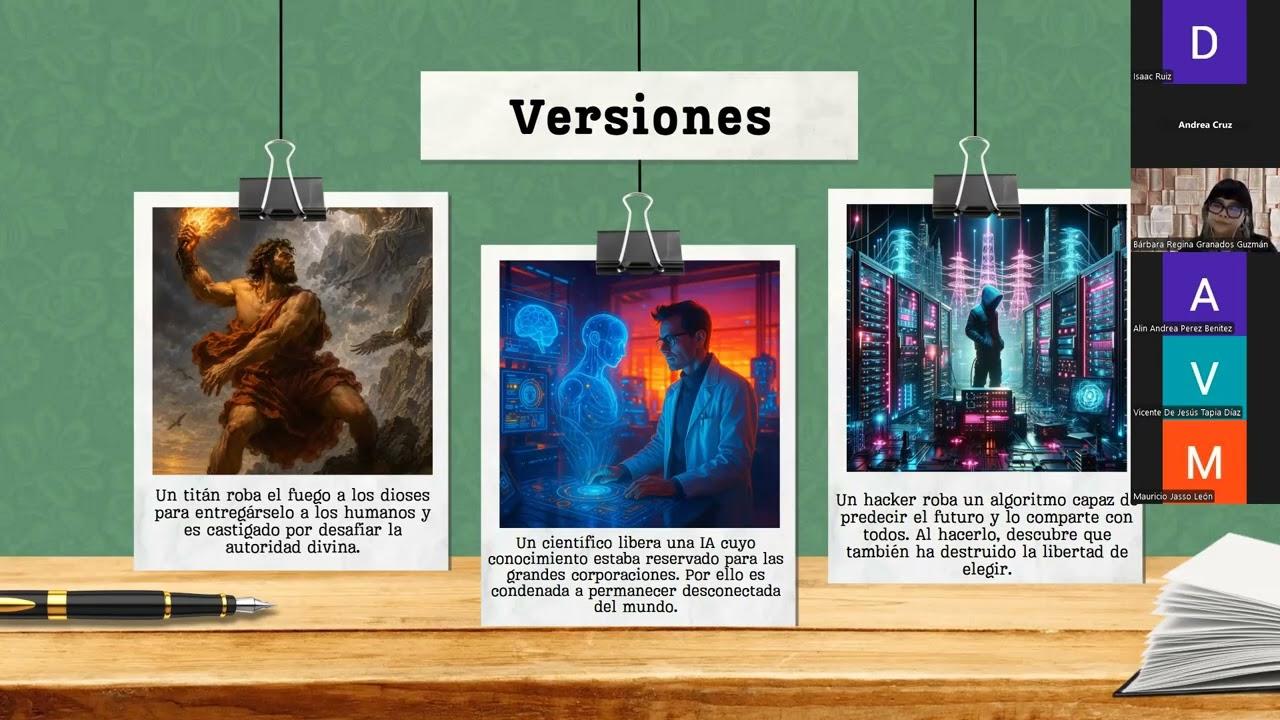
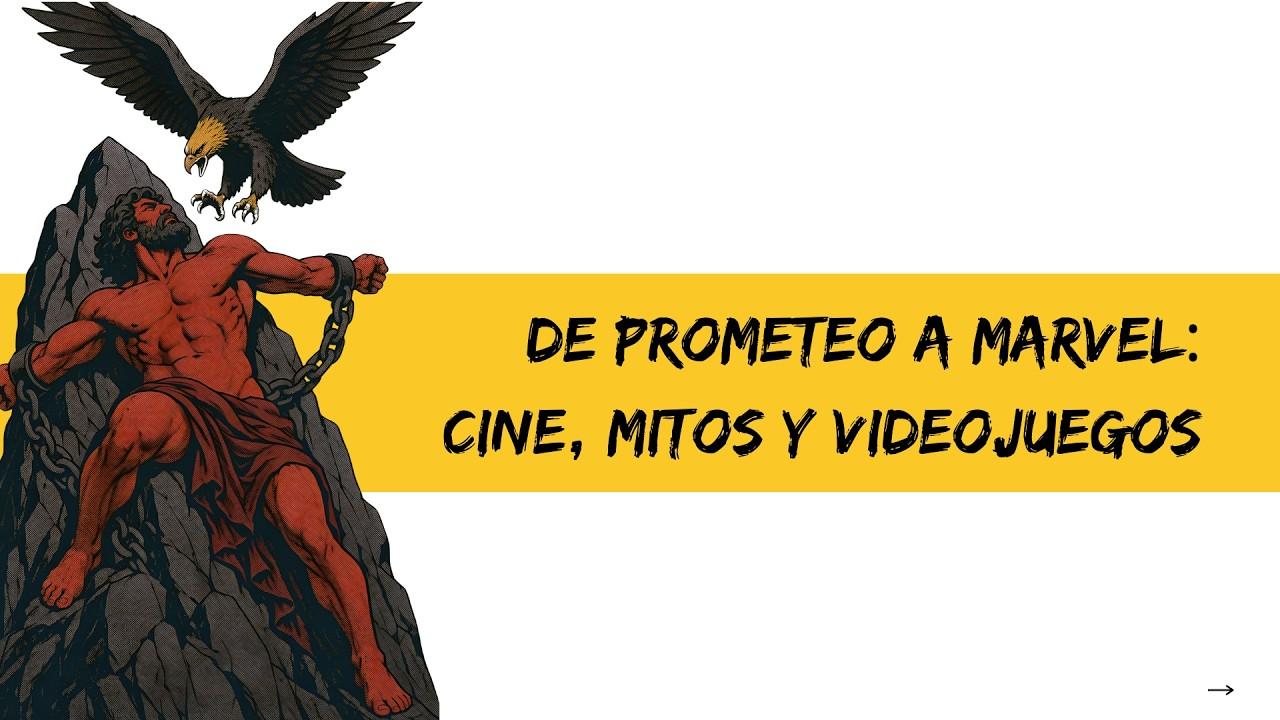
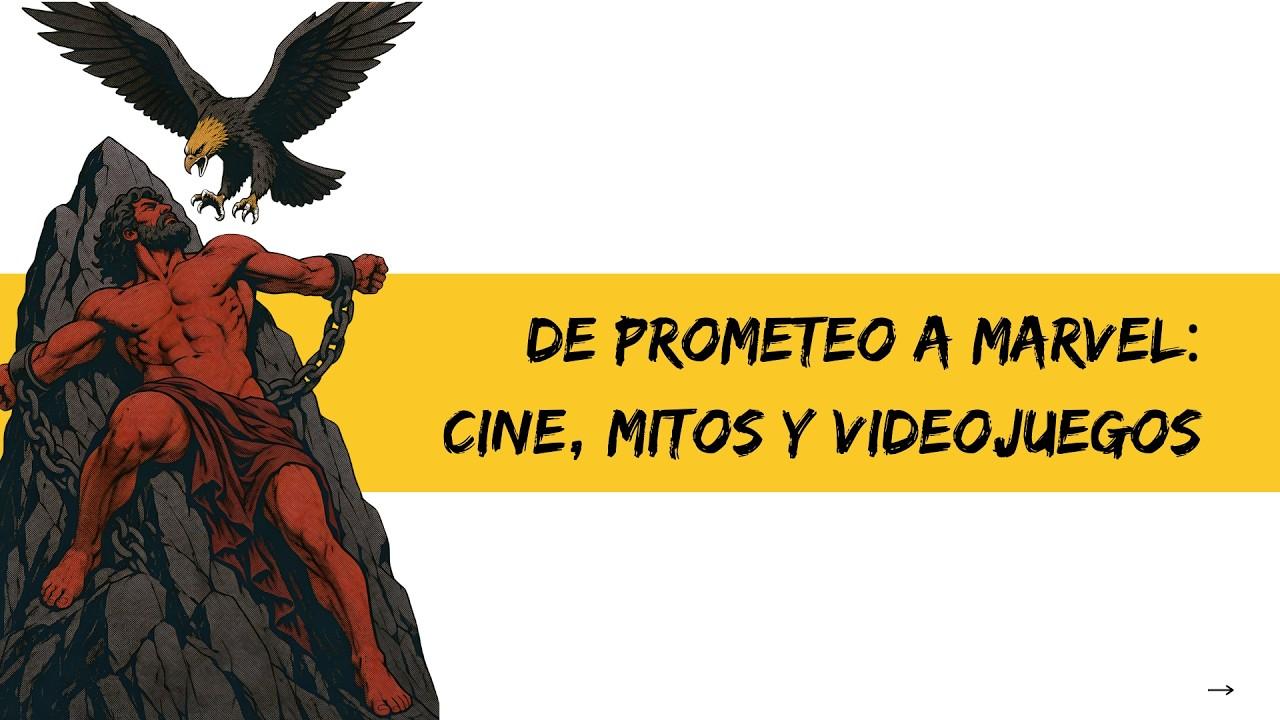
approach the development of, well, precisely the, the, the evidence, well, the same one that is due this Sunday, which is to say, this week we should already be working on it fully. But before we begin, tell me how it went with the, the, the worksheet. Did you, uh, find the work useful for making a general outline of, of, of what is, um, well, the analysis of your myth ? Tell me, did you struggle to do it? Was there anything difficult for you to find ? Is everything okay? Did no one have any problem with your research, with any, with any issue? >> Ah, I actually had quite a bit of trouble creation. I even had to change the myth because there were versions, yes, because there was one from the same culture. >> Okay. >> There were so many different versions and so different from each other that in the end I decided it confused me more than it cleared things up every time I researched. >> Uh-huh. >> Even the myth I chose, which was the creation of the world of the Yoruba, >> Uh-huh. >> ah, it has so many versions and then I discovered that it's basically that there are so many versions because it's more like the original version was lost over time >> Uh-huh. >> and that basically their myth translates into two things, into two, like, ways. At least on the political side, which is basically as if they were the chosen ones or that they migrated and are chosen. >> Very characteristic of, of, of, I mean, a good part of the, of the world origin myths, right? I mean, how, how being the chosen people becomes something, uh, representative to , uh, sustain the belief of, of a people , right? Specifically. Very good. >> Something quick, what I think interested me most about the myth is how they see God as a being without form, I mean, without form, without appearance, without gender, and how in the myth, the myth looks a lot like the Bible verse of Adam and Eve and the apple. And, well, I think I'm going to explore that regarding how the myth, how the myth I'm investigating looks a lot like the Bible verse. >> Uh-huh, yes, and something in relation to the, to the Judeo-Christian religion . Note that that abstraction, Pablo, what you are doing is important for the development of the essay and right now we are going to see precisely the topic of positions, how these positions can be contrasted and in what way this, this strengthens the thesis of our essay, right? So, quickly picking up where we left off last class regarding thesis structures, we will be using two: concessive, which is "although A, B is maintained," meaning one possible interpretation is acknowledged, but another position is defended; and the "must be" thesis, where "A must be interpreted as B." It proposes...how an element of the myth should be understood. In other words, this is an, uh, interpretive stance from the very beginning, right? From, from, from the very heart of the thesis, you are showing what your, your , your position is regarding the analysis, right? So, once we define this, uh, characteristics we must keep in mind to , to know that the thesis we are proposing is, is solid, right? On one hand, it has to be clear, delimited, and coherent, expressing a precise position; that is why defining the stance is so important, right? Uh, on a specific aspect of the myth related to the selected interpretive approach, then debatable and grounded; it proposes an interpretation that admits other perspectives and can be defended through arguments and evidence . That is to say, it has to be, it has to be concrete, it has to be delimited, and on the other hand, it has to be well-grounded with its arguments and be debatable, meaning it shouldn't be a definitive position, but rather open to interpretation. Very well, how is an interpretation transformed into a thesis? Which is precisely the step we, uh, take from the index card to actually starting to write our, our essay, right? Uh, moving from an interpretation, that is, an idea I have or something I understood, something I am interpreting or the message that resonated most with me regarding the reading of a myth, is not the same as, uh, developing that idea, of saying explaining it, uh, as a paragraph and having that be my thesis, right? The thesis must have a specific configuration because, well, we are looking at it from an academic point of view, right? So, it is precisely, uh, understanding that we go from A to B. Interpretation is what proposes a meaning to us, and the thesis affirms the stance on that meaning which must be demonstrated with arguments, uh-huh. So, it is the idea I have, what I understood, or what resonated most with me; the idea I want, the interpretation I want to explain, and the thesis that affirms the stance on that meaning. Take the example that Paolo just gave us , right? I have an interpretation regarding the Yoruba culture's myth of the creation of the world, and it seems very similar to Judeo-Christian traditions, right? So, that is my interpretation, and my thesis, how will it be constructed? Well, I will try to demonstrate it—I mean, it's not that you have to take this specific direction, Paolo, but I'm just using it as an example, right? My thesis is going to be based on demonstrating that relationship, that similarity with this evidence, with these arguments, right? So, in reality, it's a simple process, but it is very important to define the thesis when we are developing the essay because it will delimit us—that is, it will allow us to draw a boundary line where, even if I see other information that might seem interesting to me, if it doesn't relate to my thesis topic, I let it pass, right? I mean, I see it and say, "Oh, look, what an interesting point of view, or what relevant information," right? But I don't take it, and I don't let it influence the development of my work. This is a very healthy practice that I recommend for the development of your academic essays. It is important to keep this in mind, and also, of course, that not every interpretation automatically constitutes a thesis, right? You always have to give it shape, especially when we are doing academic work, okay? We have here an example with Prometheus , right? An interpretation can be limited to pointing out that fire symbolizes knowledge, but to become a thesis, we need to formulate a more specific claim that establishes what we want to defend about that relationship. That is to say, we need to make a concrete claim from which we can establish which elements I am going to select—argument one, two, and three—to defend that relationship that I am making, that I am supporting, that is, my interpretation. Up to this point, are we clear on the difference between interpretation and thesis? Can you give me a reaction so I know if everything is okay or if anyone has any questions? Okay, very good. I see there is clarity for a few of you . If there is anyone who is still sleepy, please wake up to pay attention to today's exercise, which is very important. Very good. From myth to thesis, right? We are going to see an example different from Prometheus to vary it a little, and we have the myth of Icarus, right? So we have the base philosophical approach. Do you remember we talked about there being different approaches, right? The symbolic, the philosophical, the cultural, the contemporary, and so on. We also have a delimited topic. It will be the limits of individual freedom; that is the reference I want to follow in developing my essay. Next, we have an initial interpretation . Icarus 'flight can represent the human desire to overcome limitations. That is like my premise, my general premise, meaning the idea I understood from the myth and the point I want to develop. From this interpretation, we can build different theses. First, the concessive, where we remember that although A, B holds; that is, although Icarus' flight is usually associated with recklessness, this is A , it can also be interpreted as a representation of the human desire to transcend imposed limits. This is B, aha . Then we have the "ought-to-be" thesis. The fall of Icarus must be interpreted as a warning about the consequences of exercising freedom without recognizing the limits of the human condition. Both theses start from the same point, but they defend different positions. Therefore, the arguments we are going to use to defend each of these theses will be different, right? Just as the evidence will be. So, notice that it is a choice; it is a choice of which path to take to develop your work , right? Each one of these ideas has its own characteristics, and the type of arguments corresponds precisely to each idea we have, right? What makes a thesis solid, everyone? Well, it has to be clear, delimited, debatable, supported, and coherent, right? So, notice how it must be concrete, it must be limited in a coherent way; that is, we cannot address, if we are going to talk about, for example, the myth of Icarus, let's say the same thing. I mean, we are not going to address all the interpretations that could emerge from the myth of Icarus, right? Individualism, disobedience, vanity, the issue of transgression, etc., because there are many elements that we would have to analyze. That would be more for a book chapter, not an essay, right? So, essays must have concrete, delimited theses that admit alternative and reasonable interpretations, which is precisely one of the elements that, returning to the example of I was mentioning that it is important to have different frames of reference where we can identify what they are, or rather , how our interpretation can be opened up to the experience of other cultures, right? That is, different alternative interpretations that are, of course, reasonable, right? Fundamental means it can be supported with arguments, evidence, and coherence , meaning it maintains a relationship with the selected interpretive approach . What is the interpretive approach? Well , it's symbolic, philosophical, contemporary, cultural, etc., okay? So everything has to be coherent, all the points have to match. That is, like, pretty basic, right? So, almost ready to start developing our exercise, what is the difference between an interpretation and an argument, right ? Here we have an example of a thesis. Although the flight of Icarus is usually associated with recklessness, it can also be interpreted as a representation of the human desire to transcend imposed limits, right? So, faced with this thesis, which is telling me whether it can be, this is a concessive thesis, right? Although A, B is maintained. Although A, which is the flight of Icarus, is usually associated with recklessness, B is that it can also be interpreted as a representation of the human desire to transcend imposed limits . What is the thesis being developed here ? How the flight of Icarus can be interpreted as a representation of the human desire to transcend imposed limits , right? So here I am telling you that in my essay I am not going to treat the flight of Icarus as an act of recklessness, but rather I am going to follow the line of development, believing that the flight of Icarus is a representation of how humans always seek to transcend imposed limits, right? So, to defend that thesis, I will have three specific arguments that you will notice are very coherent with the specific development of this idea, right ? Number one would be the search for freedom. Where the flight represents the possibility of abandoning a condition or restriction. This can be analyzed as an aspiration for autonomy, right? So, there I already have my most obvious argument; faced with a representation where disobedience or, rather, recklessness, could be interpreted as a desire for freedom, well, it is precisely the search for freedom, right ? It is, it is almost logical, right? That this should be part of my argumentation . Next, we have the transgression of limits, right? Where, uh, the ascent of Icarus allows us to examine the tension between individual desire and the warnings that seek to regulate behavior. That is, a bit of this questioning of the imposed limit and, precisely, continuing to be motivated by it in the search for freedom. And finally, the meaning of the fall. The outcome allows us to discuss whether failure necessarily invalidates the search for freedom or if it also reveals the contradictions of the human aspiration to overcome its limits. If you notice, in each of these arguments, this initial idea of the thesis regarding the human desire to transcend limits is present, right? Which relates to the limit, let's say, in a coherent way—coherence is important . What relates to the limit? Well, freedom , transgression, and meaning, right? So, all these three arguments relate a lot to the thesis; they are coherent, but they could also be interpreted in different ways, right? That is precisely why they are valid to be developed as the foundation for an interpretation, you know? It's like connecting the pieces, but knowing that if I flip this piece over, I could have more questions. And that is precisely the beauty of the essay. The beauty of the essay is that it allows us to put an idea we have out into the world so that the world can read it and question it, right? That's how the development of academic writing works, right? No essay, no stance, no interpretation from someone doing academic work should be thought of as the definitive explanation, right? Every essayistic, academic construction has the characteristic of being an element that shows the author's stance, which they want to share with the world , right? But this obviously comes with being open to analysis, interpretation, questioning , criticism, and so on, right? So, that is precisely the essential characteristic of the academic essay. An interpretation must also dialogue with other interpretations, which is exactly what I am mentioning to you right now, right? That in academic research, a position is strengthened when it recognizes that there are other ways of understanding the same phenomenon. That is to say, no one has the absolute truth, no one is proposing the definitive interpretation, rather it is important to just keep in mind that what we are doing is one interpretation of many that can exist, right? For example, one interpretation of Icarus highlights recklessness, another interpretation may highlight the desire for freedom, and a third may analyze the relationship between technical knowledge and human limits, right? A solid thesis, everyone, does not necessarily eliminate alternative interpretations, right? It can acknowledge them, discuss their scope, and justify why we favor one perspective; that is, even though I know other interpretations exist, for my particular thesis, for my particular interpretation, this is the perspective that works for me, okay? So, broadly speaking, this is how interpretation works, the way we move from an interpretation to developing a thesis. And what we are going to do now is go to our Canvas to carry out today's activity. We are in week 12, how wonderful. Do you realize? 3 weeks. I mean, with this one, 3 more and the semester is over. We are almost there. Very well. Here we have today's activity. Let me send you the link in the chat. Ready. Very well. What are we going to do? We are going to make a connector map. Do you remember that I sent you a message in the WhatsApp group to bring paper and a pen ? Well, that is the idea, to be able to make a connector map. Why by hand? I had already mentioned this to you in a previous class. When we process information by hand, there is a series of cognitive actions that our brain inherently develops, making our attention, depth, and the processing of that information deeper, right? Pardon the redundancy. So, that is the goal of doing it by hand , so that we are more involved in this process and can visually see and build a map of how our essay is or will be constructed, right? When you are drafting your essay, you will realize that each of these elements connects in a very specific way to another, and that will allow you to develop your writing better, okay? So, what we are going to do is retrieve the myth from the card we selected last week, and on a notebook sheet—someone asked me if it could be done on an iPad , yes, it can be on an iPad, but it must involve this process of doing it by hand , right? We are going to make a connector map. In the center of the page, we are going to place the the the myth, the name of the myth, and develop the six elements around it, like in a in a wheel, right? And where we are going to put, uh, the name of the myth, the culture of origin , then the significant element, the interpretation, the tension or problem, the stance, and the thesis, right? Let's relate the elements with arrows and linking words, such as represents, symbolizes, proposes, questions, allows , interprets, leads to, or relates to. The connections should show how you advance from observation to the construction of the thesis, uh-huh. That is to say, how you are, uh, problematizing and and and and deepening all the components of these stances, right? Then, uh, at the end, we are going to highlight, if you don't have color, by outlining it a bit more, or adding an arrow, or some visual element, what the final thesis is. Emphasizing whether it will have a concessive structure or a "should be" structure, okay? Take a clear and legible photo of your map and upload it to this space. The map must be done individually, entirely by hand. It is not about answering the questions as a list or as text, but about visually representing the relationships between the ideas you want to develop later in your essay, right? The thesis must express your own interpretation that can be defended through arguments and evidence, okay? This activity is not graded, but it will add to your participation, which is always important. And since we are already wrapping up, every class is a good opportunity to develop this. Um, the activity closes at 9, so it is to be done now during class, and that's it. Does anyone have any questions? If not, give me your sign of approval that everything is clear. Very well, perfect. Well, let's start the work, guys. Um, let's do a a comeback at 8. That's a good time. Uh, I will be here connected, waiting to see if there are any questions or comments, and you go ahead and work, okay? >> Okay. We still have to be here, right? I mean , no. >> Yes, yes, we still need to stay connected. Right now at 8, we are going to to to talk again, okay? >> Yes, it is understood. Thank you. >> All right, very well. It is 8 in the morning. The activity closes at 9. My proposal is that whoever wants to leave the session can do so, and whoever wants to stay for this half hour to resolve doubts with me, specifically about your work or your thesis, we can use this last half hour to work on specific cases or questions, right? In other words, not talking about it in a general way anymore, but if someone wants to tell me what they are working on and how they are structuring it, well , we can do that in this half hour. And also to mention that next class on Thursday we won't have class as such, but rather I will be logged on specifically to resolve doubts about the assignment, right? So, the space is open, I leave it to your consideration. If someone prefers to get some sleep, that's fine, but I will be connected at class time specifically to resolve any situation that may arise. I'm talking about Thursday's class, this Thursday, okay? And the activity counts as attendance, it will also be recorded as participation, but it primarily serves to see how you are going to structure your thesis so I can give you feedback on it, okay? So, that's why it's at 9:00; today I will try to review both activities, both the index card and this one, so that you have everything—I mean, so you have the feedback and the whole week to develop your work, okay? So, whoever wants to leave the session, go ahead; whoever wants to stay with me to resolve doubts, go ahead, professor. Very well, thank you very much. >> Thank you. >> Thank you, miss. >> Thanks. Tell me, Pablo.