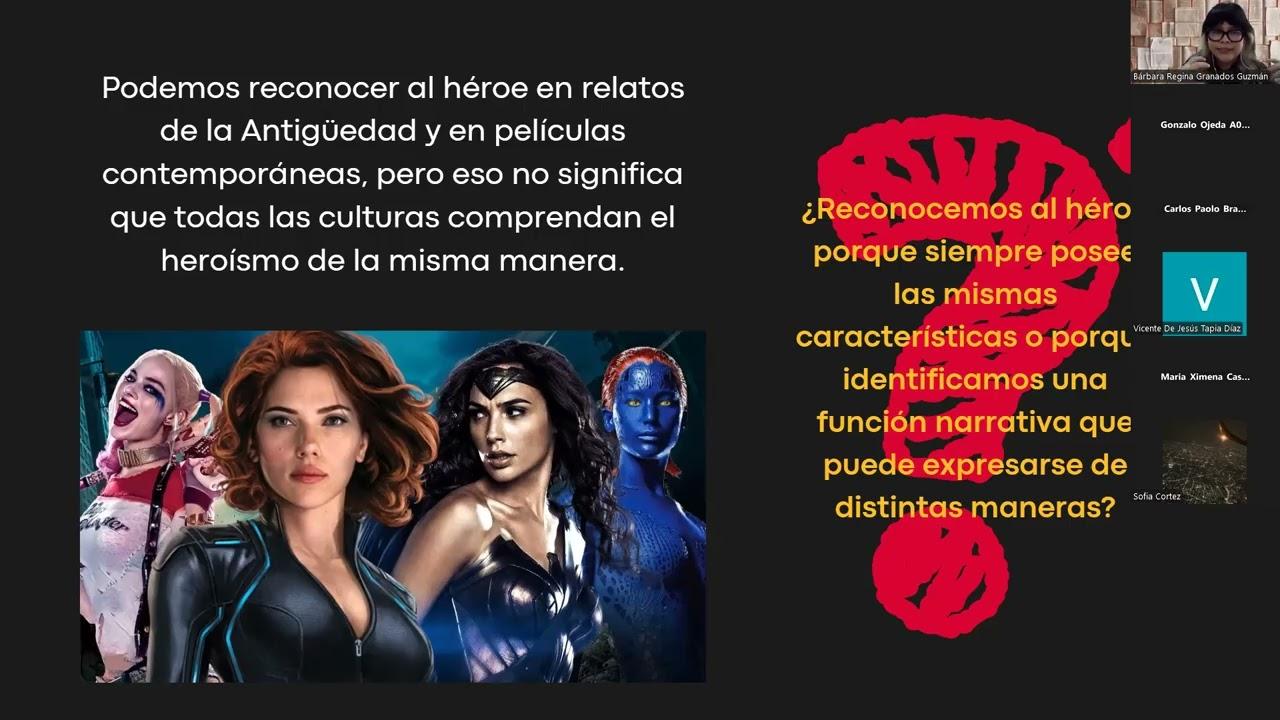
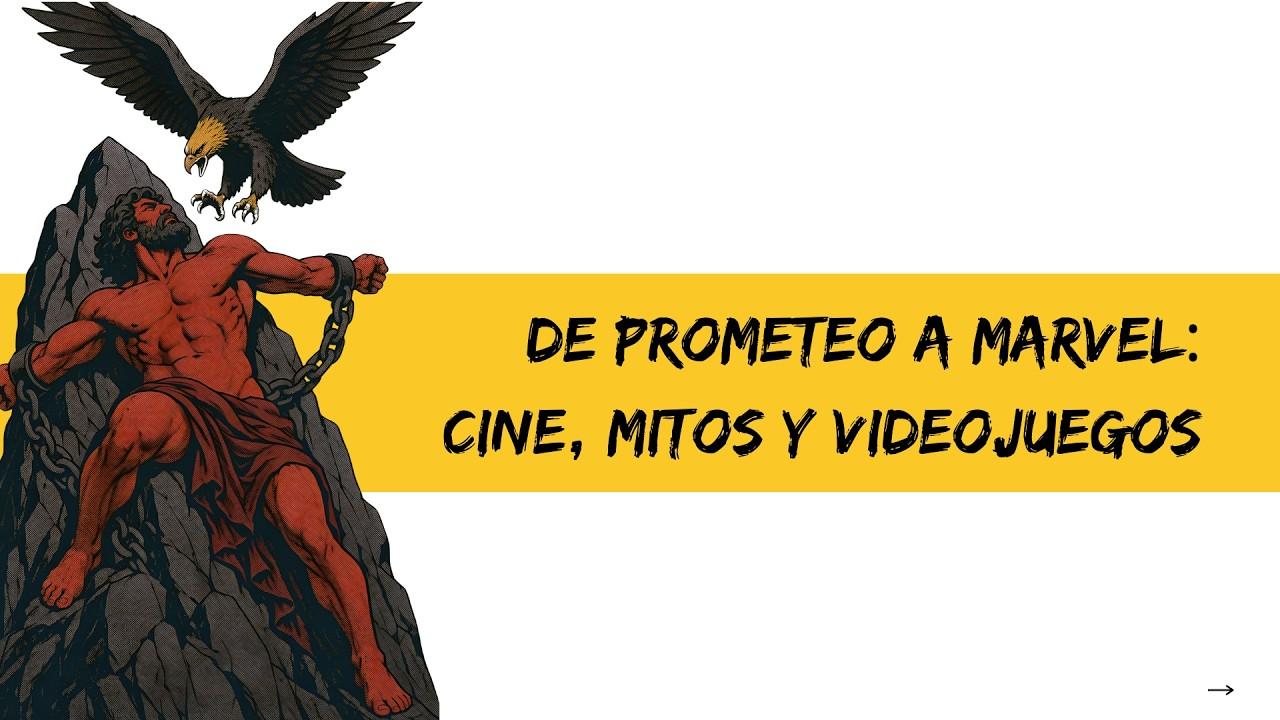
In the last few classes, we've focused on issues related to completing the work , right? Evidence, and it's all been about questions or explaining instructions, and today we're going to have Gonzalo here, do you have a question? >> Yes, let's see, he uploaded two assignments. What's the difference between today's and Sunday's? Did >> you see the video I shared with you? >> No. >> Well, in that video, both activities are explained in detail. In other >> words, today we're not going to work on today's. >> No, today we're going to have a class, okay? Okay. Very good. Paolo. I have a >> lot of questions, but I don't know if it would be better to resolve them at the end. >> Yes, we're going to have a space at the end of class to review questions about the activities, okay? >> Okay, thank you. >> Very good, you're welcome. Well, guys and girls, let me start sharing today's session. Okay, let me see. Let me share this with you specifically , very good. Well, before starting with the question that Gonzalo had, here in announcements I shared a video that says explanation of advances in evidence two. Here in this message you will be able to find this video where it explains precisely advance one, advance two of the evidence and what they consist of and how to work on them, etc., etc., okay? I published them on Tuesday precisely because there is a delivery that is due today, so it would be important that you already have around what is going to be evaluated and requested. Very good. Well, now let's start with the development of today's topic, right? As you could see, well, those who watched the video, who already had the opportunity to explore a little bit about what advance one and advance two of the evidence refer to, well specifically in the evidence it is about generating a multimedia story about popular legends, right? Traditional legends, local legends. Ah, there are certain specifications that need to be reviewed and now we are going to resolve doubts about it, but part of the preparation for this topic and for this work is to talk a little about the relationship that can be found between myth and legend, right? We have talked a lot about mythical narratives, we have observed examples from different cultures from different eras. However, legends are also narratives of the fantastic type that are related to mythical narratives, but that at the same time have characteristics that separate them a little, right? That is to say, on the one hand we can relate them and on the other hand they have characteristics that make them different from a mythical narrative, right? Legends have, in their development, a different behavior, right? How they are transmitted, how they are composed, the symbolisms, the cultural identity that emerges from these narratives. And today we are going to work a little bit to analyze this aspect, right? First, deliveries of the final project. Advance one is for today. Interviews, transcriptions, and voiceover. Then advance two, which is for Sunday the 22nd, which is a multimedia product , images, narration, and setting. And finally, evidence two is for the 29th, which is also a Sunday, which would be the following week, and it is a multimedia product. It is important to mention that the advances, advance one, and evidence two will allow us to make adjustments to the final product. If you deliver it and I give you my feedback, from there you can edit the work a little so that in evidence two we get the best possible grade. It is also important to emphasize that the hardest part, the laborious part or what can be considered the densest part of this evidence is step two, which is precisely the construction of the multimedia product, right? Where we are already creating images, the narration and the setting of our digital storytelling, right? So, in the end, evidence two is putting together that multimedia product with a prologue that they are going to write and that we are going to talk about next week. Very well, that said, let's get straight to the topic that concerns us today, which is legends. What are legends? Broadly speaking, they are traditional reasons that combine recognizable elements of reality with extraordinary, supernatural or difficult-to-explain events, right? Surely with this definition you can already think of examples of legends, right? For example, the weeping woman, the black charro, the legends of the nahual , where there is, uh, a recognizable context of reality. For example, there's this recurring joke that says that at your age, "At my age, my grandfather was fighting the devil on the hill," right? Well, these are references that have to do precisely with these legends that have like marks through which people relate to a community, to a specific place, a road, a lake, a house, a neighborhood, etc., etc., right? They are like these traits that make them feel close or make them feel like the legends happened in a familiar environment, familiar to us as people, right? Unlike mythical narratives, where the events occur in a sacred time, in a different space, right? So legends, for that very reason, feel closer, right? More human, right? And the main means of transmission is through oral tradition. In oral tradition, everything that is developed through speech, right? All of the knowledge that we might think is popular, such as sayings, riddles, legends, stories, proverbs, and some songs, even the double meanings within our Mexican culture, are popular expressions that do not belong to anyone specifically, but that are always circulating within society, right? And within conversations , within everyday life, right? So oral tradition is that, that which is not registered as such or there is no official version, it does not have an author, it does not have an academic framework to support it, but it is things that in one way or another we all know. If I were to ask you who knows the legend of La Llorona, we would probably have many, many people who would tell me that they know what I am talking about, right? Maybe we don't specifically remember what the story is or in detail how the progress of events, the narration, is composed, but we know that it exists and we know more or less what it is, right? What it refers to. That is precisely the oral tradition, those traditional and popular narratives that are shared within a cultural environment , right? Fundamental characteristics of legends are their link to reality, which is what was just mentioned, right? That they are related to places, events that are identifiable, that is, that we can relate to them very easily. Presence of the extraordinary, right? They can incorporate apparitions, supernatural transformations or inexplicable events, right? There is always something like magic, right? Like a bit of...Legends are a good example of magical realism where precisely this, the development of events...Do you remember when we talked about myths they told us that the center , the objective, is to question whether the myth is real or not? Well, the same thing happens with legends, right? Let's say that perhaps the important thing is not whether what is happening in the story actually happened or whether the characters are real, right? It is simply a narration, a tale, a story. Well, they are usually transmitted collectively, as I mentioned, oral tradition is based on this, right? And that also allows their options to change over time, depending on the person who is telling it, by location, or due to issues that have to do with the fact that perhaps there is a legend that develops in a certain way in a state because it is related, not to a specific lake, no. So in that region, the weeping woman is similar to the lake, but then we go to another area of the country and then the weeping woman is similar to a road. And so we keep changing, it is like the same base of the story, but we have variations in where it develops, right? We also have the cultural meaning that expresses beliefs, fears, values, and social tensions, right? For example, there is a legend called the black charro, which is about a charro who offers money and this is like a temptation. There, the beliefs, values, and social tensions that we have are greed, or perhaps a bit of economic need, that this money will provide you with something good or, in the end, it will generate greater tension, right? And from there come many, many comments and many ways of interpreting the morals and symbols, the meanings contained in the legends. Just like the exercise we were doing in evidence one of the significance of the myth, we were going to approach it from the symbolic aspect, from the philosophical aspect, etc., etc. Well, the same thing happens with legends, right? As people, as readers or as the general public, we approach these types of narratives, stories, films, series, etc. , etc. And we do see what they tell us, but we also interpret those symbols or information between the lines, so that for each of us, these versions can mean different elements or we can give more weight to one symbol than another, we can understand the meanings differently and this is precisely the richness of human interpretation, which is individual, right? So, when there is a cultural meaning within these stories, that interpretation sometimes tends to have coincidences among people who live in the same place, in the same region, in the same state, who have the same condition of perhaps sharing a group of beliefs or being identified in some other way, right? And that is why cultural meaning is so important and I emphasize it so much, because it will be very important for the development of this work. Then we have the claim to veracity. Legends are often narrated as events that could have happened or that someone claims to have witnessed, right? Then we have these marks of truth, like this happened to my grandfather, this my grandfather told me, my father saw it, we have these references where when we talk about it or read it, whether we communicate it or the person, the author is communicating to us that this is not something he made up, but rather something that happened to someone close to him or that in some way or another he is trying to prove to you that it did indeed happen, right? So, these are the fundamental characteristics of legends. Right now, in this phase of the work, which is the first one, you should be choosing which legends or which people you are going to interview, to share those stories with, because these characteristics will allow you to understand those stories with greater depth, with a broader perspective to be able to do a more in-depth analysis. That is precisely the goal of this session. There is an important aspect here, which is plausibility, which is precisely what I was telling you. It doesn't really matter if the mythical reason is real or if the legend actually happened, right? Excuse me, the narrative strength of these stories depends on whether the people who listen to them consider it possible that it happened, right? For example, the weeping woman acquires greater strength when it is linked to a river, a street, a place known by a community, etc., right? Because a story, here I ask you if anyone would like to share something with us so that we can add participation . There will be few sessions in which we will be able to add participation, so take advantage. Hey, why might a supernatural story be more disturbing when it happens in a place we know? That is to say, why do you think it might arouse a little more fear, a little more impact, or a little more, precisely, unease? Alexa, go ahead. >> Because I feel that somehow that makes it more real knowing that it happened in a place so close to you. >> Mhm. >> That gives it a little more ...How do you say the word? Creativity. >> Believability, yeah. >> Yeah, yeah. >> And tension, right? I mean, suddenly here, for example, in Monterrey, we have this place called the Aramberri house, where there are even tours on Halloween and there are themed things there, it's a house where a murder took place around the beginning of the 19th century and it's never been inhabited and you can hear noises and things happen, right? So there's a bit of fear on that street and a bit of resistance, right? It's a house that's right in the center of Monterrey, it's a good size and it's never been sold. And it's because people somehow reject that location out of belief, out of fear, in case it doesn't happen, etcetera, etcetera, right? So yes, it precisely has this sense of being more believable . Hey, Sofía, go ahead. >> Yes, >> well, complementing what Alexa says, uh , it just adds that kind of realism. I mean, I'm from Durango and the entire center is full of legends. So, as you were saying, walking through the streets and seeing the houses, seeing the churches, adds that feeling that makes you say, oh, wow, maybe it could have happened. Maybe not that, but something like that . So, uh, more than anything, also when people tell you that an acquaintance or a relative or something saw it, it makes you wonder a little bit how much is true and how much is a lie. So, it lets your imagination flow too. So, I think that has a lot to do with you actually seeing it. >> Yeah. That's right. Thank you very much, Sofía . Hey, Diana, go ahead. >> I feel like it's because, just like one of my colleagues said, it's because it happens very close to us and also because it's like, uh, it's something that could easily happen to anyone; and it's like that feeling that, uh, it could happen to us one random afternoon and it could be an anecdote out of nowhere, or that it could even happen to a close relative. So, it's like having that minimal possibility, but it's not zero, you know . >> Of course, and what you mentioned, Diana , is a key point, right? This possibility that it could happen to me. Since it's a random street, right? I mean, it's a, a, in the case that, for example, I don't know if right now Sofía , this, well, there are like many legends in the center, well suddenly it's like walking by there, it's like having this nervousness, this concern of : what if something appears to me? What if I see something and what if something happens. In other words, it brings the possibility of experiencing a supernatural phenomenon very close to us , right? And that, by itself, that simple idea, causes certain feelings or tensions in our expectations, in our humanity, that make us, with that reaction, continue to give life to the story, to continue giving life to the history; with that rejection, with that caution or even with that curiosity, we continue to keep these legends alive. Kiri, can you go ahead? >> Well, the truth is, I think that, well, I think very much like my colleagues. Unlike the horror stories that we know, well, here they are in places that we know, so I even feel that our imagination can create the scenario a little bigger. And I also think that since they are transmitted from generation to generation, we even believe that they are even more real, right? So that makes them stay with us more and maybe we ourselves will tell them to our children and so on. Me too, for example, I'm from a small town and there they also do an adaptation of this weeping woman and so on, but in places where we know them and there are even tours at night where they explain how it happened and, well, it's like something cultural, right? >> Yes, it's definitely something cultural that has even become a symbol of identity, right? For example , in Guanajuato, how many people have heard the legend of the Alley of the Kiss? And it's so characteristic that it's even like a tradition for couples who go to visit it to kiss, take a photo and in that way continue to be part of that story. Adaptations are also very common and are things that allow for the creation of a collective awareness regarding a story. The phenomenon of La Llorona is a very, very palpable example of this, right? Precisely because the versions that give us these elements of truth, right? Like this adaptation to the regions and having it told to you by someone close to you, well, it makes you feel like, well, my grandfather told me this story and my grandfather doesn't lie to me, he's not lying, right? So, this is part of our culture. It's a really, really wonderful characteristic that Mexican culture has and that legends are cultural heritage, right? And being cultural heritage means that it's built by society for society, right? So, it's important to analyze it from that point of view, that a legend is not just a legend, but is precisely a cultural representation of a region, right? Two important aspects, right? Where do mythical narratives and legends meet? On the one hand, we have that the myth happens in a sacred time, right? And the legend happens in a local memory or in a regional sense of development, right? As we have already explained very well throughout these minutes. So, where do they meet? Well, what coincides between mythical narratives and legends are symbols, beliefs, identity, and oral tradition. Although we have formal mythical narratives, that is, records, stories, songs that refer to these stories, we also often learn about them through narratives, right? Through someone telling us about them, someone recounting them to us. This does not mean that oral tradition specifically is the only means of transmitting myths and legends, but it is a point where they coincide, right? However, this is where I would like to emphasize more and also ask you to take this into consideration when developing your final project, because we should focus on the symbols, beliefs, and sense of identity that are expressed in each of the legends, right? That's why the first trailer is focused on you being able to interview people who can share local legends with you. We're not talking about legends or stories that have to do with the general, right? But with the local, because it's much easier for a person to know legends that happen in their region than to tell us about national aspects or other elements, for example. Gonzalo, go ahead. >> Oh, it would be nice if you told me about the video, but was the first trailer for today, Sunday, or the following Sunday? >> As we saw in the first slide, trailer one is for today, trailer two is for Sunday, and evidence two is for the following Sunday. What we're explaining will help you with this week's content. Right? I >> mean, the interview has to be done today . >> Yes, the interview is for today. Interviews, transcriptions, and...Oh. >> And do I have to record it? >> Yes, of course. We'll quickly go over the instructions right now, but I'm telling you, it's going to be very important that you watch that explanatory video, because it's more detailed. Okay? Very good. Okay, so continuing with this aspect, now let's analyze what we've already seen, for example, here's where myths and legends coincide, right? Symbols, beliefs of identity. And later, we're going to analyze how mythical elements survive within legends , that is, how we can do this tracking or where we can find more specific examples. And well, these are aspects, as I say, that are sometimes even obvious, right? For example, the supernatural. The presence of beings or forces that defy ordinary explanations of reality. What more supernatural aspect do we want than the powers of the gods, right? Divine powers, manifestations of their power over the control of the elements of nature, time, destiny, etc., right? Well, the supernatural is also found within the development of legends. Transformation, for example, the change of form, identity or condition that represents the breaking of the usual limits of existence, right? Examples of this are the nahual. Has anyone heard legends that have to do with this mythical figure? I don't know if you know, but the figure of the nahual dates back to pre-Hispanic times, right? This ability of a person to perhaps transform into an animal, right? That this animal can have certain behaviors or a specific development or pursue certain situations. So this bodily, anthropomorphic transformation can also be found within legends. The symbolic, right? The extraordinary events that allow us to attribute meanings to the elements of nature. For example, the legend of Popocatépetl and Iztaccíhuatl, which are two volcanoes that, if we look at them physically, are two mountainous structures that exist, right? But how do people and inhabitants interpret them? Well, as a love story that refers to a legend of the volcano and the sleeping woman, right? Yes, yes, if you've heard that very romantic legend, this is a symbolism, it's precisely how the symbolic is expressed within the stories; how the people themselves say: "Ah, well, this hill is the equivalent of the woman and this other one, which is the volcano, is the equivalent of the man." So these are symbolisms of meanings. We don't try to understand them, to know if they are coherent or not, we simply understand that they exist and try to understand what message they are trying to convey. Then we have transgression and consequences, right? The character breaks a prohibition, defies a norm or alters an established order and there is a consequence. Our great example of Prometheus is a good example of this aspect and we can also think, for example, of La Llorona, where in some versions the woman drowns her children and, let's say, the consequence is to wander forever searching and crying somewhere. So, although it is different, we have a transgression and a consequence. So it is a symbolic aspect that can be found in both types of narratives. Then the relationship between life and death, right? Narrations that explore the possibility that the dead remain present, that is, that they remain within our timeline. There is a regional legend from here in Nuevo Leon called La Planchada, which is about a nurse from an IMSS clinic who appears. She appears and there are some things there, right? But look how close legends can be. We're talking about a nurse at a Social Security clinic. This is modern. We're not talking about something that happened in the colony, involving horses and a lot of things. This is a modern person who developed this story in a contemporary setting, right? So, legends can break with this structure that has to refer to a past or mythical time. They can even develop within the present, within the contemporary world. We also have urban legends, for example . Urban legends also have their own characteristics, which are focused on having morals about what can happen in society. These legends, like, "Don't go out or drink anything from a stranger because then they can drug you and steal your organs." These are things that happen at night that have to do with the fun of young people and that parents would later use to scare you and tell you not to go out; these types of urban legends that are more modern are also transmitted orally, they also contain meanings, popular beliefs and they also have a function, right? Let's analyze three quick examples now before moving on to a short exercise that we have for today. And we have the example of La Llorona, right? I think it's the best known or most emblematic. What is the mythical element? A supernatural presence, a link between the living and the dead and the cyclical repetition of suffering. In other words, this person gets trapped in a loop, like Prometheus who every night a body comes to eat him. Well, La Llorona is trapped in this cycle of suffering. Symbols: we have water, we have crying, we have a night and a mother figure. This is very important. Here we can even find the archetype of Carl Jung's mother . Through these legends we can also find these characters that, although they are not constructed stories, we can also identify archetypes, right? We have an interpretation according to the version because there are a large number of versions of La Llorona. She can express fears related to loss, guilt , motherhood or social norms. What collective fears? Here I ask you. We are going to open the opportunity for participation to go a little faster, but what collective fears can remain current through the figure of La Llorona? That is to say, what does it transmit? What fear can the legend of La Llorona transmit? In her figure, right? As a woman, as a woman who is a soul in pain. What fear can she transmit? What do you think? Can't you think of anything? Let's think, for example, that La Llorona. Go ahead, Sofía. >> Well, I don't know, that your children will be stolen, for example. Or as a mother, I know that if they kidnap you or as a child, if they abduct you. >> Yeah. I mean, it could be related to the very human and maternal fear of losing your children, right? In any way, through kidnapping, through death, through any detail, right? Like a mother's fear that her children will suffer some kind of harm. Ana Paula, go ahead. >> Well, when I was little, it happened to me a lot that you had like the exact image, I mean, of that character. So, when it was the Day of the Dead and so on, you could already have the idea that something could appear to you or you could already hear like the crying and it's like simulating that character , that image that something could appear to you. I mean, like you already have the, I mean, better the idea that something could appear to you. >> Yes, like you already have like a predisposition to something, right? >> Yes, yeah, and well, I feel like that would be like fear, well, you know exactly what, ah, this could seem like to me. >> Very good, thank you very much, Melissa . Go ahead. >> Well, maybe, I mean, it could be like in adults, like the fear of, I don't know, like, the mother, like, not being a good mother and, I mean, it could also be, I don't know, maybe the fear of drowning. I mean, I remember that I was like afraid of drowning because, well, they said, I mean, there were like several versions, but there was one that drowned them, right? So, maybe that one could be it too. >> Okay, very good. Let's move on to the next example to, uh , continue analyzing this a little bit, right? We have the legend of Popocatépetl and Iztaccíhuatl, right? A mythical element, an extraordinary transformation and a symbolic explanation of the landscape, right? As you can see here, it refers to these two mountains or volcanoes. Symbols: mountains, fire, dreams, and permanence. Interpretation: the transformation of lovers into volcanoes can express the permanence of love and memory in the face of death. In other words, living a love so intense that you become the representation of a mountain that will always be there and will always remind the world of your love story, right? Why does turning characters into elements of nature allow the story to be symbolically preserved? Can anyone think of any other examples or analyze why trying to create that meaning? In other words, the metaphors and analogies that legends carry are ultimately symbols that we interpret, right? Here we are told very clearly that these two mountains are two people, that it is the story of lovers. But, for example, there are also stories , uh, legends that have to do with pre-Hispanic times, where the gods of the sun and the moon are in love, but they are condemned to never see each other, to only see each other when they are coming together, right? To never be able to be together because each one has a time and a space to exist . And even if they are in love, they can only see each other momentarily at some point during the day when it is dawn, right? When the moon sets and the sun rises. So, what do you think allows these types of symbols to be attributed to natural aspects or these metaphors that preserve them? I mean, do you find this comparison significant? I mean, attributing something, for example, a volcano to something that will always be there, to a person or some romance, some story, does it provoke any reflection for you? Arantxa, go ahead. >> Hm, well, I think that turning the characters into these elements of nature , uh, links them to something like, I don't know, something eternal, something tangible, >> uh, that's >> in our real world, right? And I don't know, I feel that every time people observe, I don't know, this natural element, they're automatically going to evoke this story, right? That's right . >> And it gives them a sense of immortality , right? What's more romantic than having a story like that? Uh, a legend doesn't necessarily have to be a terrifying, supernatural, mystical story, that it has to be scary, that it frightens, right? Legends can also tell stories of love. Uh, Ysamar, and so on. >> Yes, just like Alexa was saying, I mean , I think that giving it that, that symbolism, right? That they're two people who stayed there , uh, gives it that sense of, uh, how do I put it? I mean, it gives it that sense of perpetuity, like they stayed there, and I feel that when people, I don't know, come there as tourists or pass through those places or come to that city, it also gives it a certain history, right? I mean, a certain meaning. For example, here in Monterrey, I mean, it's not the same, but when I was little I didn't understand why Cerro de la Silla was called Cerro de la Silla. I mean, I didn't understand that and I mean, it's not like there's a legend associated with it, but I find it very curious how, well, before or like for a long time ago, the natural elements of the Earth were given a different image. Yes, yeah. And and and that's very, very curious to me and it reminds me a lot, for example , also when I was little and in history they taught me a lot about the founding of Monterrey. About cities like that in Mexico. Uh, once they asked me to draw what it was like and I think what I drew, that is, what presented that scene of the founding of Monterrey was Cerro de la Silla. So in this case of Popocatépetl, I think it's like something very iconic, right? I mean, of that place and, I don't know , it kind of makes it, I don't know if I should say it mystical or like it makes it, like, >> a symbol, yeah. >> Yes, like a symbol, yeah, of the place where they are. >> Yes, exactly. And what you mentioned about Cerro de la Silla is very characteristic because it becomes something that identifies us, I mean, Cerro de la Silla is even on our coat of arms, right? So when I was a little girl I also thought, but I can't find the shape of a chair, right? And until an adult explained it to me, it's a saddle and they showed me a reference image of a saddle and you say , oh, okay. But it's something that seems so familiar that we would think it's not necessary to explain it, right ? However, it's something that doesn't come from a specific author or there's a record that says Diego de Montemayor gave this hill the shape of a saddle and named it that, right? In other words, it's simply something that is built with beliefs and with the interpretation and these symbols that we create as a community. Let's go with the last example, right? Which is the legend of El Nahual. A mythical element, transformation and extraordinary relationship between human beings and animals. Symbols, animality, night, body and power. Interpretation depending on tradition because there are also many versions of the legend of the nahual. It can be related to spiritual abilities , special knowledge or fears about the unknown, right? Well, that reveals the transformation between human and animal in our way of understanding identity. I mean, how many stories do we know of humans who turn into animals? Here we can not only think about Mexican traditions, right? But, for example, this is something that recurs in movies and in various universes that are fantastic, right? That are out there. Let's think, for example, of Harry Potter, where Sirius Black turns into, I think he's like a dog, they call him Grim, but he's a kind of dog, right? We have other stories, other creatures that have this ability to transform into werewolves or into animal elements, right? Figures or morphs. What does that tell us about humanity? I mean, what does that tell us about this boundary between the human and the animal? Right? The way in which we then understand this identity. Identity, uh, is linked to the human or it can also cross that line and turn it into something more complex, right? Something more symbolic, more abstract, more metaphorical. What is it that generates a person who can become an animal? What does it give us? What does a story like that leave us with, right? Why is it repeated so much in the imagination of people who generate these types of stories? Melissa, go ahead. >> Well, I mean, I feel that identity is not something fixed and that it's not just about how you look physically. I mean, sometimes people, well, you identify with an animal, I don't know, because of their instincts or things like that. And it's like, you identify not so much by their appearance, but by their characteristics, what they do and so on . >> Yes, and how interesting that you mention it, Melissa, because there are even these judgments or I don't know, like these Instagram carousels or something like, what animal are you according to your zodiac sign? And so it's like a relationship between precisely those characteristics that emerge from the instincts or behaviors of animals in relation to human behavior , that need to match them, right? There will be arguments out there that tell us that we also come from natural evolution, right? Darwin's theory that we come from monkeys, right? So these are issues that will be like a human need to find ourselves in some way, to recognize ourselves in the kingdom, in the animal kingdom and from there on. >> I was just remembering, teacher, that, I mean, I know it's considered a legend, but I have heard stories from, I mean, people close to me. For example, my grandfather, I mean, he passed away, but he once told me that he was born, I think it was in '40, and no, no, in '40, sorry, but he had to live with people during the Mexican Revolution and he was from a ranch. So, I mean, I mean, it was his experience; I wasn't there, but he did see people turn into animals. I mean, I mean, it's his experience, I wasn't there, I can't prove it, but then, yes, these stories, yes, I mean, to me personally, they do make me wonder if I see them like that. Yes, I mean, is it real, is it just a legend or maybe it does happen, right? I mean, I don't know, I don't know. But I mean, beyond the fact that, well, literally, that in literature it's considered a legend, uh, I find it very interesting, I mean, how in Mexican culture...because I think that, well, I don't know if in other cultures too; I'm not sure if other cultures also have stories like these. Um, but I do find it very interesting how in Mexican culture there are these stories. And then also, suddenly, I mean, no... I've heard, like, experiences from other people who say they experienced, no, these types of events. And well, yes, I mean, one says: "Oh, it's a legend, you see it in movies or things like that", but then when I personally had to listen to those testimonies, so to speak, well, it made me think, I mean, it makes me wonder, what elements are real and what elements aren't, and how sometimes elements that we think are fictitious, well, they can ...there's no chance that they could end up being real. >> Yes, and this experience that you mentioned is precisely the perfect example of oral transmission, right? And since my grandfather told me that, there's no reason for my grandfather to lie to me, right? I mean, there's no reason for me not to believe him. So, these are issues that precisely open up this possibility, right? When a close relative tells you about something they saw, it's a sign of realism. I'm having a hard time pronouncing that word right now. But that's precisely what makes the possibility that it's real open up in our collective imagination from story to story from person to person, right? But since there's no way to prove it, it becomes a legend. Also, for example, there's this popular legend that witches are owls, right? So, if you suddenly see an owl that's not usually found in the city or in a neighborhood, it means that there's a witch there who's not an owl, but a witch roaming around the place. So, everything that has to do with the mystical finds a way of transmitting it in the world of legends to stay alive, so that's perfect, right? Ideal. And precisely this accompanied by this magical thinking that all Latin Americans have, well, it enters a little bit into our collective imagination. Ariana, go ahead. >> Yes, the same thing happens to me. I think it's something very much part of Mexican culture and I think all of our grandparents told us some story about a nahual at some point, or even in school it was very normalized that, although we were perhaps very young, but always with this...Well, I remember that in elementary school the movie The Legend of the Nahuals came out. Yeah, and La Llorona and all that and the Chupacabra which is also like a nahual. So, I think it's very much part of Mexican culture and I also think that, well, I've also always associated it a little bit with witchcraft. I know it's a legend and it's part of beliefs, but I think it also arises from the transformation of the need to transform into something to achieve perhaps a certain goal that you can't achieve as a human person. And yes, I think it arises from that need. >> Yeah. Yes, precisely, human beings have always had the need to understand what they don't understand, I don't know, that there are no apparent explanations for certain natural phenomena or certain situations that seem to have no explanation. From there, from that attempt to find a reasoning or some mark, some sign that allows you to decipher it, all these theories and all these metaphors and all these stories are generated that precisely try to put things in order or give examples, to tell the events in stories, right? So, well, what's interesting is that we all have, like, perhaps without thinking about it or reflecting on it, we all have a little understanding of the universe in which legends unfold. We all have some experience with how we live a legend, right? Either because our grandparents told us about it, because we learned about it at school, or because after we learned about it at school I talked to my classmates during recess and some of them told me that yes, indeed, their grandfather had seen a nahual, that their father had told them something like that, right? In other words, all these experiences that are generated that come from legends are what make them a living tradition, right? That we ourselves maintain these stories , that we feel somehow related to them, because knowing a story in a context that you may have had when you were little, told to you by someone who is special to you, in addition to what the story tells you, it already generates a memory for you, right? Like a way in which you experienced and lived that narration that is different from if you read it in a text or saw it on TikTok. The experience of how you approached that story definitely has symbolic power and is important in how you are going to store that element in your memory, right ? It is no different to save it as something your grandfather told you than to save it as a 30-second video that you saw somewhere, right? I mean, you know it, but the difference and what it will leave in you is a totally different experience, right? Okay, let's quickly move on to an exercise that will take us, I hope, about 5 minutes. We're going to select a legend that interests you, right? Mexican or, I think we have some classmates here who are from another country. You can do it with local legends from your region. A legend that interests you. Briefly identify its plot, characters, supernatural and symbolic elements. Use an AI tool to analyze the legend from the theoretical perspective of one of the authors we've studied in the course, which are three: Mircea Eliade, Levi-Strauss, and Carl Jung. Mircea Eliade talks to us about mythical elements, Levi-Strauss talks to us about symbolic elements, and Carl Jung talks to us about archetypes. These are the three authors or the theoretical axes of this course, right? So, please ask the artificial intelligence to do this exercise, select your legend, select your author, read what it generates, make an interpretation and then we will have the opportunity to share two or three contributions in class, okay? So, I will give 5 minutes for this exercise. Any questions? Is everything okay? Let me know. Are you going to >> upload it somewhere else, miss? >> No, it is only to share in class. Yes? Very good. So, five minutes. Let me set the stopwatch. Go ahead. >> Miss, can you put the instructions again ? >> Sure, here they are. Let me pass them to you in the chat too. Ready. >> Okay, does anyone want to share the result of their exercise? Alexa, go ahead. Let's >> see. Uh, I chose the legend of the eternal lover, which is a legend from here in Hermosillo. >> Yeah. >> Uh, so a summary. The legend tells the story of Arturo Chávez, a man who fell in love with Esmeralda, a mannequin dressed as a bride who was in the window of a store in the center of the city. For years he would go to visit her, convinced that his love was true. The authors are Arturo and Esmeralda, who is the mannequin, well, it represents...It is the mannequin, but it represents his fiancée. The symbolic or supernatural elements are: the mannequin represents an idealized and impossible love. Although there are no supernatural events, the story has a mysterious character due to Arturo's emotional connection with an inanimate object. From Carl Jung's theory, the legend can be interpreted through the concepts of the unconscious and psychological projection. Arturo projects his idea of perfect love onto Esmeralda, turning the mannequin into a representation of his desires and emotions. Esmeralda is not a real person, but a figure that symbolizes what Arturo longs to find. What else? Well, the relationship between the theory and the legend. Arturo represents the search for ideal love and the need for emotional connection. Esmeralda symbolizes the idealization of love and the projection of unconscious desires. And the conflict is that Arturo's love is impossible because Esmeralda is a lifeless object and the legend can be interpreted as showing how desires and emotions can influence our perception of reality. >> Very good. Notice how interesting this question of comparing the narration with an author, right? Right now that we're finishing the entries, we're going to explain a little bit about that. Ana Paula, go ahead. >> Well, I chose the one about the Devil's Casino, which is also from Sonora. Well, it's a very famous story. One of its versions is about a young woman who goes to a dance and meets a very attractive man while they're dancing. She discovers that he has animal legs and realizes that he's the devil. The details change depending on who's telling it. And according to Carl Jung's theory, the devil could be interpreted as a representation of the shadow related to desires, fears, and aspects that are rejected or hidden. >> Mhm. The shadow has been a very interesting archetype. Thank you very much. Uh, thanks also to whoever wants to participate. We're going to stop here to be able to finish the topic. Uh, the objective of this exercise is precisely for you to be able to do this analysis, right? Because it's one thing to know the legend and understand what it wants to tell you and another thing to analyze it academically, right? So, uh, I suggest that, in point number two, that is, in advance two, once you have developed your narrative, you take , one of your interviews, sorry, you take some time to analyze the legends that were told to you from a theoretical point of view. You can do the exercise with artificial intelligence to identify those relationships and those symbolisms. It will allow you, in the following phases, such as in advance two and in the final prologue, to integrate that theoretical element from the beginning; That is, from the perspective of your work, no, it's already been done, finding how to fit the theoretical with what you've already developed. It will be easier if you take this into consideration from the moment you build it. So, keep this exercise in mind, right? Keep these three authors in mind so that you can do this exercise individually, even if it's not handed in, it will be very useful for your analysis, right? And this is precisely a process in which , in order to understand these narratives, we have three concepts that are cognitive processes that we sometimes do unconsciously, right? But they have a name and a structure. The first of these is intertextuality, which occurs precisely when a work establishes relationships with other narratives through references, characters, symbols, or structures that we can recognize. For example, a contemporary film can recover the figure of La Llorona and place her in a different context. Imagine that the figure of La Llorona were...Someone once did a really cool exercise for me, this one that placed La Llorona in a context of gentrification where, uh, it was a town that, uh, a magical town, that became like a very important tourist spot and so they started building buildings around there, right? And then during an excavation they dug so much that they woke La Llorona up and then La Llorona looked like this in the new apartments, right? The same characteristics of the legend of La Llorona, only in a contemporary environment that, uh, came from a current problem, right? Like gentrification. So, this has intertextuality and many, many possibilities, right? Then we have resignification, which consists of attributing new, new meanings to elements of a traditional narrative, right? An apparition, for example, that was originally presented as a moral punishment can be reinterpreted as a symbol of social injustice or a collective memory, right? We have seen this in different examples . Let's think about the example of Maleficent, right? Because this film breaks the stereotype of Maleficent as a villain, a villainous villain, and then when we learn about her story in this new interpretation, there is a repair of the damage, a cleaning of the image. There are symbols of injustice that explain her later behavior, right? That is a resignification. Then we have recontextualization, which occurs when a story is moved to a new space, time, or cultural context that is similar but different from intertextuality. So it is important to mention that a new setting does not guarantee a new interpretation. In order for there to be a meaningful adaptation, it is necessary to consider how conflicts and symbols are transformed in the story. Why do we see these concepts as so rushed, right? Because the objective of trailer two is precisely to create a new story based on these two legends that they are going to tell you, right? Today, we're going to do the...Okay, now we're going to address the issues, right ? Today, we're going to do an interview process. Let me see the activity here. We're going to select two people, family members, neighbors, members of your community, so they can share local legends with you. We're going to do these interviews, which can be in audio or video, approximately three to five minutes long , that would be enough, more or less for each testimony. You have to ask them, they told me yesterday in the group yesterday or the day before, I don't remember, that the document still couldn't be viewed, I've already uploaded it for you. If you'd do me a favor, check that you can view it now and download it. Make sure that each person you're going to interview, that is, those two people , signs this consent protocol. This work is not going to be disseminated or made public anywhere else; no one else will see it but mine, right? But this is a formality that is normally done in fieldwork within the humanities and as such it is important to respect the protocol. Recorded interview. Here, these questions are not here so that you are forced to ask them all, but to guide you in the type of questions that you can ask. You can record your interview in audio or video format using any type of device ; it can be live, it can be in a call, it can be in a video call, etc. The possibilities are quite a few, right? You have to upload the recordings to a repository with an available link, make a transcription. Here is a tutorial for using a specific tool, but if you know of another one or want to do it with AI, you can do that too, go ahead. Just check that the transcription is accurate. In other words, once you have your transcription, listen to it while you read it, and then you can make adjustments if you need to make any adjustments. Then we have the story merging, which involves using an artificial intelligence tool to merge the two transcripts into a single new story, right? That the result is attractive and interesting. And that's where these three concepts that we saw come in, right? You can select intertextuality, you can select sequencing, and recontextualization. It doesn't necessarily mean that they have to be one of those three concepts, but they are like guides or tools that can help you know where you want to go or what structure you want to give this new story, right? No. >> Okay, you have to make sure that the narrative has an adequate structure, introduction, climax, and conclusion, and is between 450 and 900 words long. You have to save the prompts you used because it will be part of the delivery and, uh, with the same artificial intelligence, ask it to generate a storyboard for you. What is a storyboard ? Well, a, uh, like a progressive guide of how the story is going to develop. At least 12 panels. This and this are what is delivered for today. Here are the specific elements that must be integrated into your work. Now, do you have any questions, Gonzalo? >> Yes. Teacher, I couldn't change the delivery date of today's work to tomorrow because I'm very sick. >> Because, well, I sent them to you on Tuesday and the class a class before, that is, the class on Thursday, I told you that on Tuesday I would send you a video so that you could consider it. The truth is that the calendar doesn't allow us, it doesn't allow us, it doesn't give us more dates. But there are ways that you can do the interview without wearing yourself out, Gonzalo, you can send the written questions and ask the person you are going to interview to give you a narration. Hey, who spoke to me? >> Me, miss. >> Who? Aylin? >> No, Alexa. >> Oh, Alexa, tell me. >> Uh, can the protocol be sent separately or does it all have to be in the same document. >> You can upload multiple documents in the submission, no, there's no...Well, here it says the only document, but if that complicates things too much for you, then attach the protocols separately. Yes? >> Thank you very much, miss. You're welcome. >> Uh, yes, Gonzalo? You >> have to sign the protocol literally. >> Yes, but it can be an electronic signature. >> And the interview has to be in person. >> No, it can be by audio or video. In other >> words, it can be by phone call. >> Yes, it can be by phone call. I just mentioned it. That's why I'm telling you that there are like many, many ways to do the exercise, right? Because it can be by phone call, it can be by Zoom, it can be by WhatsApp call, phone call, etc. >> And if the person doesn't know the story completely, do I have to do another interview or is their story fine? >> You have to do it. I mean, the interview with each person should give you a different caption. If that person doesn't have that much detail, it doesn't matter if they just tell you about their experience, what they know. What they know about it. Mhm. >> Okay, well. Thank you. You're welcome. >> Eileen, go ahead. >> Oh, the protocol document does open, but the transcript document doesn't open, and I mean, I downloaded it because the preview wasn't available, but it shows me the instructions as an error. >> Let me share them with you here through the Zoom chat. I mean, I'll update it on the platform right now, but so that whoever's here already has it. And I'll tell you, this is like an option. If you know of any other tool, go ahead. Here it is. I already sent it to you through the chat. Very good. Paola. >> Oh, I have a lot of questions about the job, as always. >> Mhm. >> And I was doing...Well, I was doing the transcription of the interview. >> Mhm. Do >> you want us to send it in a G document or in a Word document? >> Uh, to the transcription in Word or >> in Word, okay. >> Mhm. >> And apart from that, we...Well, the question is, now comes the document, the consent protocol, do I know how to do it? >> Mhm. >> But apart from that, how do I declare the use of artificial intelligence? >> How do you declare the use of artificial intelligence? >> Yes, I need to write something specific , I just need to say that artificial intelligence was used. >> Look, let's see if it comes out like that, because I sent you a link. Here it is. Perfect. Yes, look. This is what goes inside the references, right? If you notice, it shows the name of the company, that is, if they used ChatGPT, Gemini, etc., etc., uh, year, month, and day of the chat, the title of the conversation, the link to that query that you made, which when you do a search or any topic that has to do with an AI chat, it generates a link there, in the upper right part, an option that says share; that will allow you to get the link to the conversation and that is placed here within the reference, huh? And these are examples, these are examples of how you can do it, okay? I'm going to share this link here through the chat, this is the institutional guideline, that is, this is the way that adheres to what is APA edition seven. I have another question about the work. The prompts have to be seen as a history of prompts as in a separate document. >> Yes, in the same document. Look, here it tells you exactly what a colleague was telling us a moment ago, that the consents should be included in the same document. You can put that aside because they are two different documents, right? But let's say that in a Word document you are going to put the link where the interviews are. You create a folder in Drive, upload your two interviews and there it is. Then the transcription of the interviews , the storyboard, the prompts used and the declaration of AI use. All in a single document, you can divide it into sections and perhaps what is more complicated is integrating the protocols . Those could be separate. Yes? >> I can send a Drive with all the information. Okay. >> You could send a Drive just to verify that this access, the integrated access is there. But it is important. Yes, you can use a Drive, but you do need a document with all this information organized. In other words, if you only upload a Drive with the link to the folder and everything is in the link to the folder , it would not be ideal. In other words, what you have to do is put the links in a document and give it structure because this is a progress format. In other words, there is a certain order within the delivery of the components. Okay? Katie, go ahead. >> Miss, I only have one activity, this one is from September 27th. >> Yeah. It >> seems to me that, well, and he told me in a comment that he only saw the padlet . But according to me, if I uploaded this document in a comment once, but never, well, he hasn't graded it for me yet. >> Can you send it to me via WhatsApp or by email? Because when they leave comments in Canvas, pretend that what I get is that there is a comment, right? But since I have three subjects, it can be complicated to know where the comment is coming from. So, send me the activity, what it is, and I'll go in and review it specifically. Okay? Don't worry. >> Thank you. You're welcome. >> Gonzalo, go ahead. Okay, time, time, Gonzalo. Well, that's all for today's class. I'll leave it to anyone who has questions about the work. The rest of you, if you're already here , if you have no questions, thank you very much for connecting. And remember that I'll be watching our media. I'm going to give a presentation today and another on Sunday. Very good. Good luck. See you later. Bye bye. >> Teacher. >> Yes.